If you’re living with endometriosis, you already know it involves more than having “bad cramps.”
Endo also comes along with inflammation, immune dysfunction, hormonal imbalance, and nervous system overload.
Additionally, for many women with endometriosis, the condition causes anxiety, low mood, irritability, and exhaustion that can feel nearly impossible to separate from physical pain. And that’s exactly why saffron (yes, the red spice) can be beneficial.
While most people associate saffron with mood support, studies now show it can also influence inflammation, pain perception, and hormone-related symptoms, all of which are central to endometriosis.
In this article:
- Saffron for Endometriosis: What You Need to Know
- Saffron for Endometriosis at a Glance
- What Is Saffron & How Does It Work?
- Why Inflammation Is the Root of Endometriosis Symptoms
- Can Saffron Help Inhibit Endometriosis Cell Growth?
- Can Saffron Help With Endometriosis Pain?
- Is Saffron Alone Enough for Endometriosis Support?
- Saffron, Serotonin, and the Endometriosis Mood Connection
- ADHD and Endometriosis: The Overlooked Brain–Body Connection
- Saffron and Estrogen: Is There a Hormone Connection?
- How Saffron Supports the HPA Axis and Stress Response
- What to Look for in a Saffron Supplement
- Why a Multi-Pathway Formula May Work Better Than Saffron Alone
- Best Saffron Supplement for Endometriosis-Related Mood and Brain Fog
- How to Consume Saffron for Health Benefits (Including Saffron for Endometriosis Support)
- Is Saffron Safe?
- Can Saffron Replace Conventional Endometriosis Treatment?
- Who Might Benefit Most From Saffron?
- Key Takeaways on Saffron for Endometriosis
- FAQ: Saffron for Endometriosis
Saffron for Endometriosis: What You Need to Know
Can saffron help endometriosis?
Saffron may help support key symptoms of endometriosis, particularly those related to inflammation, pain perception, and mood. While it does not treat or reverse endometriosis itself, research shows it can influence several of the pathways that drive symptom severity.
What symptoms can saffron support?
Saffron has been studied for its effects on:
- Mood changes (including anxiety, irritability, and PMDD-like symptoms)
- Menstrual and pelvic pain through its influence on inflammatory signaling
- Stress resilience and nervous system regulation
- Sleep and emotional balance, which are often disrupted in endometriosis
Because endometriosis affects both the body and brain, saffron’s combined effects on inflammation and neurotransmitters make it especially relevant.
When is saffron alone enough?
Saffron may be a good fit on its own if:
- Your primary concern is mood symptoms (like PMS or mild anxiety)
- You’re looking for a simple, single-ingredient approach
- Your symptoms are mild to moderate and not highly complex
When is a broader formula more appropriate?
A multi-ingredient approach may be more effective if you experience:
- Brain fog or low motivation alongside pain
- Chronic stress or feeling “wired and tired”
- Mood changes plus cognitive symptoms (like poor focus or mental fatigue)
- Symptom flares that are amplified by stress or nervous system dysregulation
In these cases, combining saffron with nutrients that support dopamine, stress pathways, and cognitive function may provide more comprehensive relief than saffron alone.
Saffron for Endometriosis at a Glance
- Best studied dose: 28–30 mg daily of standardized extract daily
- Primary benefits: Mood support, inflammation modulation, menstrual pain relief
- Time to notice changes: 4–6 weeks
- May help with: Endometriosis pain, PMS, PMDD-like mood symptoms, stress resilience
- Avoid high doses: Do not exceed 200 mg/day
Endometriosis is a multi-system condition. Saffron helps one important part of that picture, but women with endometriosis often need broader support for mood, stress resilience, brain fog, and neurotransmitter balance. That’s where a formula like Radiant Mind fits.
What Is Saffron & How Does It Work?
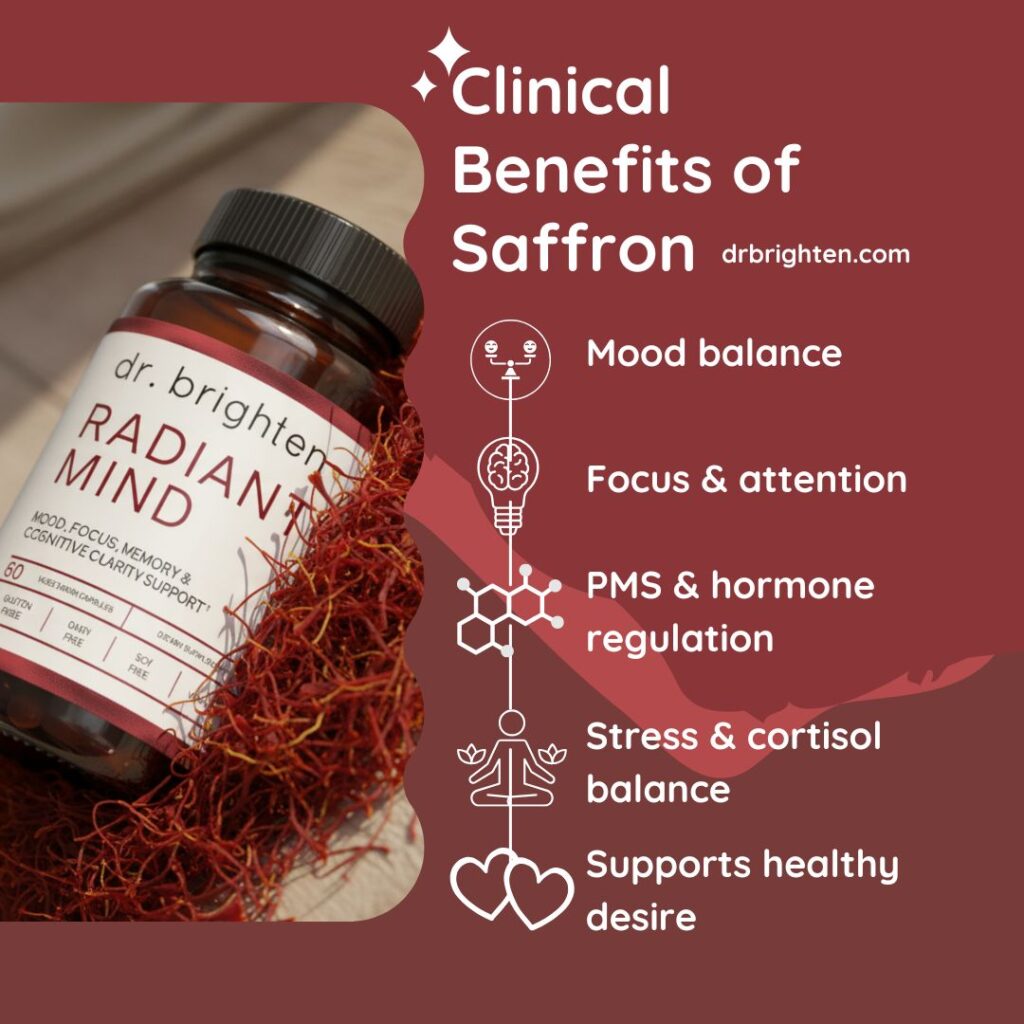
Saffron is a spice that's made from the dried stigmas (thread-like parts) of the Crocus sativus flower. It's loaded with powerful bioactive compounds1, including the most active types called:
- Crocin: A potent antioxidant that helps reduce oxidative stress, calm inflammation, and protect nerve tissue. Crocin is largely responsible for saffron’s mood-supportive and neuroprotective effects2.
- Safranal: It's been shown to support serotonin signaling, reduce anxiety, and modulate the body’s stress response.
- Picrocrocin: This compound has antioxidant properties and contributes to saffron’s overall anti-inflammatory and digestive-supportive effect
These compounds have antioxidant, anti-inflammatory, and neuroprotective properties3.
That means saffron not only affects your mood but also influences inflammation, oxidative stress, neurotransmitters, and even your stress response. And all of these pathways are involved in endometriosis.
Related:
Best Saffron Supplement for Mood, Anxiety, ADHD & PMS
Best Supplements for Endometriosis (Evidence-Based Guide)
Why Inflammation Is the Root of Endometriosis Symptoms
Endometriosis is characterized by:
- Chronic pelvic inflammation
- Immune system dysregulation
- Estrogen dominance or imbalance
- Heightened pain sensitivity
- Increased oxidative stress
Research4 shows that inflammatory cytokines and immune signaling molecules are elevated in women with endometriosis. This contributes to lesion growth, pelvic pain, and central sensitization, where the nervous system becomes more reactive to pain signals.
The main reasons saffron can help women with endometriosis are due to its anti-inflammatory and antioxidant properties. For example, crocin has been shown to:
- Reduce inflammatory cytokines
- Lower oxidative stress markers
- Protect tissues from inflammatory damage
While saffron is not a cure for endometriosis, its ability to support the inflammatory and immune pathways that drive endo symptoms is impressive—not to mention that it has many other benefits for conditions like anxiety5, depression, and poor sleep.
Related:
Endometriosis and Painful Ovulation: Why Ovulation Hurts, Where It’s Felt, and What Helps
Does Endometriosis Go Away After Menopause? Here's the Truth
Can Saffron Help Inhibit Endometriosis Cell Growth?
One of the most intriguing areas of saffron research is its potential role in modulating endometriosis lesion activity at the cellular level.
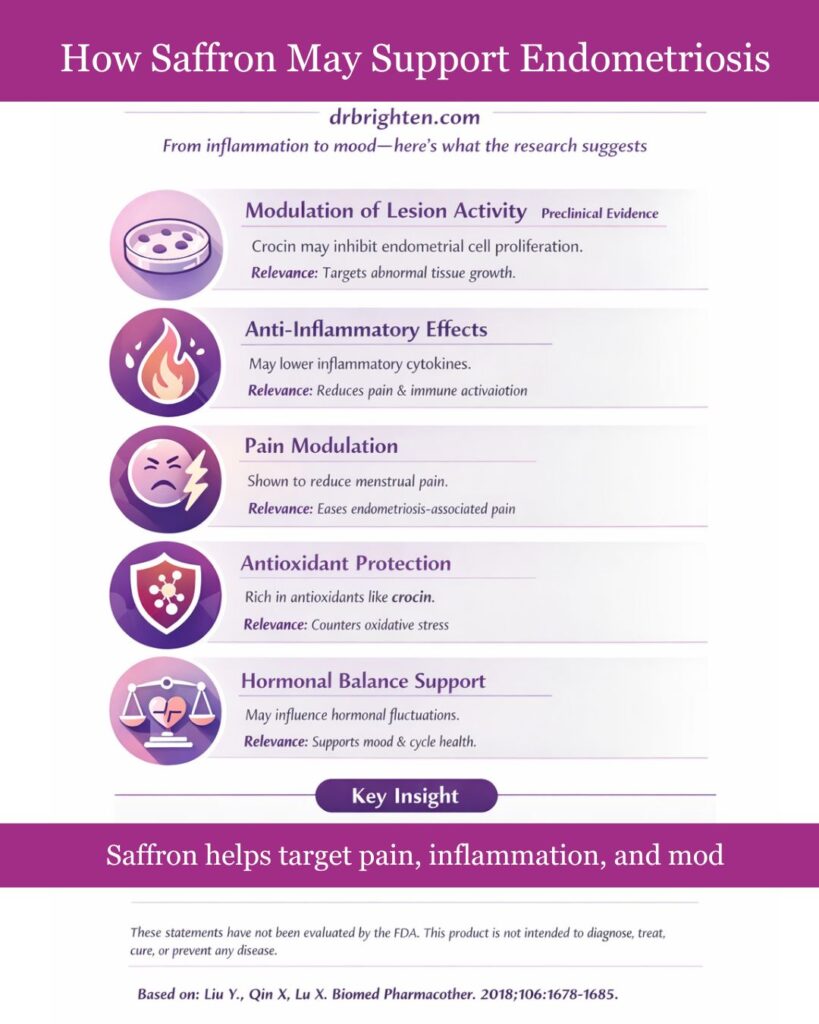
A study by Liu et al. (2018)6 investigated the effects of crocin, one of saffron’s primary bioactive compounds, on endometriosis in laboratory and animal models. Researchers found that crocin was able to:
- Inhibit the proliferation of endometrial-like cells
- Reduce the release of inflammatory cytokines
- Suppress pathways involved in lesion growth and survival
These findings suggest that saffron may influence some of the underlying biological processes that contribute to the development and persistence of endometriosis.
What This Means Clinically
Endometriosis is driven, in part, by the abnormal growth of tissue outside the uterus, along with chronic inflammation that supports that growth. Targeting both cell proliferation and inflammatory signaling is a key focus of many medical and surgical treatments.
Crocin’s ability to impact these pathways in preclinical models points to a potential supportive role for saffron in influencing disease activity, not just symptom management.
However, it’s important to be precise here: These findings are based on cell and animal studies, not large-scale human clinical trials.
That means we cannot say saffron will shrink endometriosis lesions in people—but it does provide a compelling mechanistic rationale for why saffron may be beneficial as part of a broader support strategy.
Where This Fits in a Treatment Approach
This research reinforces an important concept:
- Saffron may help modulate inflammation, oxidative stress, and cellular signaling
- These are all pathways involved in endometriosis progression
- But saffron is best viewed as supportive, not curative
For women with endometriosis, especially those seeking non-pharmaceutical options to complement medical care, saffron represents a promising compound that works across multiple biological systems—including some that may influence how endometriosis behaves over time.
Can Saffron Help With Endometriosis Pain?
Endometriosis pain is more complex than “normal” PMS symptoms or period cramps. But that said, many women experience overlapping inflammatory pain patterns whether they have endometriosis or not.
Newer research does suggest that saffron can reduce different types of menstrual pain7, including PMS and dysmenorrhea8 (painful periods).
A 2024 review9 concluded that saffron appears promising for:
- Reducing menstrual pain before and during periods
- Improving hormonal balance
- Supporting overall menstrual health
- Potentially having relaxant or antispasmodic effects10 that can reduce uterine contractions (although more research is still underway on the exact mechanisms)
Pain, including from endometriosis, isn't just physical. It's also processed through the brain, which makes saffron a useful supplement.
Here's more about how saffron can help manage endometriosis symptoms, including pain:
It helps modulate prostaglandins involved in uterine contractions:
Prostaglandins are inflammatory compounds that drive cramping and pelvic pain. By helping regulate their activity, saffron may reduce the intensity of painful uterine contractions.
It reduces inflammatory signaling:
Endometriosis is fueled by chronic inflammation. Saffron’s bioactive compounds help lower inflammatory cytokines and oxidative stress, which may decrease tissue irritation and pain amplification.
It supports serotonin pathways that influence pain perception:
Serotonin impacts how the brain processes pain signals. By supporting healthy serotonin levels, saffron may help reduce central pain sensitivity.
It helps calm nervous system hyperreactivity:
Chronic pelvic pain can sensitize the nervous system, making pain signals feel stronger and more persistent. Saffron appears to support parasympathetic activity and stress regulation, which may help reduce that heightened pain response.
Related:
Saffron and PMDD: Natural Relief for Mood Swings, Anxiety & PMS
19 Ways to Find Endometriosis Relief Naturally
Is Saffron Alone Enough for Endometriosis Support?
Saffron is one of the most promising natural compounds for endometriosis-related symptoms because it works across several key pathways. Research suggests it can help:
- Support mood and emotional regulation through serotonin and dopamine activity
- Influence pain perception, including how the brain processes pelvic pain
- Reduce inflammatory signaling and oxidative stress, which contribute to symptom severity
For some women, especially those with milder or more isolated symptoms, saffron alone may be enough to provide noticeable relief.
However, endometriosis is not just an inflammatory condition—it’s a multi-system disorder that often involves far more than pain.
Many women with endometriosis are also dealing with:
- Chronic stress physiology (HPA axis dysregulation and cortisol disruption)
- Neuroinflammation, which can impact mood, pain sensitivity, and energy
- Neurotransmitter imbalances, including both serotonin and dopamine
- Cognitive symptoms, like brain fog, low motivation, and difficulty focusing
- Nervous system overload, where the body is stuck in a heightened stress response that amplifies pain
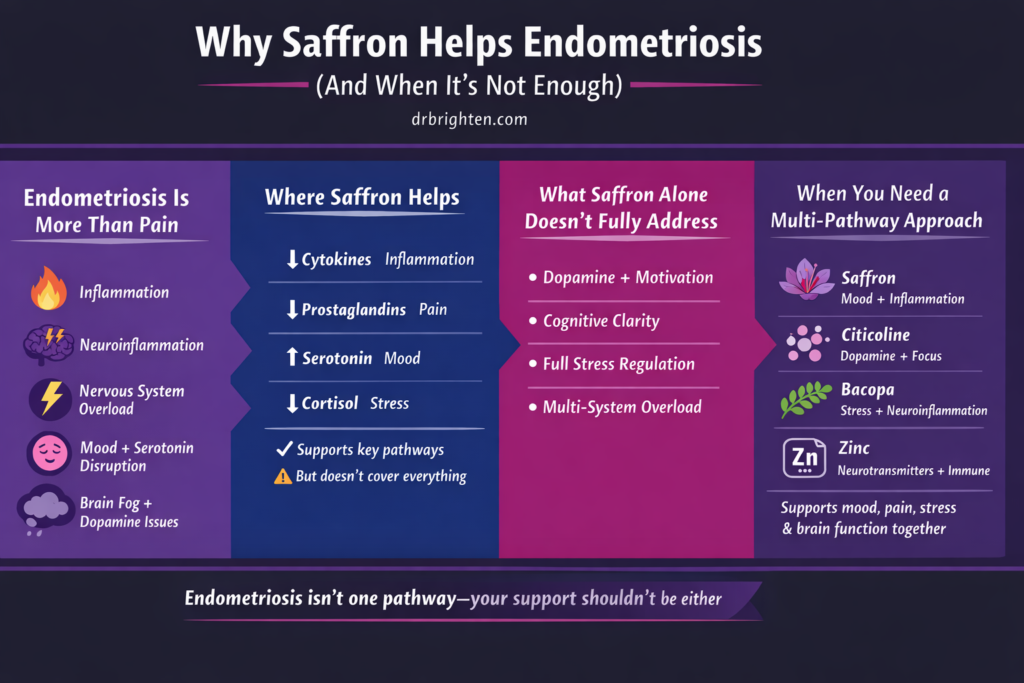
Saffron primarily supports serotonin, inflammation, and oxidative stress, but it doesn’t fully address dopamine signaling, cognitive function, or the broader stress-response system.
That’s why some women, especially those experiencing both physical symptoms and brain-based symptoms, may benefit more from a multi-ingredient approach rather than relying on a single compound.
Formulas that combine saffron with nutrients that support dopamine, stress resilience, and cognitive clarity can offer more comprehensive support for the complex physiology of endometriosis.
Saffron, Serotonin, and the Endometriosis Mood Connection
Women with endometriosis are significantly more likely to experience mood-related issues like anxiety, depression, and PMDD-like symptoms (which often include emotional dysregulation during the luteal phase).
Chronic pain itself alters serotonin and dopamine pathways. Add hormonal fluctuations, and mood instability can intensify these effects.
Saffron has been shown in clinical trials11 to:
- Increase serotonin availability
- Support dopamine signaling
- Improve mild and moderate depression12, and even major depressive disorder, according to one study13
- Reduce anxiety symptoms
What makes saffron especially appealing is that studies comparing it to certain antidepressants found similar mood benefits from both14. However, saffron is less likely to cause common side effects that can occur from antidepressants, like emotional blunting or sexual dysfunction.
For women with endometriosis who experience cyclical mood crashes, saffron offers dual support: nervous system regulation15 and inflammation modulation.
Related:
Saffron and Depression: How This Natural Mood Booster Compares to Antidepressants
Connection Between Brain Health and Hormone Balance
Hormonal Imbalance Symptoms in Women: Signs, Causes & How to Fix It Naturally
ADHD and Endometriosis: The Overlooked Brain–Body Connection
Endometriosis is often thought of as a reproductive or inflammatory condition—but for many women, the experience goes far beyond pelvic pain.
There’s a growing recognition that endometriosis and ADHD frequently overlap, and the connection lies in shared pathways involving inflammation, neurotransmitters, and stress physiology.
Why ADHD Symptoms Can Worsen with Endometriosis
Women with endometriosis often experience symptoms that closely mirror or amplify ADHD, including:
- Brain fog and difficulty concentrating
- Low motivation and mental fatigue
- Emotional dysregulation
- Increased sensitivity to stress
These symptoms aren’t “in your head”—they’re rooted in biology.
Endometriosis is associated with chronic inflammation and immune activation, which can influence brain function. Inflammatory signaling can alter neurotransmitters like dopamine and serotonin, both of which play a central role in attention, motivation, and mood.
At the same time, chronic pain acts as a persistent stressor, activating the HPA axis and disrupting cortisol patterns. Over time, this can lead to a state of nervous system overload, where focus, resilience, and emotional regulation all decline.
Where Saffron and a Multi-Pathway Approach Fit In
Saffron can play an important role by supporting:
- Mood
- Pain perception
- Inflammatory balance
But for women experiencing ADHD-like symptoms alongside endometriosis, a broader strategy may be needed.
This is where combining saffron with nutrients that support:
- Dopamine (focus + motivation)
- Stress resilience (HPA axis support)
- Cognitive clarity
can provide more comprehensive support.
Learn more about the ADHD and endometriosis connection
Saffron and Estrogen: Is There a Hormone Connection?
Endometriosis is an estrogen-dependent condition, which means a valid question is: Does saffron increase estrogen?
While saffron is not an estrogen blocker, its antioxidant and anti-inflammatory effects are potentially helpful for decreasing some of the downstream consequences of estrogen dominance and hormonal imbalances, such as:
- Tissue proliferation
- Inflammatory signaling
- Immune activation
Many women with endometriosis also experience severe PMS, or sometimes PMDD. Saffron has been studied for both PMS and PMDD, conditions that are strongly influenced by hormonal fluctuations, including estrogen.
In clinical trials16, 30 milligrams of saffron daily has been shown to significantly reduce mood swings, irritability, and emotional symptoms across two menstrual cycles.
There are also potential benefits of saffron for fertility, since its antioxidant compounds may support reproductive tissue health and reduce inflammation that can interfere with hormone signaling.
Does saffron help with menopause? There is some evidence that taking saffron can help reduce mood symptoms, hot flashes, and sleep disturbances in postmenopausal women, largely due to its effects on serotonin and oxidative stress.
How Saffron Supports the HPA Axis and Stress Response
Chronic pain is a serious stressor, so it's no surprise that if you have endometriosis, it takes a toll on your mood and energy.
Endometriosis activates the HPA axis, your central stress response system. Over time, this activation can dysregulate cortisol patterns and amplify inflammation.
Here's where saffron comes into play:
- It's been shown to help modulate cortisol
- It can support parasympathetic nervous system activity
- It often improves stress resilience
This is important because nervous system dysregulation can worsen sensitivity to pelvic pain.
When the brain perceives threat, pain amplifies. Supporting the stress response may help reduce that amplification loop.
Related: ADHD in Women: Symptoms, Causes, and Treatment, ADHD and PMDD Hormone Connection, 8 Ways to Eliminate Postpartum Depression & “Mommy Brain”
What to Look for in a Saffron Supplement
Here’s what matters when it comes to choosing a good quality saffron supplement that will give you the best results:
- Standardized extract: Look for affron® or Safr’Inside™, the most clinically studied forms.
- Clinically studied dose: 28–30 mg per day.
- Third-party tested: Ensures purity and potency.
- Clean ingredients: No artificial fillers or dyes, if possible.
- Clear labeling: Should specify Crocus sativus L.
A note on dosing: More saffron is not better. Avoid mega-dosing, such as taking high doses above 200 mg/day, which can cause adverse effects.
Why a Multi-Pathway Formula May Work Better Than Saffron Alone
Saffron is a powerful, well-studied ingredient and for many women, it’s an excellent place to start. It can support mood, inflammation, and pain perception, all of which are central to endometriosis.
But as we’ve discussed, endometriosis is rarely driven by just one pathway.
In clinical practice, many women with endometriosis are not only dealing with pelvic pain—they’re also navigating:
- Brain fog and low mental energy
- Stress reactivity and nervous system dysregulation
- Mood swings tied to the luteal phase
- Anxiety that’s amplified by chronic pain
- Difficulty with focus, motivation, and resilience
These symptoms point to something deeper: multiple neurotransmitter systems and stress pathways being affected at the same time.
Saffron primarily supports serotonin and inflammation, but it does not fully address dopamine signaling, cognitive function, or the broader stress response.
That’s where a multi-ingredient approach can make a meaningful difference.
Who May Do Well With Saffron Alone
Saffron on its own may be a great fit if:
- Your symptoms are primarily mood-related (like mild anxiety or low mood)
- You experience mild PMS-type irritability
- You prefer a simple, single-ingredient approach
- Your symptoms are not significantly impacting focus, cognition, or stress resilience
Who May Benefit More From a Formula Like Radiant Mind™
A more comprehensive formula may be a better option if you experience:
- Endometriosis + brain fog or low motivation
- Endometriosis + stress reactivity (feeling wired, overwhelmed, or easily depleted)
- Luteal phase mood crashes or PMDD-like symptoms
- Pain that worsens anxiety, fatigue, or mental clarity
- A pattern suggesting you need support for serotonin, dopamine, and stress pathways simultaneously
Best Saffron Supplement for Endometriosis-Related Mood and Brain Fog
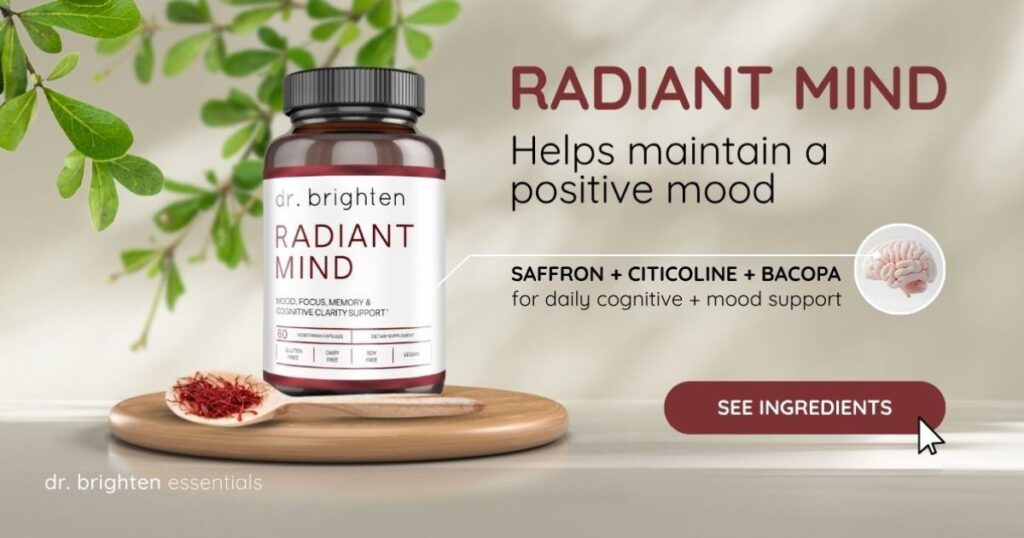
I formulated Radiant Mind™ to support the neurotransmitter and stress pathways that so often go off track in women with hormone-driven conditions.
Radiant Mind™ includes clinically studied affron® saffron extract at 30 mg, the research-supported dose shown to support mood, emotional resilience, and stress regulation.
It’s also paired with other beneficial compounds that provide mood support, including:
- Cognizin® citicoline to support dopamine and mental energy
- Bacognize® bacopa to support stress adaptation and cognitive clarity
- Zinc to support neurotransmitter function and immune balance
Radiant Mind™ isn’t a treatment for endometriosis on its own, but it can be supportive for women who experience:
- Luteal phase mood crashes
- Anxiety related to chronic pain
- Brain fog during flares
- Stress-driven symptom amplification
Supporting the brain and nervous system is often a missing piece in endometriosis care. And that’s exactly where this formula shines.
How to Consume Saffron for Health Benefits (Including Saffron for Endometriosis Support)
Most research uses saffron dosages of about 28–30 milligrams daily for at least 6-8 weeks.
You can either take one saffron capsule each day, or divide your dosage into two doses if you prefer. Take saffron with food if you have a sensitive stomach.
Be consistent and have some patience. Most women notice changes within 4–6 weeks, though some report earlier improvements in calm or sleep.
Is Saffron Safe?
Saffron is generally very well tolerated at recommended doses and unlikely to cause side effects, as long as you take it correctly.
Most people don't experience side effects, but a small percentage might deal with mild side effects such as:
- Nausea
- Headache
- Drowsiness in people who are sensitive to its effects
Always consult your healthcare provider before adding supplements to your endometriosis care plan. It's usually best to avoid saffron supplements if:
- You are pregnant
- You are taking SSRIs or other serotonin-modulating medications without medical supervision
- You are on anticoagulants without a clinician's approval
Can Saffron Replace Conventional Endometriosis Treatment?
No, saffron should not replace other endo treatments. Instead, it should be used alongside other options for additional support.
Even if you're taking saffron for endometriosis, talk to your healthcare provider about whether or not other treatments might be helpful for you, like:
- Surgical care
- Hormone therapy
- Prescribed medications
- Pelvic floor therapy
Overall, saffron is a great addition to a broader, root-cause-informed endometriosis treatment plan that includes:
- Anti-inflammatory nutrition
- Blood sugar stability
- Gut health support
- Nervous system regulation
- Targeted supplementation
Think of saffron as supportive, not standalone.
Who Might Benefit Most From Saffron?
Saffron can be especially helpful if you have endometriosis and:
- Experience significant mood symptoms
- Have PMDD-like patterns
- Struggle with anxiety related to chronic pain
- Have inflammatory pain flares
- Feel that stress amplifies your endo symptoms
Remember, saffron supports both the brain and the inflammatory pathways that drive endometriosis symptoms, which means it works from multiple angles to help you feel better (plus it's safe and low risk).
Key Takeaways on Saffron for Endometriosis
Saffron is one of the best natural supplements for mood support and pain reduction, which is why I recommend trying it for endometriosis, and why it's included in Radiant Mind. Studies show it helps:
- Modulates inflammation
- Supports serotonin and dopamine
- Can reduce menstrual pain
- Improves PMS and mood symptoms
- Supports stress resilience
Saffron isn't an endo cure, but it is a gentle, research-backed support for the inflammatory and emotional burden of this condition.
As always, supplements work best alongside lifestyle interventions, restorative sleep, blood sugar stability, movement that supports your nervous system, and a comprehensive endometriosis care strategy.
FAQ: Saffron for Endometriosis
There is currently no evidence that saffron shrinks lesions. But it can support healthier responses to inflammation and help manage endo symptoms like emotional issues and pain.
Most studies evaluate results after about 6–8 weeks. Many women continue daily use if they notice benefits.
Yes, clinical research supports saffron for mild to moderate depression and anxiety, which are common in endometriosis.
At recommended doses, saffron appears safe. If you're using it for longer than 6 months, it's a good idea to work with a knowledgeable clinician.
References
- https://pmc.ncbi.nlm.nih.gov/articles/PMC6266642/ ↩︎
- https://pmc.ncbi.nlm.nih.gov/articles/PMC9000812/ ↩︎
- https://pmc.ncbi.nlm.nih.gov/articles/PMC9361724/ ↩︎
- https://pmc.ncbi.nlm.nih.gov/articles/PMC10855755/ ↩︎
- https://pmc.ncbi.nlm.nih.gov/articles/PMC6266642/ ↩︎
- https://www.sciencedirect.com/science/article/abs/pii/S0753332218338988 ↩︎
- https://pubmed.ncbi.nlm.nih.gov/38694315/ ↩︎
- https://pubmed.ncbi.nlm.nih.gov/18271889/ ↩︎
- https://pubmed.ncbi.nlm.nih.gov/38558480/ ↩︎
- https://pmc.ncbi.nlm.nih.gov/articles/PMC6235659/ ↩︎
- https://pmc.ncbi.nlm.nih.gov/articles/PMC6266642/ ↩︎
- https://pubmed.ncbi.nlm.nih.gov/19787421/ ↩︎
- https://pmc.ncbi.nlm.nih.gov/articles/PMC4643654/ ↩︎
- https://www.sciencedirect.com/science/article/abs/pii/S0165032713007970?via%3Dihub ↩︎
- https://onlinelibrary.wiley.com/doi/10.1002/hup.2434?prg140729=daaba3d3-057c-4131-bfb1-2095ab6cd1b6 ↩︎
- https://pmc.ncbi.nlm.nih.gov/articles/PMC11426294/ ↩︎
About The Author