
Why does your body feel calm and capable one week, then suddenly tense, bloated, and emotionally raw the next? PMS is one common reason this happens to many women—and it's not only due to rising and falling hormones. The intensity of PMS symptoms that you deal with also depends on how your nervous system, muscles, and inflammatory pathways respond to those shifts.
If you struggle with PMS cramps, bloating, headaches, anxiety, poor sleep, or emotional swings before your period, you might need more magnesium. PMS and PMDD symptoms are driven by shifts in estrogen, progesterone, inflammation, and nervous system sensitivity, and one of the most powerful tools for calming these causes is magnesium.
If you've ever asked, ” Does magnesium help with PMS (or does magnesium help with period symptoms), the answer is yes. Let’s look at how magnesium for PMS and menstrual cycle support can help reduce symptoms and restore balance.
In this article:
- Does Magnesium Help With PMS?
- PMS Symptoms Magnesium May Help Support
- How Magnesium Works in PMS and the Menstrual Cycle
- Does Magnesium Help With Period Symptoms?
- Does Magnesium Help With Period Cramps?
- Is Magnesium Good for PMDD?
- Can Magnesium Delay Your Period?
- What Type of Magnesium Is Best for PMS?
- Signs You Might Be Low in Magnesium During Your Cycle
- Why Magnesium Glycinate Is My Recommended Form for PMS
- What to Look for in a Magnesium Supplement for PMS
- How to Take a Magnesium Supplement for PMS
- What Magnesium Can Be Combined With for PMS
- Magnesium for More Than PMS
- The Bottom Line: Magnesium for PMS Relief
- Key Takeaways on Magnesium for PMS
Does Magnesium Help With PMS?
Yes, magnesium may help reduce PMS symptoms such as cramps, mood changes, headaches, and sleep disturbances. Research suggests magnesium supports muscle relaxation, regulates neurotransmitters like serotonin and GABA, and helps modulate inflammatory prostaglandins that drive menstrual pain. Keep reading to learn more.
PMS Symptoms Magnesium May Help Support
- menstrual cramps
- headaches
- irritability
- anxiety
- insomnia
- bloating
- breast tenderness
- fatigue
How Magnesium Works in PMS and the Menstrual Cycle
Magnesium is an electrolyte mineral that's involved in hundreds of reactions that regulate muscle contraction, hormone signaling, blood sugar, and brain chemistry, all of which influence how you feel during your cycle.
During the luteal phase, progesterone falls, and cortisol and inflammation tend to rise. For many women, this increases anxiety, water retention, pain, and sugar cravings. Many of these symptoms are the same ones that magnesium can help to tame, which is why magnesium and PMS management1 are so closely linked.
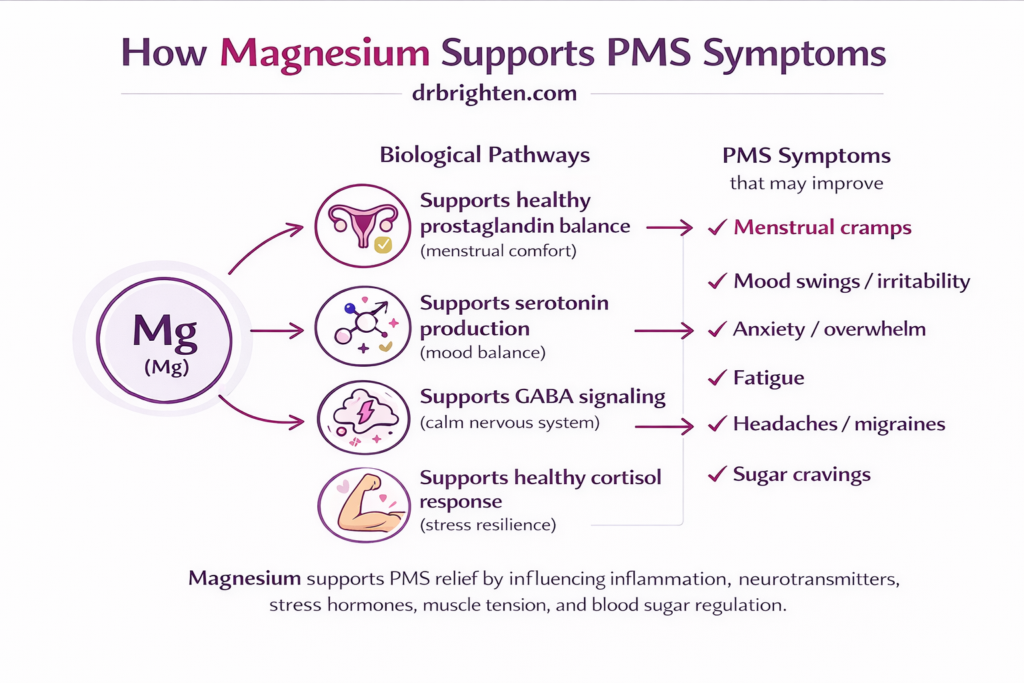
Magnesium can help counteract the causes and symptoms of PMS by:
- Regulating stress hormones
- Calming the nervous system
- Supporting progesterone’s relaxing effects
- Reducing inflammation and prostaglandin production
- Relaxing the uterine and skeletal muscles, which can decrease cramps
- Helping you sleep better before and during your period
- Supporting blood sugar balance
If PMS symptoms like cramps, irritability, or poor sleep are disrupting your life each month, a highly absorbable magnesium supplement may help support your nervous system and hormonal balance.
Related:
Magnesium Benefits: 15 Ways This Mineral Boosts Health
Does Magnesium Help With Period Symptoms?
Many women wonder whether magnesium can help with PMS or other period symptoms. Research suggests that magnesium may support relief from several common menstrual complaints, including cramps, headaches, bloating, mood changes, and sleep disturbances.
Magnesium plays a role in hundreds of biochemical reactions in the body, many of which influence how you feel during your menstrual cycle. It helps regulate muscle contraction, supports neurotransmitters involved in mood, and contributes to healthy inflammatory responses.
Because PMS symptoms are often driven by changes in prostaglandins, stress hormones, and nervous system sensitivity, adequate magnesium levels may help the body respond more calmly to hormonal fluctuations during the luteal phase of the menstrual cycle.
For women experiencing premenstrual symptoms like irritability, anxiety, fatigue, or poor sleep, magnesium intake may help support nervous system balance and overall menstrual comfort.
Does Magnesium Help With Period Cramps?
Magnesium may help support relief from menstrual cramps by promoting healthy muscle relaxation and reducing inflammatory signaling.
Period cramps occur when the uterus contracts to shed its lining. These contractions are triggered by compounds called prostaglandins. When prostaglandin levels are high, uterine contractions can become stronger and more painful.
Magnesium helps regulate calcium movement into muscle cells. Because calcium triggers muscle contraction, excessive calcium activity can lead to stronger uterine spasms. Magnesium acts as a natural counterbalance, helping muscles relax.
Research has found that magnesium supplementation may support reduced menstrual pain intensity compared with placebo in some women. By supporting muscle relaxation and healthy inflammatory responses, magnesium may help decrease the severity of cramps and pelvic tension during menstruation.
Magnesium may also support relief from symptoms often associated with menstrual cramps, including:
- lower back pain
- headaches or menstrual migraines
- pelvic pressure
- fatigue
- bloating
Because of these effects, magnesium is often recommended as part of a nutritional strategy for menstrual comfort.
Is Magnesium Good for PMDD?
PMDD (Premenstrual Dysphoric Disorder) is not just “severe PMS.” It's a neurohormonal condition in which the brain has an exaggerated response to normal hormone fluctuations.
Women with PMDD have nervous systems that are more reactive to progesterone and estrogen shifts. While symptoms vary from person to person, they can include intense anxiety, depression, irritability, panic, and pain sensitivity before their period.
Magnesium is uniquely helpful here because it works directly on the brain and nervous system, not just the uterus.
For those with PMDD (and those without it, too), magnesium helps:
- Regulate GABA, the brain’s main calming neurotransmitter
- Reduce glutamate, the excitatory neurotransmitter linked to anxiety and overstimulation
- Stabilize the stress response by lowering cortisol
- Support serotonin production, which affects mood and emotional resilience
This is why magnesium can help decrease the “wired but tired” feeling so common in PMDD, along with the emotional volatility, insomnia, and heightened pain sensitivity. Research2 has found that magnesium supplementation can significantly reduce PMDD symptoms such as mood swings, pain, and fatigue.
In women with PMS and PMDD, magnesium has also been shown to work even better when combined with vitamin B63, which supports neurotransmitter balance4 and hormone metabolism.
Can Magnesium Delay Your Period?
Magnesium does not typically delay your period or significantly alter the timing of your menstrual cycle.
The timing of menstruation is controlled by ovulation and hormonal signals from the brain and ovaries. Magnesium does not suppress ovulation or change the hormonal signaling that determines when your period begins.
However, magnesium does influence muscle relaxation and prostaglandin activity in the uterus. Because of this, some women notice that their period begins more gradually or feels less intense when they maintain adequate magnesium intake.
This effect reflects improved uterine muscle relaxation rather than a delay in the menstrual cycle itself.
In other words, magnesium may support a more comfortable period, but it does not usually change when your cycle occurs.
What Type of Magnesium Is Best for PMS?
Not all magnesium supplements are absorbed equally, and the form of magnesium you choose can influence how well it supports PMS symptoms.
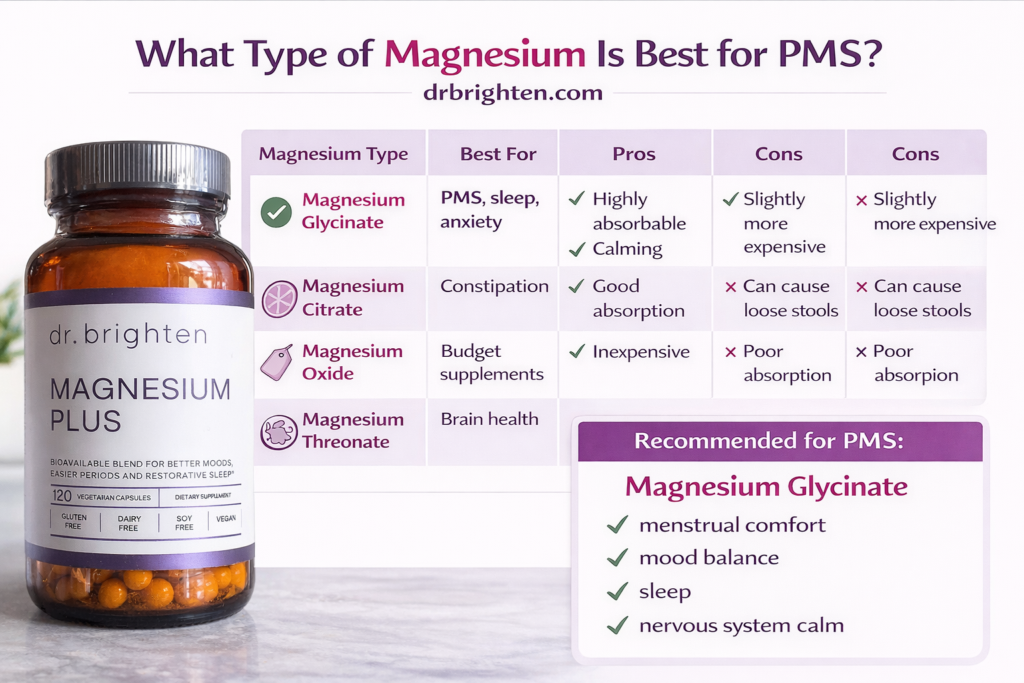
Some common forms of magnesium include:
Magnesium glycinate
Magnesium glycinate is one of the most commonly recommended forms for PMS because it is highly absorbable and gentle on digestion. The glycine component may also support relaxation and sleep.
Magnesium citrate
Magnesium citrate is well absorbed but can sometimes cause loose stools, which makes it less ideal for daily PMS support for some individuals.
Magnesium oxide
Magnesium oxide is inexpensive but poorly absorbed compared with other forms of magnesium.
Magnesium threonate
Magnesium threonate is often used for brain health support but provides lower elemental magnesium compared with other forms.
For women seeking support for PMS symptoms such as cramps, irritability, anxiety, and sleep disturbances, magnesium glycinate is often preferred because it supports nervous system relaxation without causing digestive discomfort.
Magnesium Plus contains magnesium glycinate, a form chosen for its absorption and tolerability, making it a practical option for supporting relaxation, muscle comfort, and nervous system balance throughout the menstrual cycle.
Once you choose the right form of magnesium, the next step is understanding how to take it to support your menstrual cycle most effectively.
Best Types of Magnesium for PMS
| Type | Benefits | Downsides |
| Magnesium Glycinate | Highly absorbable, calming, supports sleep and mood | Slightly more expensive |
| Magnesium Citrate | Good absorption | Can cause loose stools |
| Magnesium Oxide | Cheap | Poor absorption |
| Magnesium Threonate | Brain support | Expensive, lower elemental magnesium |
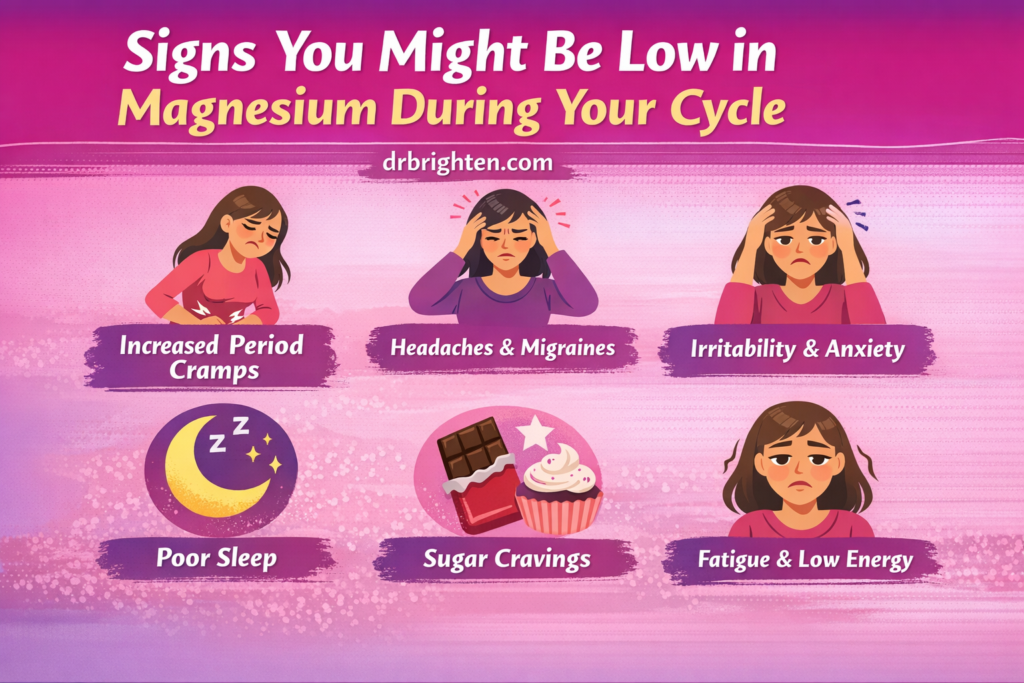
Signs You Might Be Low in Magnesium During Your Cycle
Magnesium deficiency is surprisingly common, especially among women. Stress, intense exercise, blood sugar fluctuations, and menstruation can all increase magnesium demands in the body. At the same time, modern diets often provide less magnesium than the body needs to support optimal nervous system and hormonal function.
Because magnesium plays a role in muscle relaxation, neurotransmitter balance, inflammation regulation, and stress response, low levels may contribute to many of the symptoms women experience before their period.
Some signs that magnesium intake may be too low during your menstrual cycle include:
More intense period cramps
Magnesium helps regulate muscle contraction in the uterus. When magnesium levels are low, uterine contractions may feel stronger or more painful.
Premenstrual headaches or menstrual migraines
Magnesium plays a role in blood vessel regulation and nervous system signaling. Low levels have been associated with increased risk of headaches and migraines around the menstrual cycle.
Irritability, anxiety, or emotional sensitivity before your period
Magnesium supports neurotransmitters like serotonin and GABA, which help regulate mood and stress response. Inadequate magnesium may make the nervous system more reactive during hormonal shifts.
Sleep problems during the luteal phase
Magnesium helps support relaxation and healthy sleep signaling. Some women notice more difficulty falling asleep or staying asleep in the week before their period when magnesium intake is low.
Increased sugar cravings
Magnesium plays a role in glucose metabolism and insulin signaling. Low levels may contribute to stronger cravings for carbohydrates and sweets before menstruation.
Muscle tension or back pain during PMS
Magnesium supports healthy muscle relaxation throughout the body, including the lower back and pelvic region.
Fatigue during the premenstrual phase
Magnesium contributes to cellular energy production. When levels are low, women may feel more depleted or drained in the days leading up to their period.
These symptoms don’t always mean someone is deficient in magnesium, but they may signal that magnesium intake could be helpful for supporting the body during hormonal changes.
Because magnesium is involved in so many systems that influence PMS symptoms—from inflammation to brain chemistry—ensuring adequate intake through food and supplements may help support a calmer nervous system and a more comfortable menstrual cycle.
Benefits of Magnesium for Period Cramps, Pain, and Other PMS Symptoms
One of the main drivers of menstrual pain is a group of inflammatory compounds called prostaglandins. These chemicals tell the uterus to contract so it can shed the uterine lining. But when prostaglandins are too high, those contractions become stronger, more frequent, and more painful.
Magnesium helps regulate this process in several powerful ways:
1. Helps Relax Muscles
Magnesium blocks excessive calcium5 from entering muscle cells. Calcium is what triggers muscle contraction, so when calcium floods uterine muscle cells, the uterus tightens and spasms.
Magnesium acts as a natural “brake,” preventing that over-contraction and allowing the uterine muscle to relax. This is why magnesium is often described as a natural muscle relaxer.
Due to its pain-relieving effects, magnesium can also help with other PMS-related symptoms, including:
- Pelvic tension and pressure caused by muscle and nerve irritation
- Back and thigh pain that radiates from uterine contractions
- Headaches and menstrual migraines, which are linked to blood vessel constriction and magnesium deficiency
- Bloating and water retention, because magnesium helps regulate fluid balance
- Breast tenderness, by calming inflammatory signaling
2. Reduces Inflammation & Pain
Magnesium helps reduce prostaglandin production and inflammation, which lowers the intensity of the signals that drive cramps, swelling, and pain in the first place.
This dual effect is why magnesium has been shown to be a helpful non-drug option for painful periods. It's also recommended for most women with PMS because studies show women who experience more intense symptoms before their periods are more likely to be deficient in magnesium6 (along with vitamin D and calcium).
Clinical studies7 have found that magnesium supplementation can significantly reduce menstrual pain when compared to a placebo, especially when taken in the days leading up to menstruation. Some trials show magnesium to be comparable to NSAIDs for cramp relief, but without the same risks to the gut or kidneys.
3. Supports Serotonin and Calm Brain Chemistry
Magnesium is required to make and use serotonin8, your brain’s main mood-stabilizing neurotransmitter. It also helps regulate dopamine and adrenaline, which influence motivation, focus, and emotional reactivity.
Low magnesium makes your brain more reactive and less resilient, which is why deficiency is linked to anxiety, irritability, and sleep problems.
Additionally, magnesium blocks overactivation of NMDA receptors9, which are responsible for excitatory brain signaling. When these receptors are too active, the brain feels wired, anxious, emotionally volatile, and sensitive to pain. It also activates GABA receptors, which are your brain’s natural “brakes.” GABA calms the nervous system and reduces emotional overwhelm.
4. Helps the Brain Grow, Adapt to Stress, and Recover
Magnesium is believed to increase BDNF10 (brain-derived neurotrophic factor), a growth factor that helps neurons repair themselves and stay flexible. Low BDNF is linked to depression and mood disorders—which is why magnesium is often described as having antidepressant-like effects in the brain.
Magnesium reduces stress hormone overload, too, by helping to regulate the HPA axis, which controls cortisol. This is especially important for PMDD, which is driven by an exaggerated stress response to normal hormone changes.
Related:
Magnesium for Sleep: Complete Guide to Best Forms and Dosage
Magnesium Supplementation for Anxiety: Benefits, Best Types, Dosage, and Safety

Why Magnesium Glycinate Is My Recommended Form for PMS
Not all magnesium supplements work in the same way to manage PMS. I recommend magnesium glycinate for PMS, the type found in Magnesium Plus, because it is:
- Highly absorbable
- Gentle on the stomach
- Non-laxative
- Calming to the nervous system
Glycine, the amino acid it is bound to, also supports relaxation and sleep, which makes it ideal for PMS-related anxiety, insomnia, and irritability. This is why magnesium glycinate is used in many high-quality formulas.
If you experience bloating, diarrhea, or cramping from other forms like citrate or oxide, switching to glycinate (like Magnesium Plus) can make a big difference.
Related: What's The Best Magnesium Supplement?
What to Look for in a Magnesium Supplement for PMS
Not all magnesium supplements are created equal. The form of magnesium, how well it is absorbed, and the amount of elemental magnesium in a formula can all influence how well it supports PMS symptoms.
If you’re considering a magnesium supplement for PMS, there are several factors worth paying attention to.
Bioavailability Matters
Bioavailability refers to how easily your body can absorb and use a nutrient.
Some magnesium forms are absorbed efficiently, while others pass through the digestive tract with minimal uptake. Supplements that use highly absorbable forms of magnesium may be more effective for supporting the nervous system, muscle relaxation, and hormonal balance during the menstrual cycle.
When choosing a magnesium supplement for PMS, look for forms that are known for better absorption and gentler digestion.
Magnesium Glycinate vs Magnesium Oxide
Two of the most common forms of magnesium found in supplements are magnesium glycinate and magnesium oxide, but they behave very differently in the body.
Magnesium oxide is inexpensive and commonly used in supplements, but it has relatively low absorption. Because of this, it is sometimes used primarily for digestive purposes rather than for supporting systemic magnesium levels.
Magnesium glycinate, on the other hand, is bound to the amino acid glycine. This form is widely recognized for its higher bioavailability and gentle effect on the digestive system. Glycine may also help support relaxation and nervous system balance, which can be especially helpful for women experiencing PMS-related anxiety, sleep disruption, or irritability.
Because of these characteristics, magnesium glycinate is often preferred when magnesium is used to support menstrual comfort, mood balance, and sleep.
Pay Attention to Elemental Magnesium
Another important factor is the amount of elemental magnesium a supplement provides.
Elemental magnesium refers to the actual amount of magnesium available for your body to use, not the total weight of the compound listed on the label. Two supplements may contain the same magnesium compound but provide very different amounts of usable magnesium.
Many women find that daily intakes of roughly 200–400 mg of elemental magnesium help support muscle relaxation, nervous system balance, and menstrual comfort, although individual needs may vary.
Consider Dosing and Consistency
Magnesium tends to work best when taken consistently rather than only when symptoms appear.
Because PMS symptoms typically develop during the luteal phase of the menstrual cycle, some women benefit from maintaining daily magnesium intake and increasing their dose slightly during the week leading up to their period.
Consistent intake helps support steady magnesium levels in the body, which may help maintain nervous system calm and muscle relaxation throughout the cycle.
Look for Gut Tolerance
Digestive tolerance is another factor to consider when choosing a magnesium supplement.
Some forms of magnesium can cause loose stools or digestive discomfort, especially when taken in higher amounts. Forms like magnesium glycinate are often better tolerated and less likely to cause gastrointestinal upset compared with forms such as magnesium oxide or magnesium citrate.
Choosing a well-tolerated magnesium form makes it easier to take the supplement consistently, which is key for supporting PMS symptoms over time.
A Magnesium Formula Designed for PMS Support
Magnesium Plus was formulated with these considerations in mind.
It contains magnesium glycinate, a form known for:
- high absorption
- gentle digestion and minimal laxative effects
- calming support for the nervous system
- support for relaxation and sleep quality
Magnesium Plus also provides a clinically relevant amount of elemental magnesium, designed to support stress resilience, muscle relaxation, and menstrual comfort throughout the cycle.
When used as part of a broader approach to nutrition, sleep, and hormone balance, a well-formulated magnesium supplement may help support a calmer nervous system and more comfortable menstrual experience.
How to Take a Magnesium Supplement for PMS
Using a magnesium supplement for PMS works best when it is taken consistently, not just during your period.
For the most relief and best results:
- Take magnesium daily, not only when symptoms appear
- Start increasing your dose 7–10 days before your period
- Take it in the evening to support relaxation and sleep
- Pair it with food if you're sensitive
How much magnesium for PMS do you need?
Typical doses range from 200 to 400 milligrams of elemental magnesium per day, depending on your symptoms and tolerance. If you notice loose stools or other side effects, try taking less and seeing if it helps.
What Magnesium Can Be Combined With for PMS
Magnesium often works even better when paired with other targeted nutrients and supplements.
If you're using magnesium for PMS, consider combining it with:
- Vitamin B6: Helps reduce water retention and mood symptoms
- Omega-3 fatty acids: Lower prostaglandins and inflammation
- Calcium: Works synergistically with magnesium for muscle function
- Vitex (chasteberry): Supports progesterone and cycle regularity
- Ginger and turmeric: Natural anti-inflammatory support
- Probiotics: Support estrogen metabolism and gut health
This combination approach supports magnesium and menstrual cycle balance from multiple angles.
Magnesium for More Than PMS
Magnesium is not only helpful for periods. It supports women across every life stage, including those in menopause, those with ADHD or anxiety, or anyone struggling to sleep well or relax.
Magnesium can help with:
- Sleep by improving relaxation and melatonin production
- Stress and anxiety
- Perimenopause and menopause symptoms, such as hot flashes, sleep, and mood
- Blood sugar balance by reducing insulin spikes
- Headaches and migraines:
- Bone health is supported by supporting calcium use
Because magnesium is lost during stress, exercise, and menstruation, many women are chronically deficient without realizing it. That's why I recommend magnesium supplements, such as Magnesium Plus, to most women.
The Bottom Line: Magnesium for PMS Relief
If PMS symptoms like cramps, irritability, and sleep disruption affect your quality of life each month, optimizing magnesium intake may help support a calmer nervous system and more comfortable cycle.
Magnesium Plus provides magnesium glycinate in a highly absorbable formula designed to support relaxation, stress resilience, and menstrual comfort.
Key Takeaways on Magnesium for PMS
- Magnesium is one of the most important minerals for your brain, nerves, and hormones. It directly affects how your body handles stress, pain, and emotional swings, which is why it plays such a big role in PMS and PMDD.
- Magnesium glycinate, found in Magnesium Plus, provides broad support for the hormonal and nervous system shifts that drive symptoms.
- When used consistently and in the right form, magnesium is one of the most widely studied nutrients for supporting PMS symptoms.
References
- https://pubmed.ncbi.nlm.nih.gov/28392498/ ↩︎
- https://pmc.ncbi.nlm.nih.gov/articles/PMC9790166/ ↩︎
- https://pubmed.ncbi.nlm.nih.gov/10746516/ ↩︎
- https://pmc.ncbi.nlm.nih.gov/articles/PMC4161081/ ↩︎
- https://pmc.ncbi.nlm.nih.gov/articles/PMC12647176/ ↩︎
- https://pmc.ncbi.nlm.nih.gov/articles/PMC4667262/ ↩︎
- https://pmc.ncbi.nlm.nih.gov/articles/PMC9800031/ ↩︎
- https://mcpress.mayoclinic.org/nutrition-fitness/magnesium-glycinate-is-this-supplement-helpful-for-you/ ↩︎
- https://academic.oup.com/ijnp/article/17/3/393/759123 ↩︎
- https://pmc.ncbi.nlm.nih.gov/articles/PMC9820677/ ↩︎
About The Author