You probably won’t usually notice it all at once, since hair thinning during menopause is usually subtle at first. Your part might look a little wider in certain lighting, or your hair might not hold volume the way it used to. You start tying your hair up and realize your ponytail feels thinner.
This is how menopause thinning hair often begins. Why does it happen? There are clear biological reasons, mainly shifts in certain hormones, and specific ways you can support your body through it.
In this article, we’ll cover:
- Why menopause thinning hair happens, including what takes place at a hormonal level
- The connection between estrogen, progesterone, and hair follicles
- What the research says about the prevalence of menopause hair loss
- The most effective menopause hair loss treatment strategies
- What helps hair loss during menopause naturally and medically
- How to improve thinning hair after menopause
- The best shampoo for thinning hair due to menopause, and what matters more than brand
- Whether or not hair loss from menopause will grow back eventually
Hair thinning can have many causes, including menopause-related hormone changes, thyroid disorders, low iron, autoimmune conditions, medication side effects, stress, and genetics. This article is educational and is not a substitute for personalized medical care. If your hair loss is sudden, patchy, painful, or rapidly worsening, speak with a qualified healthcare provider.
You're in ✦
Check your inbox. Day one is on its way.
Your ADHD Hormone & Brain Sync Guide is heading to your inbox now — look for it from Dr. Brighten in the next few minutes.
New Book · Out October 6, 2026
The full system behind the guide
These five days are the doorway. ADHD and Women is the whole map — the ADHD-Hormone Profile and what to do across every hormonal transition.
Pre-Order ADHD and WomenIs Thinning Hair a Symptom of Menopause?
Yes, thinning hair during menopause is one of the most common symptoms[1] women experience.
Hair loss is talked about less than hot flashes or weight changes, but it still affects a high percentage of women during perimenopause, menopause, and postmenopause.
Some studies have found that more than half[2] (about 52%) of postmenopausal women experience female pattern hair loss[3].
Other data suggests that up to two-thirds or more of women notice thinning or hair loss after menopause. In one study of 200 menopausal women[4], all 200 (100% of participants) said they experienced some degree of hair loss.
Hair thinning is common during and after menopause, but it should not be dismissed as something you simply have to accept. The cause matters, and identifying the driver early can improve your chances of slowing shedding and supporting regrowth.
Related:
Understanding Menopause Hair Loss: Causes, Symptoms, Solutions, and Preventive Measures
5 Science-Backed Steps to Stop Female Hair Loss and Regrow Your Hair
Why Menopause Thinning Hair Happens
Like many other menopause symptoms, hormones are a big piece of the puzzle.
“Many women notice hair changes before they realize they are in perimenopause. A widening part, more shedding in the shower, or a thinner ponytail can be early clues that hormones, stress, thyroid function, or nutrient status need attention. The key is not to assume it is just aging. Hair thinning is a signal worth investigating.” – Dr. Jolene Brighten, NMD, FABNE, MSCP
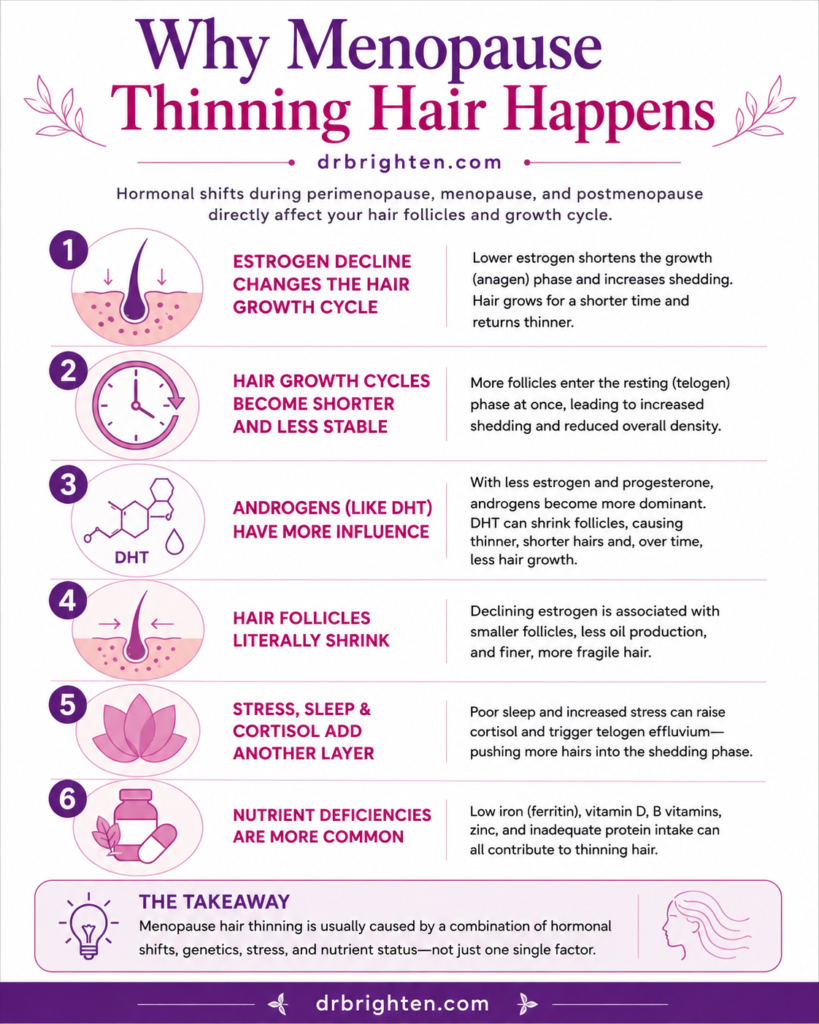
Hair follicles are extremely sensitive to hormones. When those hormones decline, your hair is often one of the first places you see it. Here’s what’s usually happening when women in midlife experience hair thinning:
1. Estrogen Decline Changes the Hair Growth Cycle
Estrogen helps keep hair in its growth phase (called the anagen phase), so changes in estrogen are a big driver of thinning hair after menopause.
Research shows that estrogen receptors are present in hair follicles[5], and declining estrogen is linked to reduced hair growth rate and diameter. When estrogen drops:
- Hair spends less time growing
- More hair shifts into shedding mode, meaning it falls out in larger amounts
- New hair grows back thinner
When all of these combine, thinner hair becomes more noticeable.
2. Hair Growth Cycles Become Shorter and Less Stable
Hair doesn’t just fall out randomly. It follows a cycle, including before and during menopause. When a woman is in menopause:
- The hair growth phase shortens
- The resting phase lengthens
- More follicles enter shedding at the same time
- This imbalance leads to ongoing thinning
Studies show that lower estrogen shifts the ratio of growing to shedding hairs, increasing long-term shedding patterns.
3. Androgens (Like DHT) Start to Have More Influence
As estrogen and progesterone decline, androgens become more dominant:
- DHT (a form of testosterone) shrinks hair follicles
- Follicles produce thinner and shorter hairs
- Over time, some follicles stop producing hair entirely
This process is called miniaturization, and it’s the hallmark of menopause loss of hair.
Related: PCOS Hair Loss Explained: Common Patterns, Triggers, and Treatment Options
4. Hair Follicles Literally Shrink
This is one of the most important pieces that isn’t well understood. With menopause, hair follicles can physically shrink. Oil production also decreases, which typically causes hair to become drier, finer, and more fragile with age.
Medical research shows that declining estrogen is associated with progressive follicle shrinkage and reduced hair production.
5. Stress, Sleep, and Cortisol Add Another Layer
Hormones aren’t the only factor. During perimenopause and menopause:
- Sleep often worsens
- Stress increases
- Cortisol becomes more unstable
These factors can trigger a type of hair shedding called telogen effluvium. You might notice:
- More hair in the shower
- Sudden shedding after stressful periods
- Fluctuating hair density
6. Nutrient Deficiencies Become More Common
Hair growth depends on nutrients your body may now be struggling to maintain. Common contributors to hair thinning can include:
- Low iron (especially ferritin), which is common among women
- Low vitamin D
- B vitamin deficiencies
- Inadequate protein
Without these, even the best menopause hair loss treatment won’t work well. That’s why these nutrients are found in many hair growth supplements.
Related: What Causes Hair Loss + How to Stop It
What Menopause Hair Loss Looks Like
Hair loss during menopause tends to follow a recognizable pattern[6]. Unlike sudden hair loss, the process is usually gradual and often progressive. If you’re experiencing menopause hair thinning, you’ll probably notice:
- Widening part line
- Thinning at the crown
- Less overall density
- Hair that feels finer and less full
- Increased shedding, especially during stress
Will Hair Loss From Menopause Grow Back?
This depends on what’s driving it and how early you catch it.
Temporary shedding, such as from increased stress, illness, rapid weight loss, or a specific nutrient deficiency, is often reversible. This type of hair loss, called telogen effluvium, pushes more hairs into the shedding phase at once. Once the trigger is resolved, the follicles typically recover and hair begins growing again within a few months, although it can take 6 to 12 months to see full regrowth.
Hormone-driven thinning is a bit different. When estrogen and progesterone decline, hair spends less time in its growth phase and grows back finer. If you support hormone balance, reduce inflammation, and optimize nutrients, you can often improve thickness, density, and growth rate. But it might not return exactly to your pre-menopause baseline.
Long-term follicle miniaturization is the hardest to reverse. At this stage, regrowth is more limited, but you can still slow progression and improve the quality of the remaining hair with the right support.
Overall, hair loss in menopause exists on a spectrum. The earlier you address the root causes, whether hormonal, nutritional, or stress-related, the better your chances of seeing meaningful regrowth.
When to See a Doctor for Menopause Hair Loss
While gradual thinning can be common during menopause, some types of hair loss need medical evaluation. Talk with a healthcare provider if you notice:
- Sudden or severe shedding
- Patchy hair loss
- Scalp itching, burning, pain, redness, or scaling
- Hair loss with fatigue, weight changes, heavy bleeding, or feeling cold
- New facial hair growth, acne, or irregular bleeding
- Hair loss after starting a new medication
- No improvement after 3 to 6 months of consistent support
A clinician may recommend checking thyroid function, ferritin, iron studies, vitamin D, B12, zinc, hormone patterns, inflammatory markers, or evaluating for autoimmune or dermatologic causes.
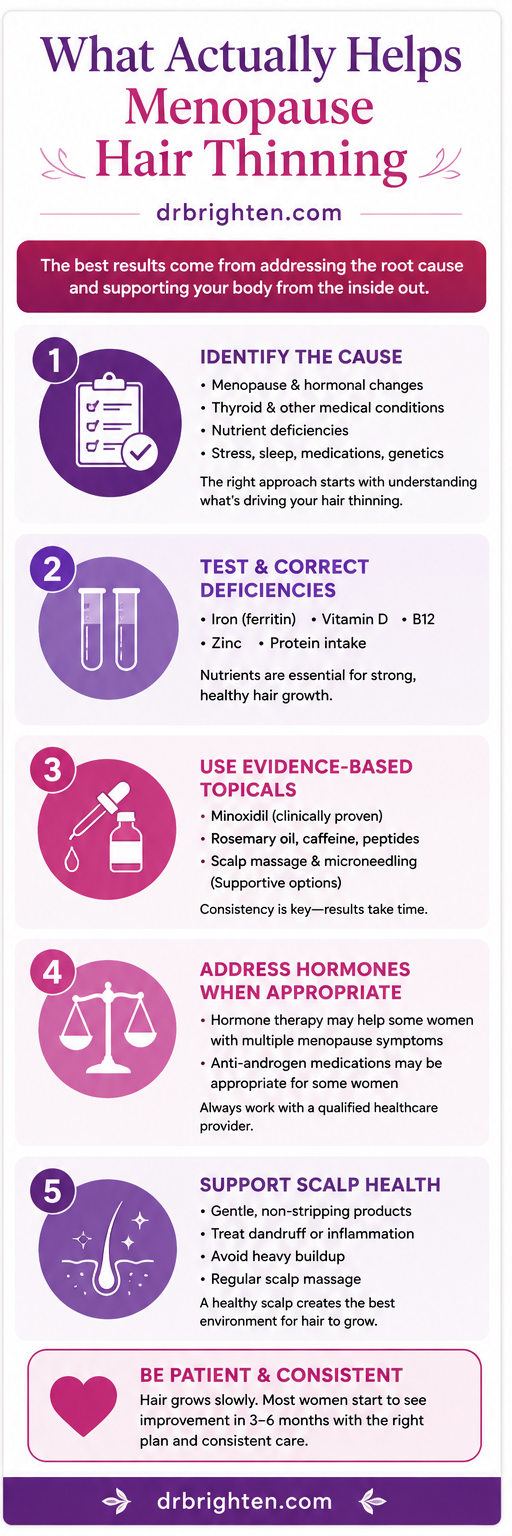
Menopause Hair Loss Treatment: What Actually Helps
The best treatment depends on the type of hair loss and what is driving it. For most women, the most effective plan combines medical evaluation, nutrient support, scalp care, and targeted therapies.
1. Identify the Type of Hair Loss
Menopause-related thinning often overlaps with:
- Female pattern hair loss
- Telogen effluvium from stress, illness, weight loss, or nutrient depletion
- Thyroid-related shedding
- Iron or vitamin D deficiency
- Androgen-sensitive hair thinning
- Scalp inflammation or dermatitis
This matters because each type requires a different approach.
2. Test and Correct Nutrient Deficiencies
Hair growth depends on adequate protein, iron, vitamin D, B vitamins, zinc, and overall calorie intake. Low ferritin, low vitamin D, and inadequate protein are especially common contributors to shedding.
3. Consider Evidence-Based Topicals
Minoxidil is one of the best-studied topical treatments for female pattern hair loss. It may help reduce shedding and support thicker regrowth when used consistently for several months.
Rosemary oil, caffeine serums, peptides, scalp massage, and microneedling may also be helpful for some women, but they should be viewed as supportive rather than guaranteed fixes.
4. Address Hormones When Appropriate
Hormone therapy is not usually prescribed for hair loss alone. However, for women who also have hot flashes, poor sleep, mood changes, vaginal dryness, or other menopause symptoms, hormone therapy may support the broader hormonal environment that affects hair health.
Anti-androgen medications such as spironolactone or finasteride may be considered in select women with androgen-driven thinning, but these require medical supervision.
5. Improve Scalp Health
A healthy scalp supports healthier hair growth. Choose gentle, non-stripping shampoos, avoid heavy buildup, treat dandruff or inflammation when present, and consider regular scalp massage.
Support Hormones (When Appropriate)
Hormone therapy can help some women improve hair thickness and growth[7] by supporting the internal environment your follicles rely on. When estrogen and progesterone are more stable, hair is more likely to stay in its growth phase longer and come in stronger.
Hormone support may help improve:
- Estrogen stability, which supports the hair growth cycle
- Hair growth phase duration, so strands grow longer before shedding
- Overall hair quality, including thickness, shine, and resilience
Some studies show improvement in about 60–75% of postmenopausal women[8] using topical estrogen-based treatments, particularly when thinning is caught early.
That said, hormone therapy is not typically prescribed just for hair loss alone. It’s considered when there are broader menopausal symptoms, like sleep disruption, hot flashes, or mood changes, that also need support.
If you’re exploring this route, options can include:
- Transdermal estradiol (like patches, gels, or creams)
- Oral progesterone (to balance estrogen and protect against excess stimulation)
- Medications like finasteride and spironolactone[9], which are used off-label to help bring hormones to more normal levels
The key is personalization. Hormones are powerful, and what works well for one woman may not be right for another. This is something to work through with a provider who understands both hormone therapy and hair loss patterns in midlife women.
Related: Spironolactone For Acne
Address Androgen Sensitivity
For women dealing with androgen-related thinning[10], targeted support can help. This is where nutrients and botanicals that influence hormone metabolism come into play.
If DHT is a major factor:
- Saw palmetto may help reduce the conversion of testosterone into DHT, which is the hormone most closely linked to follicle shrinkage and long-term thinning. One study[11] found that daily use of saw palmetto extract safely and effectively promoted hair growth in men and women experiencing thinning hair.
- Nettle root can support androgen balance, which research suggests helps diminish hair loss[12], especially when paired with herbs like saw palmetto and fenugreek.
- Prescription options can be considered, such as Ketoconazole shampoo[13] (brand name: Nizoral), which can help stimulate hair growth by lowering androgen levels.
Addressing hair thinning by targeting androgens and DHT is especially relevant if you also notice facial hair growth (hirsutism).
Consider Trying Menopause Thinning Hair Supplements
Forget the trendy blends and focus on what actually supports follicles. Key nutrients to increase in your diet and supplement routine can include:
- Iron (if low)
- Vitamin D3
- Biotin (B7), B12, and folate
- Zinc
- Protein intake
- Antioxidants, such as polyphenols, which help protect your skin and scalp
These nutrients are found in many menopause thinning hair supplements, such as capsules that are taken daily to boost nutrient intake. If taken consistently for several months, they can often help with at least some hair growth.
Related:
Supplements for Menopause Belly Fat
Foods High in Polyphenols: Polyphenol-Rich Foods List, Health Benefits, and Best Sources
Improve Scalp Health
The scalp is absolutely part of the equation when it comes to hair thickness vs. thinning. Think of it as the “soil” your hair grows from. If the environment is inflamed, dry, or clogged, follicles don’t function as well, even if everything else is in place.
Your goal isn’t just to boost “volume.” It’s creating a calm, nourished scalp where hair can actually grow thicker and stronger over time. When choosing the most effective products and best shampoo for thinning hair due to menopause, focus on:
- Gentle, non-stripping formulas: Look for sulfate-free cleansers that don’t dry out the scalp or disrupt its natural barrier. Overly harsh shampoos can increase dryness, irritation, and breakage, especially since estrogen decline already reduces natural oil production.
- Ingredients that reduce inflammation: Soothing ingredients like aloe vera, chamomile, green tea, niacinamide, or tea tree oil can help calm the scalp. A less inflamed scalp creates a better environment for healthy hair growth.
- Avoiding buildup and harsh chemicals: Heavy silicones, synthetic fragrances, and residue-forming styling products can clog follicles and weigh hair down. Clarifying occasionally, without overdoing it, can help keep follicles clear and functioning.
- Hydration and barrier support: Ingredients like glycerin, hyaluronic acid, and lightweight oils can help maintain moisture balance, which becomes more important as the scalp tends to get drier during and after menopause.
- Scalp stimulation: Even something as simple as massaging your scalp while shampooing can improve circulation and help deliver nutrients to the follicles.
Use Targeted Topicals
Topicals can help stimulate follicles directly, especially when hair has started to thin but follicles are still active.
Options include:
- Minoxidil: This is the most well-studied topical for hair loss. It works by increasing blood flow to the scalp and prolonging the growth phase of the hair cycle. Over time, this can help produce thicker, longer strands[14]. It’s available over the counter in 2% and 5% formulations[15], and many women start to see reduced shedding within 2–3 months, with visible regrowth around 4–6 months.
- Rosemary oil: Rosemary is a more natural option that’s gained attention because research has shown it can perform similarly to minoxidil[16] over time in some cases. It appears to improve circulation to the scalp and may also help reduce DHT activity locally. It’s typically diluted in a carrier oil and massaged into the scalp several times per week.
- Peptides and caffeine-based serums: These are often included in newer scalp treatments[17] to support follicle signaling, reduce inflammation, and improve the environment for hair growth. While not as extensively studied as minoxidil, they can be helpful as part of a broader routine.
- Scalp massage and microneedling: These aren’t products, but they can sometimes amplify results. Gentle daily scalp massage can improve circulation, while microneedling (done properly) helps to enhance absorption of topicals and stimulate growth factors.
Keep in mind that you need to be consistent to see meaningful results. Hair grows in cycles, so skipping applications or switching product,s too quickly can slow progress. Most people need to commit to at least 3 to 6 months before evaluating results, and ongoing use is usually required to maintain improvements.
Related: Topical peptides for Hair Loss & Skin Aging Reversal: OneSkin Review
Support Blood Sugar and Metabolism
Metabolic health influences hormones, which influence hair. Helpful strategies:
- Eat balanced meals with protein, fat, and fiber
- Avoid extreme dieting
- Get enough sleep
- Maintain stable blood sugar, as insulin resistance can worsen hair thinning
Reduce Stress and Improve Sleep
This is often overlooked, but it matters. Chronic stress:
- Pushes hair into shedding
- Disrupts hormone balance
- Increases inflammation
Make it a priority to stick with a consistent sleep routine and to support your nervous system, such as by exercising, meditating, getting counseling, socializing, and spending time outdoors.
Related:
Menopause Fatigue Solved: Proven Ways to Reclaim Energy, Focus, and Vitality
Can You Prevent Postpartum Hair Loss?
Menopause Hair Loss Natural Treatment Options
If you prefer a natural approach to treating hair loss, there are evidence-informed options:
- Rosemary oil scalp massage
- Saw palmetto for androgen balance
- Bacopa Monnieri, which supports scalp circulation, hair strength, and skin repair
- Omega-3 fatty acids for inflammation
- Collagen and amino acids for supporting hair’s structure
These work best when layered together, not used in isolation.
How to Stop Hair Thinning in Menopause
There’s no single fix for menopause thinning hair, but there is a clear, effective path when you bring the right pieces together. Start with the foundations:
- Eat enough protein daily to support hair structure
- Test and correct key nutrients like iron, B vitamins, and vitamin D
- Support sleep and reduce chronic stress
- Use targeted scalp support, such as topicals or massage
From there, layer in more targeted strategies if needed:
- Hormone support, when appropriate for your symptoms
- Nutrient repletion with collagen, vitamins, and minerals that support follicles
- Scalp stimulation, including minoxidil, rosemary oil, or microneedling
- Addressing androgen activity if DHT is contributing
Hair responds slowly, so consistency matters more than intensity. Most women need to give a plan 3 to 9 months before seeing meaningful changes.
The takeaway is this: improving hair in menopause isn’t about chasing one solution. It’s about supporting your body from multiple angles so your follicles have what they need to grow again.
Frequently Asked Questions About How to Reverse Thinning Hair After Menopause
Yes. Hormonal shifts, especially declining estrogen and progesterone, directly affect hair growth cycles and follicle health.
Yes. It’s one of the most common but under-discussed symptoms. It affects at least half of women in menopause.
The biggest impact usually comes from:
– Nutrient optimization
– Hormone support
– Stress reduction
– Consistent scalp care
Sometimes. If addressed early and driven by reversible causes, regrowth is possible. Long-standing follicle shrinkage is harder to fully reverse.
The best approach is layered, such as addressing hormones, correcting deficiencies, supporting the scalp, and improving lifestyle factors.
The Bottom Line on Menopause Hair Thinning
Menopause hair thinning is common, but it is not always permanent and should not be ignored. Hormonal shifts can play a major role, but thyroid health, iron status, vitamin D, protein intake, stress, sleep, medications, and genetics can all contribute.
The most effective approach is to identify the root cause, correct deficiencies, support the scalp, and consider evidence-based treatments when needed. The earlier you address thinning, the better your chances of improving shedding, density, and hair quality over time.