
If you’re taking a GLP-1 medication like Ozempic, Wegovy, or Saxenda, the best supplements to take are usually the ones that help protect muscle, fill nutrient gaps, support hydration, and reduce common side effects like fatigue or constipation. For many people, that means prioritizing protein, a multivitamin, magnesium, electrolytes, and omega-3s.
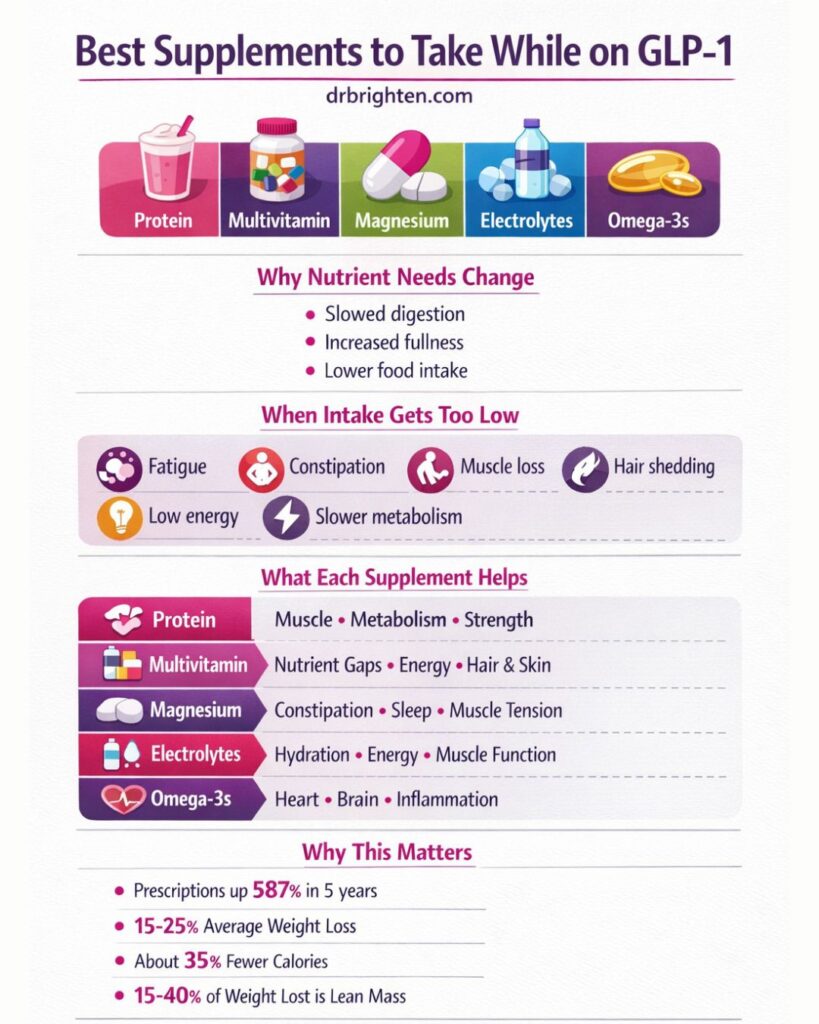
GLP-1 medications have changed the conversation around weight loss and metabolic health. Prescriptions for these drugs, called GLP-1 agonists, have increased by about 587%1 in the past five years.
For some, they feel like a breakthrough after years of struggling with blood sugar issues, metabolic dysfunction, or weight gain despite dieting and other approaches.
But the experience of using these medications isn’t always straightforward. Certain side effects are common when using GLP-1s, like fatigue, nausea, constipation, muscle loss, hair loss, or weakness. Others lose weight quickly but feel worse physically or even mentally.
Because GLP-1 drugs suppress appetite and slow digestion, they can also reduce nutrient intake and alter how nutrients are absorbed. That’s why choosing the right supplements to take while on GLP-1 can make a major difference in how you feel.
So, which supplements should you take while on GLP-1 medications to support your body properly?
Best supplements to take while on GLP-1:
- Protein
- Multivitamin
- Magnesium
- Electrolytes
- Omega-3s
In this article:
- Why Nutrient Needs Change on GLP-1 Medications
- What GLP-1 Medications Do In the Body (How They Work)
- Best Supplements to Take While on GLP-1
- Best Vitamins to Take While on GLP-1
- Do You Need a Multivitamin While Taking GLP-1?
- Key Takeaways: Best Supplements to Take While on GLP-1
- FAQ: Best Supplements and Nutrition Tips While Taking GLP-1
Why Nutrient Needs Change on GLP-1 Medications
GLP-1 medications can be incredibly effective for supporting weight loss and blood sugar balance, but they also change how you eat in ways that can affect your nutrition.
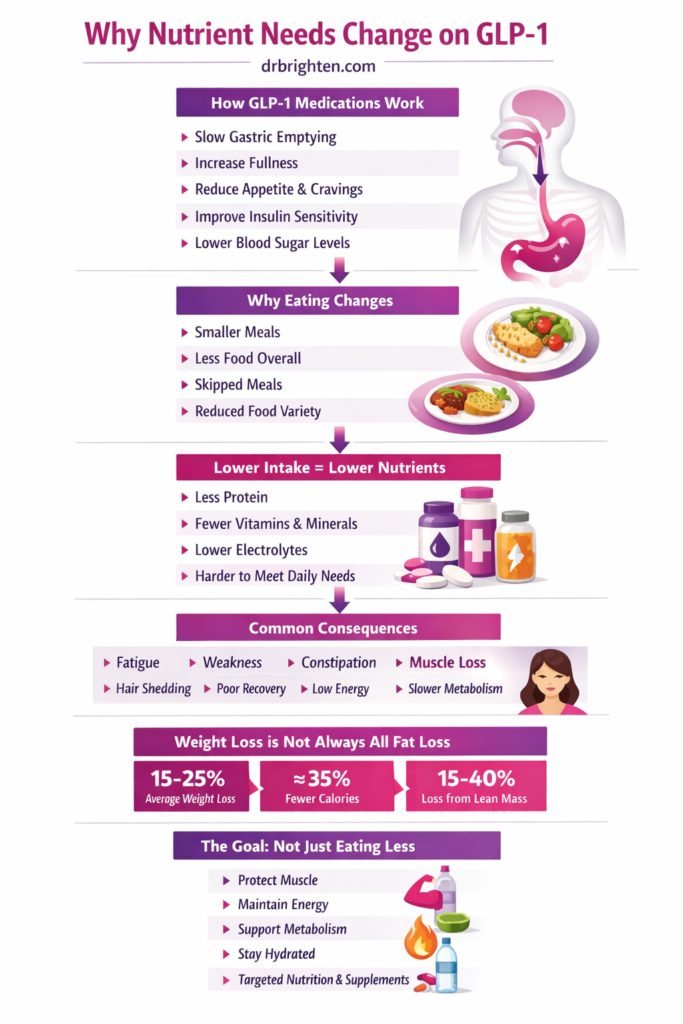
These medications work in part by slowing digestion, increasing fullness, and reducing appetite. That is a big reason they help with weight loss. But it also means many people eat less food overall, skip meals more often, or struggle to tolerate larger meals. When that happens, it becomes much easier to fall short on the protein, vitamins, minerals, and electrolytes your body needs to function well.
This is where problems can start.
When nutrient intake drops too low while on GLP-1, you may be more likely to experience:
- fatigue
- weakness
- constipation
- muscle loss
- hair shedding
- poor recovery
- low energy
- slower metabolism
For women, the stakes can be even higher. Women are already more vulnerable to issues like low iron, inadequate protein intake, and nutrient gaps that affect energy, hormones, hair, skin, and overall resilience. Add appetite suppression and rapid weight loss to the mix, and those gaps can become more noticeable.
Protein is one of the biggest concerns. If you are eating less but not prioritizing protein, your body may lose lean muscle along with body fat. That can affect strength, metabolic health, and how you feel day to day. Beyond protein, lower food intake can also make it harder to get enough B vitamins, vitamin D, magnesium, zinc, and other key nutrients that support energy production, muscle function, and recovery.
That does not mean GLP-1 medications are a problem. It means your nutrition strategy needs to be more intentional while taking them.
The goal is not just to eat less. The goal is to protect muscle, maintain energy, support metabolism, and give your body the nutrients it needs to stay strong during weight loss. That is why a targeted approach to protein, nutrient-dense foods, and the right supplements can make such a meaningful difference while on GLP-1.
What GLP-1 Medications Do In the Body (How They Work)
GLP-1 (which stands for glucagon-like peptide-1) is a hormone released by the intestines after eating. It's involved in regulating your appetite, blood sugar, and digestion.
All of us produce GLP-1, even when we don't take medications. GLP-1 medications mimic this natural hormone and make its effects much stronger, which helps to:
- Slow gastric emptying
- Increase feelings of fullness
- Reduce appetite and cravings, which lowers calorie intake
- Improve insulin sensitivity
- Lower blood sugar levels
Because people usually feel less hungry and eat fewer calories while taking GLP-1s, they typically lead to weight loss and improved metabolic health. In fact, GLP-1 medications produce some of the largest weight loss results2 seen with pharmaceutical treatments.
Average weight loss is usually 15–25% of someone's total body weight3 after about one year (compared with about 2–3% when taking a placebo). Real-world studies show an average weight loss of around 32 lbs., although results vary based on someone's body size.
However, the same mechanisms that reduce someone's appetite can also create nutritional challenges.
Because many people eat significantly less—such as 35% fewer total calories4 while taking these medications, according to recent research—it becomes especially important to prioritize a nutrient-dense diet in order to limit deficiencies and the side effects they can cause.
Some analyses estimate that 15–40% of weight lost on GLP-1 drugs may come from lean mass5, including muscle, rather than fat. This is why protein intake and resistance training are strongly recommended during treatment6.
Related: Ozempic, Weight Loss, and the Metabolic Truth No One Is Talking About with Ashley Koff
Best Supplements to Take While on GLP-1
Quick Comparison: Best Supplements to Take While on GLP-1
| Supplement | Why it helps on GLP-1 | Best for | Common caution |
| Protein | Protects muscle, supports metabolism, and helps maintain strength during weight loss | Low appetite, rapid weight loss, active women, midlife women, and anyone struggling to eat enough | Check with your clinician if you have kidney disease or have been told to limit protein |
| Multivitamin | Helps cover common nutrient gaps when calorie intake and food variety drop | Women wanting stronger daily nutrient support, especially for energy, hair, skin, and metabolism | Iron and some nutrients may not be right for everyone; medication timing can matter |
| Magnesium | Can help with constipation, sleep, muscle tension, and fatigue | Women with bowel changes, poor sleep, stress, or muscle cramps | Some forms can upset digestion; use caution with kidney disease |
| Electrolytes | Helps support hydration, energy, and muscle function when intake is low | Women feeling lightheaded, weak, depleted, or poorly hydrated | Not ideal for everyone with sodium or potassium restrictions |
| Omega-3s | Supports heart, brain, mood, and inflammation balance | Women who do not eat enough fish or want broader metabolic support | Use caution with blood thinners or bleeding concerns |
Here are some of the best GLP-1 supplements to consider taking regularly when using these medications:
1. Protein (Such as Protein Powder)
One of the most important things to focus on while using GLP-1 medications is protein intake, since protein helps build and maintain muscle mass (especially if you're active and doing resistance training, which you should be!). Because these drugs reduce appetite, many people eat less overall and accidentally fall short on protein. That can increase the risk of losing lean muscle along with body fat.
Adequate protein helps protect:
- Muscle mass
- Metabolic rate
- Bone density
- Energy levels
- Mental clarity and cognitive performance
What protein helps with on GLP-1
Getting enough protein helps support:
- Muscle maintenance
- Metabolic rate
- Strength and recovery
- Bone health
- Satiety
- Energy and cognitive function
This is especially important during weight loss, when your body needs enough protein to preserve lean tissue.
Who benefits most from extra protein support
Protein becomes even more important if you:
- are losing weight quickly
- are over 35
- are strength training
- are in perimenopause or menopause
- struggle to eat enough at meals
- feel weak, tired, or less recovered than usual
What to look for in a protein supplement
If full meals feel difficult, a protein powder or smoothie can be one of the easiest ways to stay consistent.
Look for a protein supplement that has:
- 20 to 30 grams of protein per serving
- a short, clean ingredient list
- minimal added sugar
- a form you tolerate well, such as whey isolate or a quality plant-based blend
- a texture and flavor you can realistically use often
The best protein powder is the one you will actually use consistently.
Common dosing considerations
A good starting point for many people is:
- 20 to 30 grams of protein per meal
- using a shake or smoothie to fill gaps when appetite is low
Many women do better focusing on consistency across the day rather than trying to overload one meal with protein.
Caution notes
If you have kidney disease or have been told to limit protein for medical reasons, check with your healthcare provider before increasing intake significantly.
Related:
How Much Protein Should Women Have
Daily Protein Intake for Women: Why You Don’t Need 200 Grams (And What to Do Instead)
Snacks With the Most Protein: What to Eat for a High-Protein Snack
2. Multivitamins
When calorie intake drops, vitamin intake often drops too. This makes a good quality multivitamin for GLP-1 users an important foundation for nutritional support. A good multivitamin helps cover common nutrient gaps that can happen when appetite is low, meals get smaller, or food variety drops.
What a multivitamin helps with on GLP-1
A well-formulated multivitamin can help support:
- Energy production
- Daily nutrient coverage
- Immune function
- Hair, skin, and nail health
- Metabolic health
- Overall resilience during weight loss
Who benefits most from a multivitamin
A multivitamin may be especially helpful if you:
- are eating less than usual
- skip meals because you are not hungry
- have low energy
- are concerned about hair shedding
- have a history of nutrient deficiencies
- are in midlife and want more intentional nutritional support
For women on GLP-1, a multivitamin is often one of the smartest places to start.
What to look for in the best multivitamin for women on GLP-1
Not all multivitamins are created equally. A basic one-a-day is not always enough.
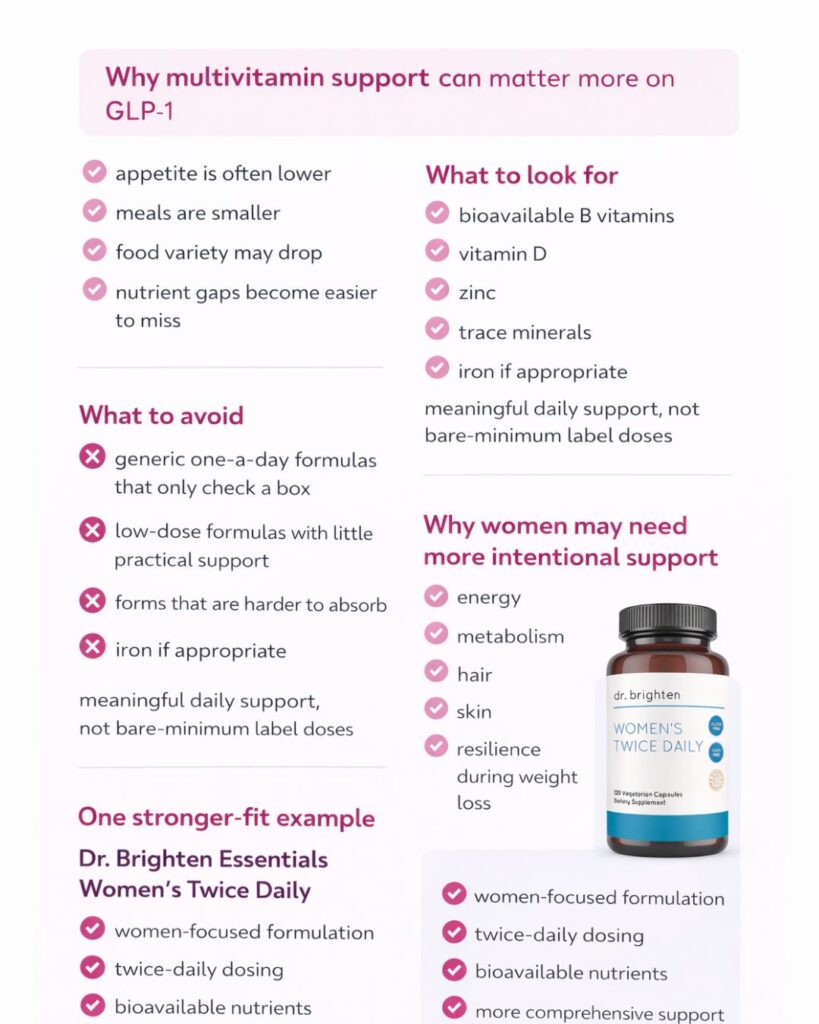
Look for a multivitamin that includes:
- Bioavailable B vitamins
- Vitamin D
- Zinc
- Trace minerals
- Iron if appropriate
- comprehensive daily support instead of bare-minimum label doses
Why Women’s Twice Daily is a stronger choice
If you’re looking for the best multivitamin for women on GLP-1, Women’s Twice Daily by Dr. Brighten Essentials stands out because it is designed with women’s nutritional needs in mind rather than using a generic formula.
It is a strong option for women on GLP-1 because it offers:
- more intentional daily nutrient support
- women-focused formulation
- twice-daily dosing
- bioavailable nutrients
- support for energy, metabolism, hair, skin, and overall wellness
For women who are eating less and want a more comprehensive multivitamin while on GLP-1, Women’s Twice Daily is a better fit than many standard multivitamins that do little more than provide a basic label claim.
Common dosing considerations
Take as directed on the label, ideally with food if tolerated. Some women find twice-daily dosing easier on digestion and more supportive than taking everything at once.
Caution notes
If you take thyroid medication, iron, or other prescription medications, timing may matter. If you have hemochromatosis, kidney disease, or another condition that affects nutrient metabolism, review your supplement plan with your clinician.
3. Magnesium
Magnesium is an overlooked GLP-1 nutrient, but it's important because it supports hundreds of metabolic reactions and can help with common side effects of GLP-1 medications, such as:
- Constipation
- Muscle cramps
- Fatigue
- Poor sleep
What magnesium helps with on GLP-1
Magnesium may help support:
- Bowel regularity
- Muscle relaxation
- Sleep quality
- Energy production
- Stress resilience
- Healthy metabolic function
Because magnesium is involved in hundreds of processes in the body, low intake can affect how you feel in more ways than people realize.
Who benefits most from magnesium
Magnesium may be especially helpful if you are experiencing:
- constipation
- muscle cramps
- poor sleep
- stress or tension
- fatigue
- headaches
What to look for in a magnesium supplement
The best form depends on your symptoms.
- Magnesium glycinate is often a better choice if you want support for relaxation, sleep, or muscle tension and want something gentler on the stomach.
- Magnesium citrate is often preferred if constipation is a main issue, since it can help draw water into the bowels.
Common dosing considerations
Start low and increase gradually based on tolerance. Many people prefer taking magnesium in the evening, especially glycinate, because it may feel more calming.
Caution notes
Magnesium can cause loose stools in some people, especially citrate. If you have kidney disease or take medications that may interact with magnesium, talk with your healthcare provider before using it regularly.The best form depends on your symptoms. Magnesium glycinate is often a better choice if you want support for relaxation, sleep, or muscle tension and want something gentler on the stomach. Magnesium citrate is often preferred if constipation is a main issue, since it can help draw water into the bowels. If you prefer a practitioner-formulated option, Magnesium Plus is one example of a glycinate-based magnesium approach.
4. Electrolytes
Electrolytes are often overlooked on GLP-1, but they can make a noticeable difference in how you feel. When appetite drops, food intake usually drops too, and that often means lower intake of sodium, potassium, and other minerals that help regulate hydration, nerve function, and muscle performance.
If you are also dealing with nausea, diarrhea, constipation, or just eating much less than usual, electrolyte support may become even more important.
Roughly 20–30% of users report dealing with digestive issues7 like diarrhea and constipation, which is why hydration, magnesium, and fiber intake often become important while using these medications.
Low electrolytes can also contribute to symptoms like:
- Fatigue
- Dizziness
- Headaches
- Muscle weakness
- Trouble exercising and recovering
Electrolyte supplements, such as low-sugar electrolyte drink mixes, can keep your energy up and help with muscle and nerve functions, along with digestion, while weight loss is occurring.
What electrolytes help with on GLP-1
Electrolytes help support:
- Hydration
- Energy
- Muscle function
- Exercise tolerance
- Nerve signaling
- Recovery
They can also help if low intake is contributing to symptoms like fatigue or dizziness.
Who benefits most from electrolyte support
Electrolytes may be especially helpful if you:
- feel dizzy or lightheaded
- have headaches
- feel weak or depleted
- exercise regularly
- sweat heavily
- are eating very little
- have GI symptoms that may affect hydration
What to look for in an electrolyte supplement
Look for:
- a balanced mineral profile
- lower sugar options
- ingredients you tolerate well
- a product you can use consistently
Many people do well with electrolyte powders or drink mixes that are easy to sip throughout the day.
Common dosing considerations
Use electrolyte support based on your symptoms, food intake, activity, and hydration needs. Some people use it daily while adjusting to GLP-1, while others use it more strategically during workouts, hot weather, or days when eating is especially low.
Caution notes
If you have high blood pressure, kidney disease, heart disease, or have been told to limit sodium or potassium, talk to your healthcare provider before using electrolyte supplements regularly.
5. Omega-3 Fatty Acids
Omega-3 fatty acid can be a valuable addition to a GLP-1 supplement routine because they support overall metabolic health while also helping with areas many women care about during weight loss, including inflammation balance, cardiovascular health, and brain function.
They can also help preserve muscle and improve insulin sensitivity. Additionally, they're important for brain health and long-term mood and cognitive support.
What omega-3s help with on GLP-1
Omega-3 fatty acids may help support:
- Cardiovascular health
- Inflammation balance
- Brain and cognitive health
- Mood support
- Insulin sensitivity
- Muscle preservation
For women who are not eating fatty fish regularly, omega-3 supplementation can help fill an important gap.
Who benefits most from omega-3s
Omega-3s may be especially useful if you:
- do not eat fish regularly
- want broader metabolic and heart support
- are focused on healthy aging
- want support for brain health and mood
- are trying to maintain muscle while losing weight
What to look for in an omega-3 supplement
Look for an omega-3 supplement that provides:
- meaningful amounts of EPA and DHA
- a quality source
- freshness and purity standards
- a form you can tolerate without digestive discomfort
Common dosing considerations
Take as directed on the label, ideally with food if tolerated. Some people find omega-3s easier to take with a meal to reduce the chance of burping or GI discomfort.
Caution notes
If you take blood thinners, have a bleeding disorder, or are preparing for surgery, talk with your healthcare provider before taking omega-3 supplements.For women who want a practitioner-formulated omega-3 with a more intentional quality standard, Omega Plus is one option that fits this category.
Best Vitamins to Take While on GLP-1
Taking a GLP-1 medication can make it harder to meet your nutrient needs consistently, especially when appetite is low and meals get smaller. That’s why many women benefit from being intentional about the vitamins and minerals they take while on GLP-1.
The best vitamins to take while on GLP-1 are the ones that help fill common nutrition gaps, support energy production, and protect lean muscle and metabolic health while weight loss is happening.
Key nutrients to prioritize often include:
- B vitamins for energy metabolism and nervous system support
- Vitamin D for immune health, bone health, and hormone support
- Magnesium for muscle function, bowel regularity, sleep, and stress support
- Zinc for immune function, skin health, and hair support
- Iron when needed, especially for women vulnerable to low iron stores
- Trace minerals to help support hydration, metabolism, and overall resilience
Because GLP-1 medications reduce appetite, many people are not just eating less food. They are also eating less variety. Over time, that can mean lower intake of the vitamins and minerals your body needs to maintain energy, strength, and recovery.
For women, this matters even more. Rapid weight loss, under-eating, and inconsistent protein intake can increase the likelihood of fatigue, hair shedding, weakness, and nutrient depletion. A well-formulated daily multivitamin can help cover those gaps and create a stronger nutritional foundation.
If you’re looking for the best vitamins to take while on GLP-1, start with a comprehensive multivitamin designed for women’s needs rather than piecing together multiple basic supplements.
Related: Is There a Natural Ozempic?
Do You Need a Multivitamin While Taking GLP-1?
A multivitamin is not mandatory for every person on GLP-1, but for many women, it is one of the smartest and simplest ways to support nutrition while appetite is reduced.
When you’re eating less, it becomes much easier to miss key nutrients without realizing it. Even women who are trying to eat well may fall short on B vitamins, vitamin D, zinc, magnesium, and other micronutrients when portions shrink and food intake becomes inconsistent.
That’s where a multivitamin can help.
A high-quality multivitamin for GLP-1 support should do more than check a box. It should deliver meaningful amounts of the nutrients women are most likely to need, in forms the body can actually use.
Why Women’s Twice Daily stands out
Women’s Twice Daily by Dr. Brighten Essentials is an especially strong choice for women taking GLP-1 because it is designed to support women’s nutritional needs more comprehensively than a basic one-a-day formula.
What makes it a better choice:
- Comprehensive coverage for foundational daily nutrient support
- Women-focused formulation instead of a generic multivitamin approach
- Twice-daily dosing, which can support better absorption and gentler tolerance for some women
- Bioavailable nutrients, which matter when digestion and intake are already compromised
- Support for energy, metabolism, hair, skin, immune health, and overall resilience
For women on GLP-1, that combination matters. You do not just want a multivitamin that looks good on a label. You want one that helps support how you actually feel day to day while navigating lower appetite, changing food intake, and the physical demands of weight loss.
Best multivitamin for women on GLP-1
If you’re asking what the best multivitamin for women on GLP-1 is, the answer should be based on quality, formulation, and relevance to women’s needs.
A better multivitamin should include:
- bioavailable B vitamins
- vitamin D
- zinc
- trace minerals
- nutrients that support energy, metabolism, and daily resilience
That’s why Women’s Twice Daily by Dr. Brighten Essentials is a standout option and one of the best multivitamins for women on GLP-1. It is a more intentional choice for women who want better nutritional support during GLP-1 treatment, not just a generic formula with a marketing label.
Key Takeaways: Best Supplements to Take While on GLP-1
GLP-1 medications can be powerful tools for supporting weight loss and overall health, if done right. But because they reduce appetite and slow digestion, they can also increase the risk of nutrient deficiencies and muscle loss, which come along with a number of side effects.
Focusing on high-protein foods for GLP-1 users, along with targeted supplements to take while on GLP-1, can help protect lean muscle and support overall metabolic health.
Remember, the goal isn’t simply losing weight, but supporting your body so that metabolic health improves along the way. To recap, helpful strategies for anyone on GLP-1s include:
- Eating protein at every meal
- Using protein powders or shakes if appetite is low
- Strength training several times per week
- Taking a high-quality multivitamin for GLP-1 support
- Ensuring adequate intake of magnesium and other key nutrients like B vitamins, electrolytes, and omega-3 fatty acids
FAQ: Best Supplements and Nutrition Tips While Taking GLP-1
The most important supplements to take while on GLP-1 medications are those that help support muscle, nutrient intake, and metabolic health.
Many clinicians recommend prioritizing protein and protein supplements, a high-quality multivitamin, magnesium, electrolytes, and omega-3 fatty acids. These nutrients help prevent common issues such as fatigue, muscle loss, and nutrient deficiencies that can occur when appetite is suppressed.
The best vitamins to take while on GLP-1 medications typically include a comprehensive multivitamin, magnesium, B vitamins, and vitamin D.
Because GLP-1 medications cause people to eat less overall, they consume fewer micronutrients. A well-formulated multivitamin for GLP-1 users can help fill nutritional gaps while supporting energy, immune health, and metabolism.
Not everyone needs a multivitamin, but many women benefit from one while taking GLP-1. Because these medications often reduce food intake, it becomes easier to fall short on key nutrients. A quality multivitamin can help fill common gaps and support energy, recovery, and metabolic health.
The best multivitamin for women on GLP-1 is one that is comprehensive, well-formulated, and designed for women’s actual nutrient needs. Women’s Twice Daily by Dr. Brighten Essentials is a standout choice because it provides more intentional daily support than a generic one-a-day formula and is designed to support energy, metabolism, and overall wellness.
A practical goal for many people is around 20 to 30 grams of protein per meal, though total needs vary based on body size, age, and activity level. Protein is especially important on GLP-1 because it helps protect lean muscle during weight loss.
Some of the best high-protein foods for GLP-1 users include eggs, fish, poultry, Greek yogurt, cottage cheese, lean beef, tofu, and protein powders. These foods provide essential amino acids that help maintain muscle mass and support metabolism and cognitive function while appetite is reduced.
Magnesium can be a helpful supplement while taking GLP-1, especially for people dealing with constipation, poor sleep, muscle tension, or fatigue. The best form depends on your needs, with glycinate often preferred for relaxation and citrate commonly used for bowel support.
GLP-1 medications do not directly cause vitamin deficiencies in everyone, but they can make them more likely over time by lowering appetite and reducing overall food intake. That is why nutrient-dense meals and targeted supplementation can be helpful.
References
- https://diabetes.org/newsroom/press-releases/new-glp-1-therapies-enhance-quality-weight-loss-improving-muscle-0 ↩︎
- https://pmc.ncbi.nlm.nih.gov/articles/PMC9272494/ ↩︎
- https://pmc.ncbi.nlm.nih.gov/articles/PMC11940170/ ↩︎
- https://www.sciencedirect.com/science/article/pii/S2667368124000238 ↩︎
- https://diabetes.org/newsroom/press-releases/new-glp-1-therapies-enhance-quality-weight-loss-improving-muscle-0 ↩︎
- https://advances.massgeneral.org/endocrinology/article.aspx ↩︎
- https://pmc.ncbi.nlm.nih.gov/articles/PMC12532569/ ↩︎
About The Author