

Getting enough restorative sleep requires more than a certain number of hours spent in bed. To fall asleep easily, stay asleep through the night, and wake feeling refreshed, multiple systems throughout the body need to work together, including your neurotransmitters, hormones, circadian rhythm, and nervous system.
When even one of these systems becomes disrupted, your sleep quality can suffer. You might find it harder to fall asleep, wake up frequently during the night, or struggle to reach the deeper stages of sleep that support recovery, focus, and memory.
While melatonin is one of the most popular natural sleeping aids for insomnia, it’s not the only option, nor the only compound that’s involved in healthy sleep. More experts are now recommending apigenin, a plant compound that appears to support relaxation and sleep through some of the brain’s most important calming pathways.
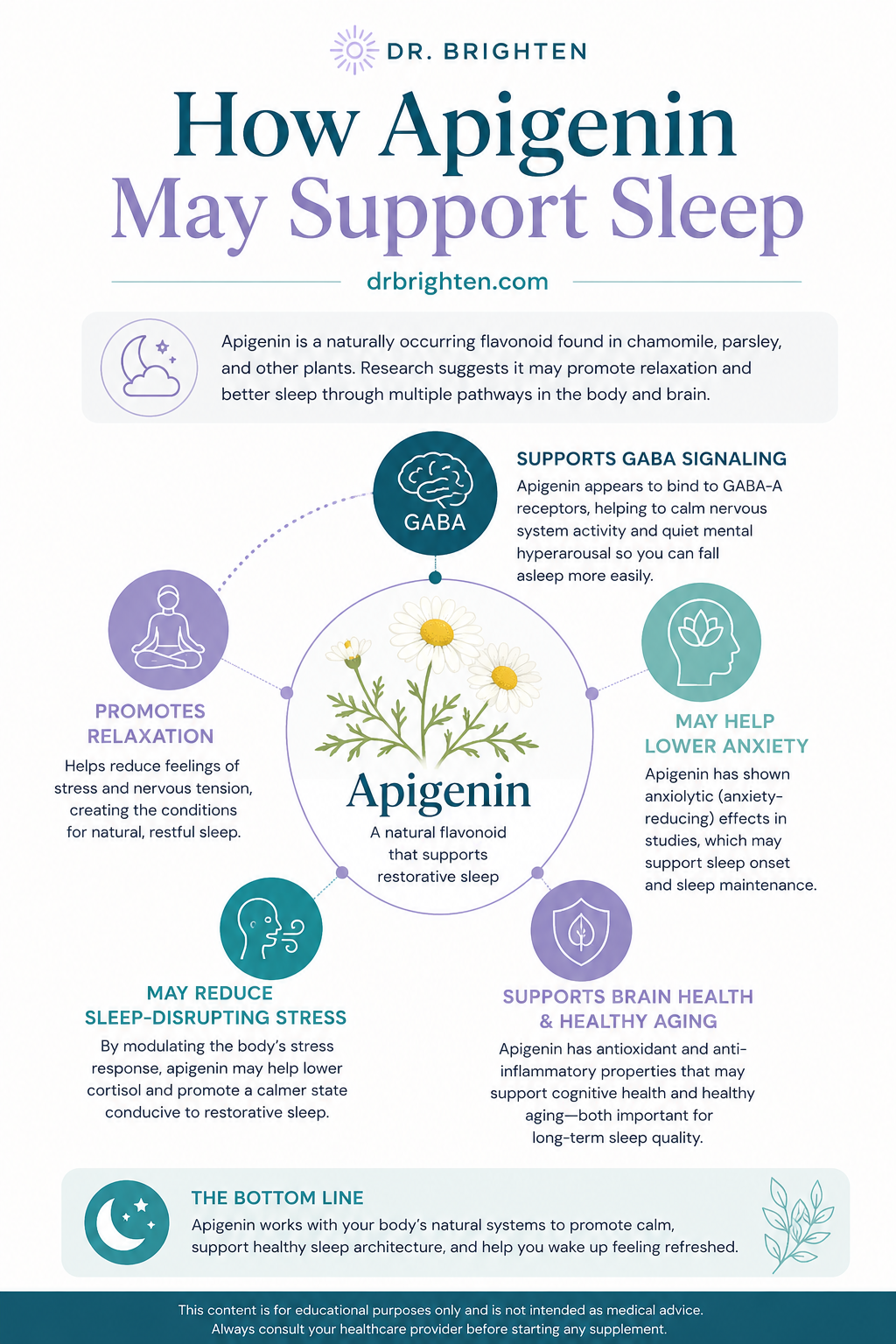
Apigenin is a naturally occurring flavonoid found in chamomile, parsley, celery, and other plant foods that’s known for its ability to interact with GABA pathways, which can help regulate nervous system activity and prepare you for sleep.
Although research is still evolving, studies suggest apigenin can promote relaxation, support sleep quality, and contribute to healthy sleep architecture without acting as a traditional sedative.
You're in ✦
Check your inbox. Day one is on its way.
Your ADHD Hormone & Brain Sync Guide is heading to your inbox now — look for it from Dr. Brighten in the next few minutes.
New Book · Out October 6, 2026
The full system behind the guide
These five days are the doorway. ADHD and Women is the whole map — the ADHD-Hormone Profile and what to do across every hormonal transition.
Pre-Order ADHD and WomenQuick Answer
Apigenin may help support sleep by promoting relaxation through GABA-related pathways, but human research on isolated apigenin for insomnia is limited. Most evidence comes from chamomile studies, animal research, and mechanistic data. Typical supplement doses range from 25–50 mg taken 30–60 minutes before bed. People who are pregnant, breastfeeding, taking sedatives, anti-anxiety medications, blood thinners, or other prescription medications should consult a healthcare provider first.
What Is Apigenin?
Apigenin is a naturally occurring flavonoid, a class of plant compounds known for their antioxidant and anti-inflammatory properties. It’s found in foods including:
- Chamomile flowers
- Parsley
- Celery
- Oregano
- Thyme
- Some fruits and vegetables
Most people encounter apigenin through chamomile tea, which has been used for centuries to promote relaxation and sleep. Today, it’s also available as concentrated apigenin supplements, which are mostly marketed as aids for sleep and nighttime relaxation.
What makes apigenin particularly compelling is its interaction with the brain’s GABA-A receptor system[1].
Research suggests that apigenin binds to the benzodiazepine site of these receptors, which may account for its calming and sleep-promoting properties. And importantly, unlike prescription sedatives, apigenin seems to modulate these pathways much more gently, similarly to herbs like passionflower or adaptogenic herbs.
Related: 10 Best Sleep Supplements Besides Melatonin
How Apigenin May Support Sleep?
To understand how apigenin helps with sleep, it helps to first understand GABA.
GABA (gamma-aminobutyric acid) is the brain’s primary inhibitory neurotransmitter. It acts like a “braking system” for the nervous system, helping to quiet mental activity and prepare the mind and body for rest.
People who have impaired GABA signaling tend to experience symptoms like:
- Racing thoughts
- Difficulty falling asleep
- Increased anxiety
- Frequent nighttime awakenings
Because apigenin appears to interact with GABA-related pathways, it may help some people feel calmer before bed, especially when sleep difficulty is related to stress or mental hyperarousal.
But that’s not all that it does. Rather than acting as a traditional sedative, it appears to influence several biological systems[2] involved in relaxation, stress resilience, inflammation, neurotransmitter activity, and healthy sleep architecture.
Here’s a closer look at the mechanisms involved:
Apigenin and GABA
Apigenin seems capable of binding to GABA-A receptors and promoting a calming effect on the nervous system, including by reducing mental hyperarousal, which is one of the most common drivers of insomnia.
Researchers have observed reductions in locomotor activity and mild sedative effects[3] in animals being given apigen. Beyond these immediate effects, apigenin has also been shown to improve learning, memory, and markers of brain health in animal models of aging and neurodegeneration.
Related: Which Hormones Affect Sleep? The Hormone-Sleep Connection Explained
Can Help Lower Anxiety
Chamomile extract is one of the richest natural sources of apigenin, and in studies, chamomile has been associated with improvements in sleep quality, daytime functioning, anxiety symptoms, mood, and overall well-being.
For example, clinical trials[4] have found that chamomile may help reduce anxiety in people with generalized anxiety disorder, improve mood in those with depression, and support better sleep quality in postpartum women.
Related: Anxiety and Supplements: What Really Works for Stress, Mood, and Sleep
Promotes Relaxation
Several studies focused on chamomile’s effects have found evidence that apigenin-containing extracts may help improve subjective sleep quality and daytime functioning, particularly in people experiencing mild sleep difficulties.
Related: 12 Ways to Reduce Anxiety Before your Period
May Help Reduce Sleep-Disrupting Stress
The latest research suggests apigenin can have anxiolytic (anxiety-reducing) effects[5], which could indirectly support sleep onset and sleep maintenance.
Related:
Cortisol Face: Causes, Symptoms & How to Fix Stress Puffiness Fast
Can Stress Cause a Hormone Imbalance
How Women Can Reduce Holiday Stress and Burnout
Can Also Support Brain Function and Healthy Aging
Beyond its role in sleep, apigenin has been linked to healthy aging and improved cognitive function[6]. Studies[7] show apigenin can help:
- Reduce oxidative stress, which has been linked to sleep deprivation and cognitive decline
- Lower stress hormones such as corticosterone
- Increase levels of brain-derived neurotrophic factor (BDNF), a protein involved in learning, memory, and healthy sleep regulation
- Support serotonin signaling, which plays a role in mood and sleep
- Reduce inflammatory compounds that can interfere with restorative sleep
- Increase NAD+ levels
Apignein’s effects on NAD+ are especially interesting, as it’s been shown to inhibit an enzyme called CD38, one of the body’s major consumers of NAD+, a molecule involved in cellular energy production, metabolism, DNA repair, and healthy aging.
Because NAD+ levels naturally decline with age, compounds that help preserve NAD+ have become a major area of longevity research.
Related:
Menopause Fatigue Solved: Proven Ways to Reclaim Energy, Focus, and Vitality
Does Apigenin Increase REM Sleep Naturally?
At this time, there is not enough research to conclude that apigenin specifically increases REM sleep. Most available studies have evaluated:
- Sleep quality
- Sleep latency (how long it takes to fall asleep)
- Daytime functioning
- Subjective sleep improvements
While animal studies suggest apigenin may influence sleep architecture, human data on REM sleep remains limited.
For natural, medication-free ways to support REM sleep, focus on fine-tuning factors such as sleep duration, stress management, circadian rhythm alignment, alcohol reduction, and addressing potential sleep disorders.
Related: How to Sleep Better by Fixing Blood Sugar and Sleep Disruptors
Apigenin vs Melatonin: What’s the Difference?
Although both apigenin and melatonin are commonly used to support sleep, they work in very different ways.
Melatonin is a hormone naturally produced by the pineal gland that helps regulate your circadian rhythm—your body’s internal clock that determines when you feel sleepy and awake. Melatonin supplements may be particularly helpful for jet lag, shift work, delayed sleep phase syndrome, or situations where your sleep schedule has been disrupted.
Apigenin, on the other hand, is a plant flavonoid that appears to promote relaxation by interacting with GABA-related pathways in the brain. Rather than signaling that it’s time to sleep, apigenin may help quiet mental overactivity and reduce stress that can make it difficult to fall asleep.
In other words:
- Melatonin helps regulate when you sleep.
- Apigenin may help you relax enough to sleep.
One isn’t necessarily better than the other. The right choice depends on what’s causing your sleep difficulties. If your insomnia is driven by stress, anxiety, or racing thoughts, apigenin may be more appropriate. If your sleep schedule is out of sync due to travel or circadian rhythm disruption, melatonin may be a better option.
Some sleep supplements combine melatonin and apigenin because they support sleep through different biological pathways. However, because both can contribute to drowsiness, it’s best to speak with your healthcare provider before combining supplements, particularly if you take prescription medications.
Apigenin vs Magnesium for Sleep
Apigenin and magnesium are often discussed together because they both support relaxation, but they do so through different mechanisms.
Magnesium is an essential mineral involved in hundreds of biochemical reactions throughout the body, including nerve signaling, muscle relaxation, stress regulation, and healthy sleep. Low magnesium status has been associated with poorer sleep quality in some people, although supplementation appears to be most beneficial when a deficiency or increased need is present.
Apigenin is not a mineral but a naturally occurring flavonoid. Rather than replenishing a nutrient deficiency, it appears to influence GABA-related pathways that help calm the nervous system.
Here’s how they compare:
| Apigenin | Magnesium |
|---|---|
| Plant flavonoid | Essential mineral |
| Supports relaxation through GABA-related signaling | Supports muscle, nerve, and nervous system function |
| May be helpful for stress-related sleep difficulties | May support sleep, especially if magnesium intake is inadequate |
| Human evidence is still emerging | Supported by a larger body of research, although results vary depending on the population studied |
Because they work differently, they’re often included together in nighttime supplement formulations. Rather than thinking of them as competing ingredients, it’s more accurate to view them as complementary approaches to supporting healthy sleep.
Can You Take Apigenin and Magnesium Together?
Yes, many people take apigenin and magnesium together because they support relaxation through different biological pathways.
Apigenin appears to promote calm by interacting with GABA-related signaling in the brain, while magnesium supports healthy nerve and muscle function and plays an important role in the body’s stress response.
Although there is limited research specifically evaluating the combination, the ingredients are frequently paired in commercially available sleep supplements.
If you decide to combine apigenin with magnesium:
- Follow the recommended serving sizes for each supplement.
- Introduce one supplement at a time so you can monitor how your body responds.
- Avoid combining multiple sleep-promoting supplements without discussing them with your healthcare provider, particularly if you take prescription medications or have an underlying medical condition.
Apigenin vs Chamomile Tea
Chamomile tea has been used for centuries as a bedtime beverage, largely because it naturally contains apigenin along with dozens of other beneficial plant compounds.
However, the amount of apigenin found in a cup of chamomile tea is much lower than what’s found in most dietary supplements. The exact amount also varies depending on the species of chamomile, how it’s grown, and how long it’s steeped.
This means the two options serve slightly different purposes.
Chamomile tea may be a good choice if you:
- Enjoy a relaxing bedtime ritual
- Prefer obtaining beneficial compounds from foods and herbs
- Have only occasional difficulty winding down at night
An apigenin supplement may be worth considering if you:
- Want a more consistent amount of apigenin
- Are looking for a concentrated source
- Have discussed supplementation with your healthcare provider
It’s also worth remembering that many of the human studies on sleep have evaluated chamomile extract rather than isolated apigenin. This means we cannot assume all of chamomile’s benefits are due to apigenin alone.
Can You Take Apigenin Every Night?
There is currently no research demonstrating that healthy adults cannot take apigenin nightly, but long-term studies of isolated apigenin supplementation are still limited.
If you choose to use apigenin regularly, it should be viewed as one part of a comprehensive approach to improving sleep rather than a long-term substitute for identifying why you’re having difficulty sleeping.
If you find that you need apigenin—or any sleep supplement—every night for several weeks or months, it’s worth discussing your symptoms with a healthcare provider. Chronic sleep problems may be caused by conditions such as obstructive sleep apnea, restless legs syndrome, anxiety disorders, chronic pain, medication side effects, perimenopause, or other medical conditions that require treatment.
Supporting your circadian rhythm, managing stress, optimizing light exposure, addressing hormonal changes, and maintaining healthy sleep habits are all foundational strategies that can improve sleep quality whether or not you choose to use supplements.
Who Is Apigenin Best For?
Apigenin is thought to be most helpful for those who experience:
- Difficulty winding down at night
- Stress-related sleep disturbances
- Mild insomnia symptoms
- Occasional nighttime restlessness
- Sleep difficulties associated with anxiety or mental overactivity
On the other hand, it may be less effective for sleep problems driven by:
- Obstructive sleep apnea
- Restless legs syndrome
- Circadian rhythm disorders
- Significant hormonal imbalances
- Chronic severe insomnia
Related:
Why Can’t I Sleep? The Real Reasons for Perimenopause Sleep Issues (and What Actually Helps)
Perimenopause Sleep Hormones: Cynthia Thurlow on Why Rest Changes First
Perimenopause Anxiety Disorder: Can Unbalanced Hormones Like Progesterone Cause Anxiety?
Apigenin Dose for Sleep
There is currently no universally established therapeutic dose of apigenin for sleep. Most supplemental protocols use approximately:
- 25–50 mg daily
- Occasionally, up to 100 mg, although it’s best to start with a lower dosage and increase if needed
- Apigenin is also sometimes used with other sleep supplements[8] or aids, such as magnesium, for example
Human sleep research is still limited, and much of the evidence comes from studies using chamomile extracts that naturally contain apigenin rather than isolated apigenin itself.
When to Take Apigenin for Sleep:
Most people who use apigenin for sleep take it about 30 to 60 minutes before bedtime.
This timing aligns with its calming effects on the nervous system, although it seems most important to take it consistently each day if chronic stress and hyperarousal are impeding sleep, rather than at an exact time.
Related:
Magnesium for Sleep: Complete Guide to Best Forms and Dosage
What Your Chronotype Reveals About Your Hormones, Sleep, and Energy with Dr. Elisa Sacal
Is Apigenin Safe?
For most healthy adults, apigenin appears to be well tolerated when used appropriately. However, because apigenin may influence calming neurotransmitter pathways, sleep-wake signaling, inflammation, and medication metabolism, it is not appropriate for everyone.
Current reviews describe apigenin as generally well tolerated, although long-term human safety data remains limited.
You should speak with your healthcare provider before taking apigenin if you:
- Take benzodiazepines, Z-drugs, prescription sleep medications, sedatives, muscle relaxers, or anti-anxiety medications
- Use alcohol, cannabis, or other substances near bedtime that may increase sedation or impair coordination
- Take antidepressants such as SSRIs or SNRIs, antipsychotics, anticonvulsants, or medications that affect the nervous system
- Take blood thinners or antiplatelet medications, including warfarin, apixaban, rivaroxaban, clopidogrel, or daily aspirin
- Have liver disease, impaired liver function, or take multiple medications that require medical monitoring
- Are preparing for surgery or a medical procedure, since supplements may affect bleeding risk, anesthesia, or sedation
- Are pregnant, trying to conceive, or breastfeeding
Do not combine apigenin with prescription sleep medications, sedatives, alcohol, or anti-anxiety medications unless your healthcare provider confirms it is appropriate.
Because long-term human safety data on isolated apigenin supplements is still limited, it is best to start with the lowest effective dose, avoid combining it with multiple sleep-promoting substances, and discontinue use if you experience excessive drowsiness, dizziness, mood changes, unusual dreams, or worsening sleep.
Potential Side Effects of Apigenin
As with any supplement, individual responses to apigenin vary. Reported side effects are generally mild and may include:
- Digestive upset
- Mild daytime drowsiness
- Headache
- Dizziness
Who Should Avoid Apigenin?
Because apigenin can influence GABA, combining it with certain medications, such as those taken for anxiety or depression, might increase sedation.
Speak with your healthcare provider before using apigenin if you:
- Take sedative medications
- Use anti-anxiety medications
- Take blood thinners
- Have a chronic medical condition requiring medication management
- Are pregnant or breastfeeding
Can Apigenin Cause Insomnia?
Ironically, some worry whether apigenin can cause insomnia. This is not considered a common side effect; however, in some cases, people can potentially experience:
- Increased alertness
- Vivid dreams
- Unexpected sleep disruption
These effects are thought to be uncommon, but it’s still important to pay attention to your individual response rather than assuming every sleep supplement works the same way for everyone.
The Takeaway: Is Apigenin Worth Trying for Sleep?
Apigenin is an intriguing plant compound with a growing body of research supporting its role in relaxation and sleep support.
Unlike saffron or creatine, the evidence for apigenin is still relatively limited in humans. The strongest evidence is for its calming effects and improved subjective sleep quality, but not necessarily for clinically diagnosed insomnia or REM sleep enhancement.
Because apigenin can help calm the nervous system through interactions with GABA, it makes it particularly relevant for those with sleep difficulties that are driven by stress, anxiety, or difficulty winding down at night.
That said, set realistic expectations and keep in mind that apigenin is not a cure for insomnia, nor is it a substitute for addressing underlying sleep disorders, circadian rhythm disruption, stress physiology, or hormonal contributors to poor sleep.
Think of apigenin as one helpful tool for supporting more restful nights and better overall sleep quality.
FAQs: Apigenin for Sleep
Apigenin is a naturally occurring flavonoid found in chamomile, parsley, celery, oregano, and other plants. It has antioxidant, anti-inflammatory, and calming properties and is best known for its potential ability to support relaxation and healthy sleep.
Apigenin appears to support sleep by interacting with GABA signaling pathways in the brain, and it may influence stress, inflammation, and other pathways involved in sleep quality.
There is no single best natural sleeping aid for insomnia because sleep problems can have many different causes. Apigenin may be most helpful for people whose sleep difficulties are related to stress, anxiety, or difficulty winding down at night.
At this time, there is not enough human research to determine whether apigenin specifically increases REM sleep. Most studies have focused on overall sleep quality, relaxation, and sleep onset rather than individual sleep stages.
Most apigenin supplements provide between 25 and 50 mg per serving, although some products contain higher amounts.
Because there is currently no established therapeutic dose for sleep, it’s best to follow product directions and consult your healthcare provider if you have questions about what is appropriate for you.
Most people use between 25 and 50 mg of apigenin before bed, sometimes with other calming supplements such as magnesium.
Apigenin is typically taken 30 to 60 minutes before bedtime. This allows time for its calming effects to support relaxation and sleep onset.
For most healthy adults, apigenin appears to be well tolerated when used appropriately. Anyone who is pregnant, breastfeeding, taking medications, or managing a chronic health condition should speak with their healthcare provider before using apigenin supplements.
Many sleep supplements combine apigenin and melatonin because they work through different mechanisms. Melatonin helps regulate circadian rhythm, while apigenin primarily supports relaxation through GABA-related pathways.
Chamomile tea naturally contains apigenin, but in much smaller amounts than a concentrated supplement. An apigenin supplement may provide a more consistent dose, while chamomile tea offers additional plant compounds that may also contribute to relaxation and sleep support.
Apigenin may be most helpful for people who experience:
– Difficulty relaxing before bed
– Stress-related sleep disturbances
– Racing thoughts at night
– Mild insomnia symptoms
– Occasional nighttime restlessness
– Anxiety-related sleep challenges
Because sleep problems often have multiple causes, apigenin is generally most effective as part of a broader sleep-supportive routine that includes good sleep hygiene, stress management, and addressing underlying health concerns.