

If your ADHD medication feels weaker, your emotions feel harder to regulate, or your focus disappears in the week before your period, it may not be a lack of discipline. Hormonal changes—especially the drop in estrogen after ovulation—can affect dopamine and norepinephrine pathways involved in ADHD.
Among women with ADHD, symptom severity is not static across the menstrual cycle. Instead, it is influenced by predictable fluctuations in ovarian hormones, particularly estrogen, which has a direct role in modulating dopamine and norepinephrine signaling in the brain.
These shifts can alter executive functioning, stress tolerance, and even your response to stimulant medications.
This article examines the underlying neurobiology of hormonal ADHD fluctuations, including how estrogen regulates neurotransmitter systems, why symptoms often intensify during the luteal phase (the two weeks before your period), and how these changes intersect with premenstrual exacerbation (PME).
It also outlines evidence-informed strategies to help manage symptoms within the context of standard ADHD care, including cycle tracking, nutritional co-factors, and collaborative medical approaches.
In this article, we’ll explore:
- The neuroendocrine connection between ADHD and premenstrual symptom exacerbation
- How estrogen regulates dopamine, norepinephrine, and executive function in the brain
- Why ADHD symptoms often intensify during the luteal phase of the menstrual cycle
- The role of declining estrogen in altering neurotransmitter availability and receptor sensitivity
- How these hormonal shifts influence the clinical response to stimulant medications
- Evidence-based strategies to anticipate and manage cyclical ADHD symptom changes
- When to consider cycle-informed care in collaboration with your healthcare provider
You're in ✦
Check your inbox. Day one is on its way.
Your ADHD Hormone & Brain Sync Guide is heading to your inbox now — look for it from Dr. Brighten in the next few minutes.
New Book · Out October 6, 2026
The full system behind the guide
These five days are the doorway. ADHD and Women is the whole map — the ADHD-Hormone Profile and what to do across every hormonal transition.
Pre-Order ADHD and WomenWhy ADHD Symptoms Get Worse Before Your Period
The most recent research, including a review in the Journal of Clinical Medicine[1], shows that ADHD symptoms in women can fluctuate significantly across the menstrual cycle[2], with symptom severity closely tied to hormonal changes.
Many women with ADHD report a predictable pattern: cognitive function feels more stable and manageable for part of the month, followed by a distinct period where attention, motivation, and emotional regulation become significantly harder to maintain.
This typically occurs during the late luteal phase (the days leading up to the start of menstruation).
Clinically, this phenomenon is described as Premenstrual Exacerbation[3] (PME). PME refers to the cyclical worsening of an existing psychiatric or neurological condition in response to hormonal fluctuations.
Unlike premenstrual syndromes that introduce new symptoms, PME amplifies vulnerabilities[4] that already exist. In ADHD, this means core features such as inattention, impulsivity, and executive dysfunction can become more pronounced prior to someone’s period starting.
Those with PME often describe this phase as:
- A reduction in task initiation capacity despite intention.
- Increased cognitive processing lag when organizing or completing tasks.
- Greater difficulty regulating emotional responses[5] to stressors.
- A diminished or inconsistent response to stimulant medications.
From a clinical perspective, these changes are not simply inconsistencies in behavior or effort. They reflect real shifts in brain chemistry[6], specifically how neurotransmitters function and how responsive their receptors are at different points in the cycle.
It’s also important to understand that PME can overlap with conditions like Premenstrual Dysphoric Disorder[7] (PMDD), which involves an increased sensitivity to normal hormonal changes. Research has found that women with ADHD have significantly higher rates of PMDD compared to the general population, suggesting a shared vulnerability related to hormone-sensitive brain pathways.
Additionally, hormonal changes throughout the cycle can exacerbate symptoms associated with other psychotic disorders[8], such as panic disorder, eating disorders, depression, and borderline personality disorder.
When both are present, it’s common for mood symptoms and cognitive challenges to intensify at the same time, making daily tasks, focus, and emotional regulation feel significantly more difficult.
Even though many women experience this pattern, menstrual cycle influences are not always accounted for in standard ADHD evaluation or treatment plans. As a result, many patients are left without a clear explanation for why their symptoms seem to change so predictably throughout the month.
Related:
ADHD and PMDD Hormone Connection
ADHD, PMS, PMDD, and PME: What’s the Difference?
If your ADHD symptoms seem to spiral before your period, it can be difficult to know what’s actually happening. Is it PMS? PMDD? Your ADHD? Or something else entirely?
The answer is that several conditions can overlap during the menstrual cycle, and understanding the differences can help you identify what you’re experiencing and discuss it more effectively with your healthcare provider.
PMS (Premenstrual Syndrome)
Premenstrual syndrome, or PMS, refers to a group of physical and emotional symptoms that occur in the days or weeks before menstruation and improve once a period begins.
Common PMS symptoms include:
- Bloating
- Breast tenderness
- Fatigue
- Food cravings
- Irritability
- Mild mood changes
- Headaches
While PMS can be uncomfortable, symptoms are typically mild to moderate and do not usually cause significant disruption to daily functioning.
For someone with ADHD, PMS may make existing challenges feel more noticeable, but PMS itself is not considered a mental health condition.
Related: ADHD in Women: How Your Periods, Progesterone, PMS, and PMDD Can Change Your Brain Every Month
PMDD (Premenstrual Dysphoric Disorder)
Premenstrual dysphoric disorder (PMDD) is a more severe condition characterized by intense emotional and psychological symptoms that occur during the luteal phase of the menstrual cycle.
Symptoms may include:
- Severe irritability or anger
- Anxiety
- Depression
- Mood swings
- Feelings of hopelessness
- Difficulty concentrating
- Changes in sleep and appetite
PMDD is not caused by abnormal hormone levels. Instead, researchers believe it results from an increased sensitivity to the normal hormonal fluctuations that occur throughout the menstrual cycle.
Research has found that women with ADHD are more likely to experience PMDD than women without ADHD, suggesting there may be shared vulnerabilities involving hormone-sensitive neurotransmitter pathways.
Watch PMDD and ADHD: Why Is Everything Harder Before Your Period
PME (Premenstrual Exacerbation)
Premenstrual exacerbation (PME) occurs when an existing medical or mental health condition becomes worse before menstruation.
Unlike PMS or PMDD, PME does not create a new disorder. Instead, it temporarily amplifies symptoms that are already present.
PME can affect many conditions, including:
- ADHD
- Anxiety disorders
- Depression
- Eating disorders
- Bipolar disorder
- Panic disorder
For individuals with ADHD, PME may show up as:
- Increased distractibility
- More difficulty starting or completing tasks
- Greater emotional reactivity
- Increased impulsivity
- Reduced motivation
- A diminished response to ADHD medication
Because symptoms intensify predictably during the luteal phase, many people mistakenly believe their treatment has stopped working or that their ADHD is suddenly getting worse. In reality, hormonal changes may be amplifying underlying symptoms.
Watch PMDD vs. Premenstrual Exacerbation (PME)
Hormonal ADHD Symptom Changes
Many women with ADHD notice changes in attention, motivation, and emotional regulation throughout their cycle, even if they do not meet the criteria for PMS, PMDD, or PME.
This is because estrogen directly influences dopamine and norepinephrine signaling in the brain. As estrogen rises and falls throughout the month, neurotransmitter activity may shift as well, affecting executive function, focus, and mood.
Not everyone with ADHD experiences significant hormonal symptom changes, but for those who do, understanding the relationship between hormones and brain chemistry can help explain why some weeks feel noticeably more challenging than others.
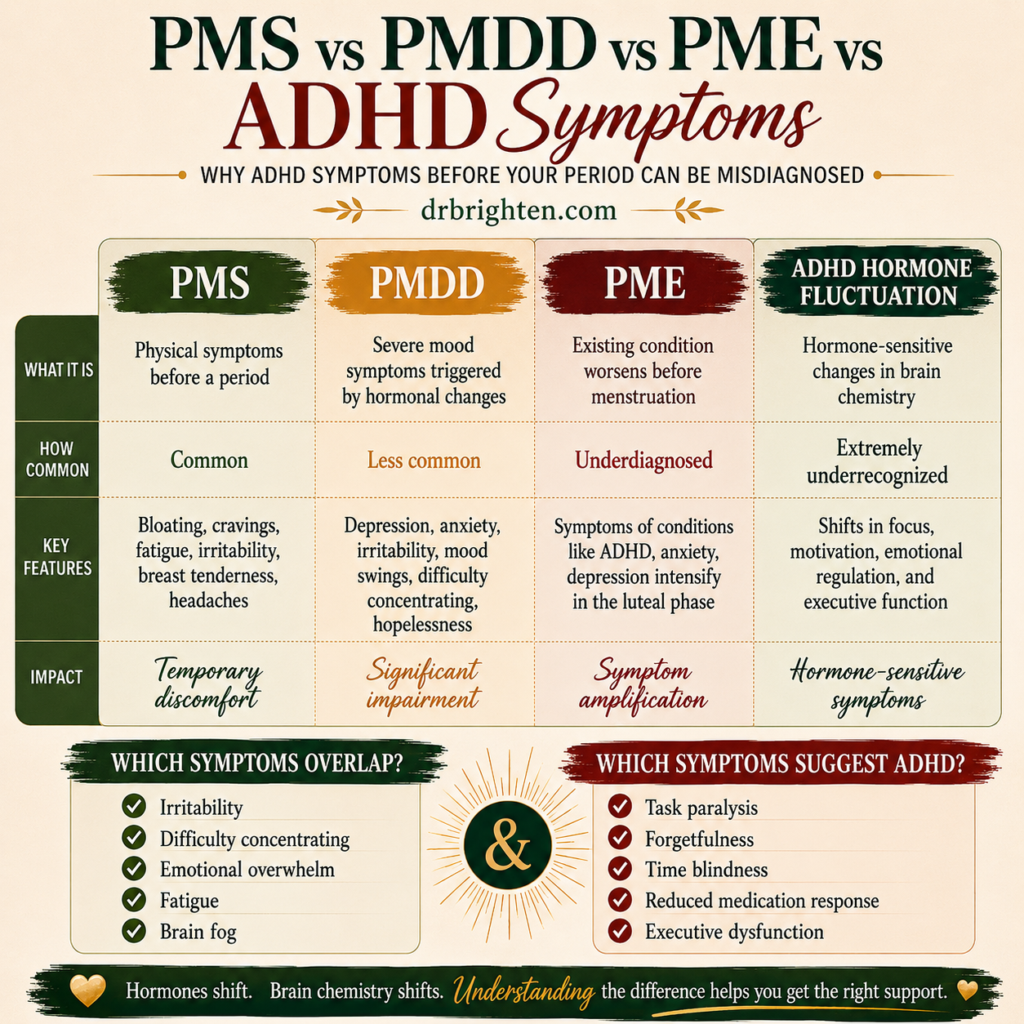
Quick Comparison: PMS vs. PMDD vs. PME
| Condition | What It Is | Common Symptoms | Impact on ADHD |
|---|---|---|---|
| PMS | Common physical and emotional symptoms before a period | Bloating, fatigue, irritability, cravings | May make ADHD symptoms feel more noticeable |
| PMDD | A severe mood disorder triggered by hormonal fluctuations | Depression, anxiety, mood swings, irritability | Frequently co-occurs with ADHD |
| PME | Worsening of an existing condition before menstruation | Intensified symptoms of a pre-existing disorder | Often causes ADHD symptoms to become significantly worse before a period |
| Hormonal ADHD Changes | Cycle-related shifts in neurotransmitter activity | Changes in focus, motivation, and emotional regulation | Can occur with or without PMS, PMDD, or PME |
How Estrogen Affects Dopamine, Focus, and ADHD Symptoms
To understand why ADHD symptoms fluctuate across the menstrual cycle, it’s necessary to examine the role of estrogen as a neuroactive compound.
Estrogen functions as a neurosteroid, meaning it directly influences brain activity[9] beyond its reproductive roles.
For example, estrogen directly modulates dopamine-dependent cognitive processes[10] and has effects on the prefrontal cortex, a region of the brain responsible for executive functions such as planning, attention regulation, working memory, and impulse control.
At a molecular level, estrogen influences several key processes that directly affect how the brain functions day to day. These include:
- Dopamine production: Estrogen supports the enzymes responsible for making dopamine, including tyrosine hydroxylase, which helps maintain adequate levels of this neurotransmitter.
- Receptor sensitivity and responsiveness: It also improves how effectively dopamine receptors respond, meaning the brain can make better use of the dopamine that’s available.
- Norepinephrine signaling: Estrogen helps regulate this pathway, which impacts alertness, focus, and how the body responds to stress.
- Neuronal communication: It supports synaptic plasticity, or how well brain cells communicate with each other, which is essential for learning, adaptability, and efficient cognitive processing.
Dopamine is also involved in ADHD, and when dopamine signaling is less efficient, it can affect motivation, sustained attention, reward processing, and executive function.
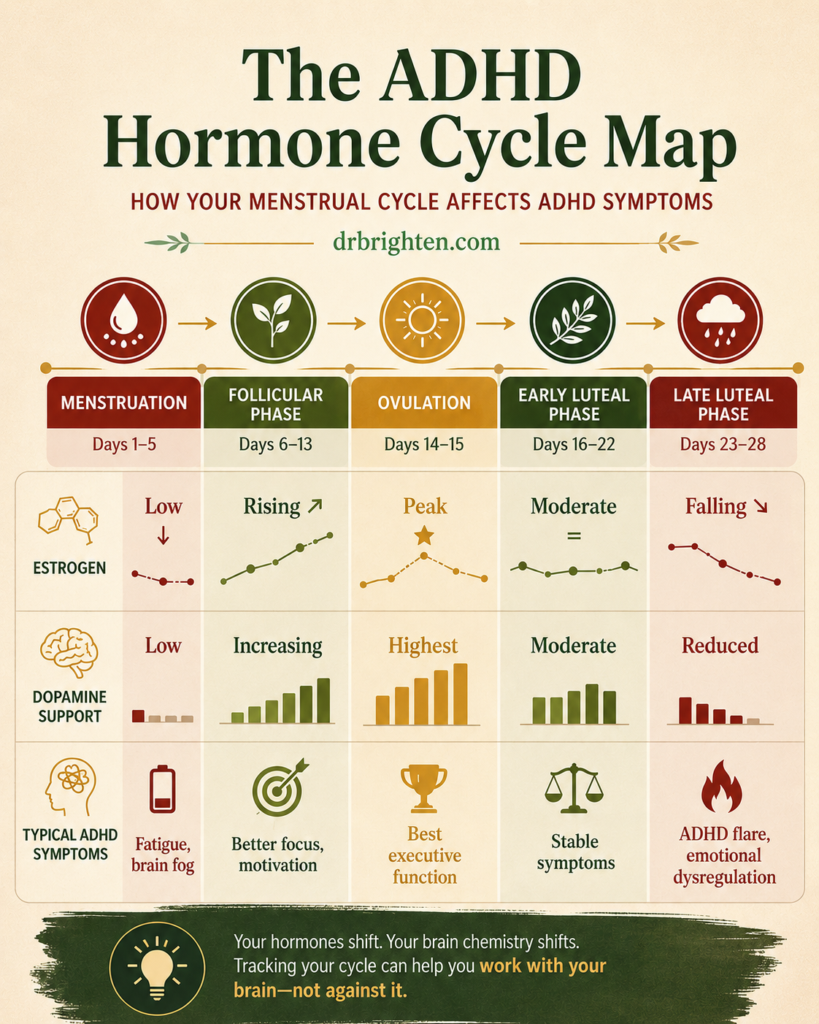
During the follicular phase of the menstrual cycle, the first half of the cycle, estrogen levels gradually rise, which leads to greater dopamine availability. This creates a more supportive neurochemical environment, where key brain systems involved in focus and regulation tend to work more efficiently.
As estrogen increases, and then dopamine availability does as well, it’s associated with:
- Improved receptor responsiveness
- More efficient functioning of executive networks in the brain
Clinically, this often translates into noticeable shifts in how you feel and function, including:
- An increased ability to initiate and follow through on tasks
- Clearer thinking and better organization
- More stable emotional responses
- A more consistent and predictable response to stimulant medications (estrogen levels can influence the brain’s response to stimulant medications, with higher estrogen states enhancing sensitivity to amphetamine effects)
These improvements reflect a temporary alignment between hormonal conditions and neurotransmitter function that supports more optimal cognitive performance.
The Luteal Phase and ADHD: What Happens After Ovulation?
Following ovulation, the hormonal environment changes significantly.
Estrogen levels decline, while progesterone rises and then falls before menstruation. This transition has important implications for neurotransmitter systems, particularly in those with ADHD.
As estrogen decreases:
- Dopamine synthesis is reduced
- Dopamine receptor sensitivity declines
- Norepinephrine signaling becomes less efficient
For people with typical baseline neurotransmitter function, these changes can produce mild cognitive or emotional effects.
But for individuals with ADHD, the impact is more substantial.
ADHD is associated with baseline differences in dopamine signaling[11] and receptor dynamics. When estrogen-mediated support is withdrawn, the system may fall below the threshold required for efficient executive functioning.
This can manifest as:
- Increased difficulty sustaining attention
- Reduced working memory capacity
- Greater impulsivity or decreased inhibitory control
- Heightened emotional reactivity and reduced stress tolerance
In addition to dopamine changes, fluctuations in progesterone-derived neurosteroids can influence GABAergic signaling, which affects mood stability and anxiety regulation. The combined effect can amplify both cognitive and emotional symptoms.
Related:
ADHD and Anxiety: How to Tell the Difference and What to Do About It
The Hidden Costs of People Pleasing: Why ADHD Women Struggle + How to Break Free | Meredith Carder
Why ADHD Medication May Feel Less Effective Before Your Period
Stimulant medications, including methylphenidate and amphetamine-based treatments, function by increasing the availability of dopamine and norepinephrine in the synaptic cleft.
However, how well these medications work depends on:
- Baseline neurotransmitter availability
- Receptor sensitivity and density
During the luteal phase, reduced dopamine availability and receptor responsiveness can blunt the clinical effect of these medications.
This doesn’t mean that the treatment has failed, but rather that the underlying neurochemical environment is changing how well the medication works to manage symptoms.
Understanding this interaction is critical for both patients and clinicians when evaluating treatment response across the menstrual cycle.
How to Manage ADHD Symptoms Throughout Your Menstrual Cycle
The most effective way to manage cyclical changes in ADHD symptoms is usually with a layered treatment approach that combines awareness, physiology, and standard clinical care.
The goal is not to eliminate normal hormonal fluctuations. Instead, it’s to reduce how much those shifts disrupt your ability to function, focus, and regulate emotions throughout the month.
Track Your Cycle to Predict ADHD Symptom Changes
One of the most effective starting points is building awareness of your cycle.
By tracking your menstrual phases alongside cognitive and emotional symptoms, you can begin to identify patterns, when your brain feels more supported, and when it requires more flexibility.
This allows you to make more informed decisions, such as:
- Scheduling higher-demand cognitive tasks during the follicular phase, when estrogen is rising
- Reducing cognitive load or building in more flexibility during the late luteal phase
- Putting supportive strategies in place before symptoms intensify
Tracking can be done using apps or simple manual logs.
What matters most is consistency. Over time, this information becomes a valuable tool, both for your own planning and for more productive conversations with your clinician.
When to Talk to Your Doctor About Cycle-Related ADHD Changes
Standard ADHD care typically includes behavioral strategies, therapy when appropriate, and medication when indicated.
If you notice consistent, cycle-related changes in symptom severity, it’s important to bring this into your care plan.
You can start by:
- Sharing cycle and symptom tracking with your prescribing clinician
- Discussing patterns in medication effectiveness across the month
- Exploring whether timing or dosing adjustments may be appropriate
This type of individualized, cycle-informed care reflects a broader clinical understanding that hormones influence brain function, an approach supported by organizations such as The Menopause Society.
Any changes to medication should always be made under medical supervision.
Why Sleep Matters More Before Your Period When You Have ADHD
Sleep is a foundational factor in ADHD management and can become more disrupted during the luteal phase.
When sleep is insufficient or inconsistent, it can worsen:
- Executive dysfunction
- Emotional reactivity
- Medication response and effectiveness
Maintaining consistent sleep and wake times, supporting natural light exposure, and aligning with your circadian rhythm can help stabilize these fluctuations.
From a neurobiological standpoint, sleep directly influences dopamine receptor sensitivity and neurotransmitter recycling, making it essential for maintaining cognitive function.
Stress, ADHD, and Hormonal Changes: Why Symptoms Can Feel More Intense
The hypothalamic-pituitary-adrenal (HPA) axis plays a central role in how the body responds to stress, and it interacts closely with both reproductive hormones and neurotransmitters.
During the luteal phase, sensitivity to stress often increases. This is partly due to changes in neurosteroid signaling, which can lower resilience and amplify emotional responses.
Supporting stress regulation may include:
- Creating structured routines that reduce decision fatigue
- Using behavioral strategies to support emotional regulation
- Incorporating practices that support autonomic nervous system balance
Stress management is not optional in this context. It directly influences how neurotransmitter systems function and how symptoms are experienced.
Nutrition That May Support Brain Function During Hormonal ADHD Flares
Dopamine production depends on having the right “building blocks” available.
While nutrition does not treat ADHD, it usually does have an important supportive role, especially during phases when neurotransmitter demand is higher.
Key nutrients involved in dopamine synthesis and regulation include:
- L-Tyrosine: A precursor used by the body to produce dopamine
- Vitamin B6: Required for converting amino acids into neurotransmitters
- Iron: Supports dopamine transport and enzymatic activity
- Magnesium: Helps regulate neuronal signaling and stress responses
- Zinc: Plays a role in neurotransmitter modulation and receptor function
Related:
Best Natural ADHD Supplements for Focus and Attention (Science-Backed Guide)
Exploring Natural Solutions for Adult ADHD — How To Find Relief
Several compounds have been studied for their supportive effects on cognition and mood, including:
- Saffron extract, which has been associated with improvements in mood[12] and emotional regulation
- Bacopa monnieri, which may support cognitive processing and stress adaptation[13]
- Citicoline, which contributes to neuronal signaling and brain energy metabolism
- Omega-3 fatty acids, which support neuronal membrane health and communication
- Creatine, which can support cellular energy production, including in the brain
These approaches are best viewed as adjunctive, meaning they support overall brain function but are not a replacement for standard ADHD treatment.
Related: Saffron for ADHD and PMDD: Benefits, Dosage & Best Time
Key Takeaways: ADHD and Your Menstrual Cycle
ADHD in women is shaped by the interaction between neurotransmitters and hormonal fluctuations across the menstrual cycle.
The worsening of symptoms before menstruation reflects:
- A decline in estrogen levels
- Reduced dopamine availability and receptor responsiveness
- Changes in how well executive networks function
Recognizing this pattern turns the conversation away from inconsistency or self-blame and toward physiology. With that understanding, you can:
- Anticipate when support is needed most
- Adjust expectations and strategies throughout your cycle
- Work more effectively with your healthcare provider to personalize care
ADHD itself does not change from week to week. But the biological environment it operates in does. And understanding that distinction is key to managing symptoms more effectively, so you can get back to feeling like yourself and living your life.
FAQ: ADHD Symptoms and Your Menstrual Cycle
ADHD symptoms often worsen during the late luteal phase due to a decline in estrogen levels. Estrogen supports dopamine production and receptor sensitivity, so when it drops, dopamine signaling becomes less efficient.
For individuals with ADHD, who already have differences in dopamine function, this can lead to increased executive dysfunction, reduced focus, and greater emotional reactivity.
Premenstrual exacerbation (PME) refers to the cyclical worsening of an existing condition, such as ADHD, due to hormonal changes across the menstrual cycle.
In ADHD, PME can present as intensified inattention, reduced motivation, increased impulsivity, and decreased response to medication in the days leading up to menstruation.
Stimulant medications rely on baseline dopamine availability and receptor responsiveness to work effectively.
During the luteal phase, estrogen declines, which can reduce dopamine levels and receptor sensitivity. This may blunt the medication’s effect, making it feel less consistent or less effective during that time.
Yes. Estrogen acts as a neurosteroid and plays a direct role in regulating dopamine systems.
It supports dopamine production, enhances receptor sensitivity, and improves signaling efficiency in brain regions involved in attention and executive function. When estrogen declines, these processes become less efficient.
Yes, this pattern is increasingly recognized in clinical research.
Many women with ADHD report improved cognitive function during the follicular phase and worsening symptoms during the luteal phase. This reflects normal hormonal fluctuations interacting with neurotransmitter systems.
Cycle tracking can be a highly effective tool.
By identifying patterns in symptom changes, you can plan higher-demand tasks during more supportive phases of your cycle and implement additional support strategies during more challenging phases. It can also provide useful data to share with your healthcare provider.
In some cases, cycle-informed care may be helpful.
If you experience consistent symptom changes across your cycle, discussing this with your clinician can help determine whether adjustments in medication timing, dosing, or supportive strategies are appropriate. Any changes should always be made under medical supervision.
Clinical Notice: This content is for public health education and translational research review purposes only. It does not replace individual clinical evaluation or psychiatric management. Always consult your healthcare provider or psychiatrist regarding neurodivergent diagnostics or changes to medication protocols.