

Because creatine helps the brain rapidly regenerate energy, researchers are increasingly interested in its potential role during perimenopause—a time when hormonal changes can affect brain metabolism, memory, concentration, and mental stamina.
Research suggests creatine may support memory, information processing, and cognitive performance, with some evidence indicating women may experience particularly meaningful benefits. Emerging research is also beginning to connect brain creatine levels with the cognitive complaints women experience during perimenopause.
So, could creatine help you feel clearer, more focused, and less mentally exhausted during the menopause transition? Here’s what the research shows—and what women should know before taking it.
You're in ✦
Check your inbox. Day one is on its way.
Your ADHD Hormone & Brain Sync Guide is heading to your inbox now — look for it from Dr. Brighten in the next few minutes.
New Book · Out October 6, 2026
The full system behind the guide
These five days are the doorway. ADHD and Women is the whole map — the ADHD-Hormone Profile and what to do across every hormonal transition.
Pre-Order ADHD and WomenQuick Answer: Does Creatine Help With Perimenopause Brain Fog?
Creatine is best known for supporting muscle strength[1], but it also plays an essential role in supplying energy to the brain.
Research suggests creatine supplementation may support memory, information processing, and mental performance—particularly when the brain is under increased metabolic demand[2]. Some analyses have also found that women may experience greater cognitive benefits than men.
That makes creatine especially interesting during perimenopause, when changing estrogen levels can affect brain energy metabolism, sleep, mood, concentration, and memory. Emerging research has even begun examining the relationship between brain creatine levels and neurocognitive complaints in perimenopausal women.
Creatine is not a cure for every cause of brain fog, but it may be a valuable tool for supporting brain energy, mental stamina, muscle health, and healthy aging during perimenopause and menopause.
Related: Creatine for ADHD: What Research Says About Focus, Brain Energy, and Executive Function
Why Brain Fog Happens During Perimenopause
Many women are surprised by how much perimenopause affects their brains.
One day, you’re effortlessly juggling work, family, and a busy schedule. The next, you’re forgetting appointments, losing your train of thought, or struggling to concentrate during meetings.
It’s easy to worry that something is wrong, but in many cases, these changes are a normal consequence of shifting hormone levels, especially estrogen and progesterone.
How Hormonal Changes Cause Perimenopause Brain Fog
Scientists now know that estrogen doesn’t just influence reproductive health. It also has profound effects on the brain and mental health, such as by regulating neurotransmitters involved in learning, memory, attention, and mood, including dopamine, serotonin, and acetylcholine.
Additionally, estrogen influences how brain cells produce energy, communicate between neurons, and maintain memory and focus.
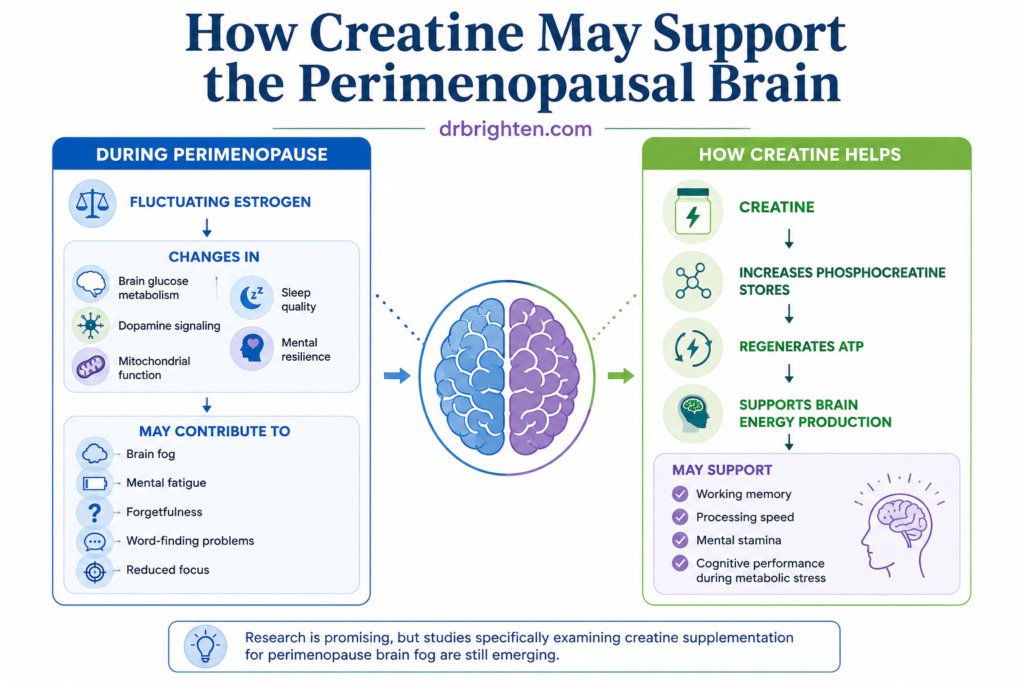
As hormone levels fluctuate during perimenopause, the brain’s high energy demands can become harder to meet, which can contribute to cognitive fatigue and brain fog. This is where creatine enters the conversation.
Why Perimenopause Causes Mental Fatigue and Poor Concentration
The brain accounts for only about 2% of your body weight, yet it consumes roughly 20% of your body’s energy. That energy is needed to support everything from remembering names and solving problems to regulating emotions and maintaining focus throughout the day.
During perimenopause, estrogen levels fluctuate dramatically rather than decline in a straight line. These hormonal shifts can temporarily reduce the brain’s efficiency in producing and using energy, making mentally demanding tasks feel more exhausting than they once did.
This helps explain why many women in perimenopause experience symptoms such as:
- Forgetfulness
- Difficulty concentrating
- Word-finding problems
- Mental fatigue
- Reduced processing speed
- Feeling like they’re thinking through a fog
Sleep disruption, chronic stress, anxiety, and hot flashes can make these cognitive symptoms even more severe. When these factors combine, they can create a cycle that’s both frustrating and exhausting.
If you’re dealing with brain fog during perimenopause, it doesn’t mean you’re developing dementia. In fact, for most women, these cognitive changes are temporary and improve once hormones stabilize after menopause.
Still, that doesn’t mean you have to simply accept them. We now have multiple tools and strategies available that help support the brain’s increased energy demands during this transition, including creatine.
Related:
Perimenopause Brain Fog: Causes, Symptoms, and Treatment Options
Connection Between Brain Fog and Hormone Imbalance
Do Hormones Affect Brain Health?
How Does Creatine Help With Brain Function and Brain Fog?
Muscles aren’t the only tissues that rely on creatine. As mentioned above, your brain also stores and uses creatine because it’s one of the most energy-demanding organs in your body.
Creatine helps regenerate adenosine triphosphate[3] (ATP), the primary source of energy that powers virtually every cell in your body. Think of ATP as the fuel that allows your cells to do their jobs.
Whenever your brain is concentrating, making decisions, recalling memories, or learning something new, it’s using ATP at a remarkable rate.
Creatine acts like a rapid energy reserve. It stores high-energy phosphate molecules that can quickly regenerate ATP whenever brain cells need an extra burst of energy. This allows neurons to continue functioning efficiently during periods of increased demand.
Researchers believe this may be especially important during situations that place additional stress on the brain[4], such as during:
- Sleep deprivation
- Chronic psychological stress
- Intense mental work
- Aging
- Hormonal transitions such as perimenopause
Recent reviews have concluded that creatine supports brain energy metabolism and can help improve cognitive performance when the brain is under metabolic stress.
Rather than acting like a stimulant, creatine ensures brain cells have the energy they need to perform their normal functions.
Because hormones affect cognitive health, there are specific creatine brain benefits for women[5].
During perimenopause, the brain seems to work harder to maintain cognitive performance and stable moods while adapting to fluctuating estrogen levels. Supporting cellular energy production can help explain why creatine is useful.
Creatine supplementation has even been shown to help reduce depression symptoms[6] and fight anxiety[7], particularly when combined with selective serotonin reuptake inhibitors, due to its effects on brain energy metabolism and neuroplasticity.
The important thing to remember is that creatine is not a steroid or source of hormones. It doesn’t replace estrogen, increase neurotransmitters, or “fix” menopause. It’s also considered very safe and very well studied[8].
Instead, it supports one of the brain’s most fundamental needs: the ability to generate energy efficiently.
Related:
Does Creatine Improve Memory, Focus, and Brain Function?
Several recent reviews and meta-analyses have found that creatine supplementation can help improve aspects of cognitive function[9], including:
- Working memory
- Short-term memory
- Information processing speed
- Mental fatigue
- Attention during demanding cognitive tasks
- Mood stability
The improvements tend to be modest rather than dramatic, and they aren’t seen consistently in every study. That may be because healthy brains with adequate energy stores simply have less room for improvement.
In other words, creatine doesn’t appear to make an already well-rested, healthy brain “supercharged.” Instead, it can help the brain perform more efficiently when it’s under increased metabolic stress.
This is an important distinction, and one that makes creatine particularly interesting for women in perimenopause.
Related:
Brain Fog Treatment: What’s Really Behind It and How to Get Your Clarity Back
The Hidden Brain Risk Every Woman Over 30 Needs To Know with Max Lugavere
Creatine Brain Benefits for Women in Perimenopause
Based on the research so far, creatine brain benefits may include:
1. Creatine May Support Mental Energy
One of the earliest signs that your brain isn’t getting the energy it needs is mental fatigue.
Tasks that once felt effortless suddenly require enormous concentration. You lose focus more quickly, feel mentally drained by the afternoon, or struggle to stay engaged during conversations and meetings.
The brain is one of the most energy-hungry organs in the body, so it’s no surprise that many of creatine’s potential cognitive effects revolve around energy availability.
Because creatine helps regenerate ATP, researchers believe it may improve the brain’s ability to sustain cognitive performance[10] during mentally demanding activities.
2. Creatine May Support Memory and Learning
Several studies have found modest improvements in working memory[11] and short-term memory among adults taking creatine.
Working memory is the ability to temporarily hold and manipulate information. It’s what allows you to remember a phone number long enough to dial it, follow multi-step directions, or keep track of several thoughts at once.
These are often some of the first cognitive skills women notice changing during perimenopause.
3. Creatine May Help Reduce Mental Fatigue
Fatigue isn’t always physical. Many women in perimenopause describe feeling mentally exhausted before they feel physically tired. They may have enough energy to complete their day, but thinking clearly feels like much harder work.
Several studies suggest creatine may help reduce this type of cognitive fatigue[12] by supporting the brain’s energy supply. Some of the strongest findings have come from studies involving sleep deprivation, where creatine helped preserve aspects of cognitive performance[13] despite increased mental stress.
4. Creatine May Support Healthy Brain Aging
Studies suggest creatine helps protect neurons from oxidative stress, supports mitochondrial function, and improves cellular resilience during aging.
At this point, I wouldn’t recommend creatine specifically to prevent cognitive decline or dementia. However, supporting brain energy metabolism is one of the reasons researchers remain excited about its potential.
What the research can and cannot tell us: Creatine has been studied for memory, cognition, mental fatigue, aging, sleep deprivation, and exercise performance. However, direct studies examining creatine specifically for perimenopause brain fog remain limited. Some of the potential benefits discussed below are therefore based on broader cognitive and women’s health research.
Can Creatine Help With Perimenopause Brain Fog?
The short answer is: possibly, but not because creatine directly treats brain fog.
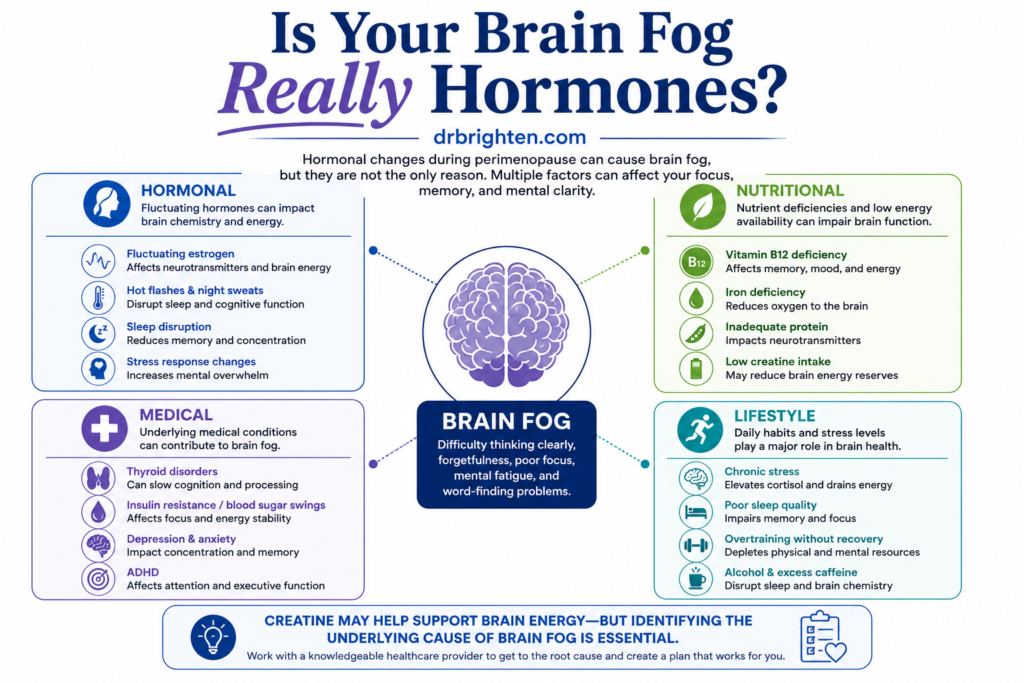
Brain fog is an umbrella term rather than a medical diagnosis. It can describe symptoms such as:
- Forgetfulness
- Difficulty concentrating
- Word-finding problems
- Feeling mentally “slower”
- Trouble multitasking
- Mental fatigue
The challenge is that brain fog has many possible causes. For women in perimenopause, fluctuating estrogen levels are often a major contributor. But poor sleep, chronic stress, anxiety, thyroid disorders, iron deficiency, vitamin B12 deficiency, insulin resistance, and even ADHD can produce similar symptoms.
This is why I always encourage looking for the root cause before assuming hormones—or any one factor—are responsible. With that said, creatine for perimenopause brain fog is becoming an increasingly active area of research.
Because creatine helps support cellular energy production, some researchers believe it may help reduce one contributor to brain fog: an energy mismatch between what the brain needs and what it’s able to produce during periods of hormonal transition.
That doesn’t mean creatine will eliminate brain fog overnight. But if reduced brain energy metabolism is part of what’s driving your symptoms, improving ATP availability may help support clearer thinking and better mental stamina.
What Are the Benefits of Creatine During Perimenopause?
Women may have unique creatine needs during periods of hormonal change, including perimenopause.
As estrogen levels fluctuate dramatically, it can influence muscle mass, bone health, mood, sleep, and how efficiently your brain produces energy.
Researchers have proposed that declining estrogen may alter the body’s creatine metabolism and increase the brain’s reliance on alternative energy sources.
At the same time, women naturally have lower creatine stores than men on average, making adequate intake potentially even more important.
Recent reviews have suggested that creatine supplementation offers benefits during perimenopause, including support for:
- Brain energy metabolism
- Cognitive performance
- Mental fatigue
- Mood
- Muscle strength and lean body mass
- Bone health, when combined with resistance training
- Recovery from exercise
Although much of the evidence is still emerging, these findings have led many experts to suggest that creatine deserves a greater role in women’s health discussions—not just in sports nutrition.
That said, creatine isn’t a replacement for hormone therapy, strength training, adequate protein intake, or other evidence-based strategies for navigating perimenopause.
Related: The 10 Most Unusual Symptoms of Perimenopause (and What They Really Mean)
Research Summary: Benefits of Creatine for Perimenopause
| Potential benefit | Strength of evidence | Important limitation |
|---|---|---|
| Muscle strength and lean mass | Strongest | Works best with resistance training |
| Memory and cognition | Promising but mixed | Not every study finds improvement |
| Mental fatigue | Some supportive evidence | Much of the evidence is not specific to perimenopause |
| Perimenopause brain fog | Emerging | Direct clinical research remains limited |
| Healthy brain aging | Preliminary | Creatine is not proven to prevent dementia |
Can Creatine Help With Perimenopause Fatigue?
One symptom I hear women mention again and again during perimenopause is fatigue. Not just physical tiredness, but a deep mental exhaustion that makes it difficult to think clearly, stay productive, or feel motivated throughout the day.
Hormonal fluctuations can certainly contribute, but they’re rarely the only factor.
Sleep disruption from night sweats, increased stress, nutritional deficiencies, reduced physical activity, and changing muscle metabolism can all leave women feeling depleted.
This is another area where creatine may offer support.
Because creatine helps regenerate ATP—the body’s primary energy molecule—it may help improve both physical and mental energy during times of increased demand.
Several studies have found that creatine supplementation can reduce fatigue-related declines in cognitive performance, including during sleep deprivation and mentally demanding tasks.
Of course, fatigue should never automatically be blamed on hormones. Also consider other common contributors, including thyroid dysfunction, iron deficiency, vitamin B12 deficiency, depression, sleep disorders, chronic stress, and inadequate protein intake.
Related: Extreme Fatigue in Perimenopause: What’s Really Going On—And What Helps?
Creatine Benefits for Menopause and Postmenopausal Women
Many of the same reasons creatine is helpful during perimenopause continue after menopause.
Following menopause, estrogen levels remain consistently lower, contributing to accelerated losses in muscle mass and strength, reduced bone density, and continued changes in brain metabolism.
Several studies suggest that creatine supplementation, particularly when paired with resistance training, can help improve muscle strength, preserve lean body mass, and support physical function.
Creatine may help support cognition, mood, and mental energy after menopause, although the evidence in these areas is still developing.
In other words, creatine isn’t simply a supplement for younger athletes. It may have an important role throughout midlife and beyond as women work to maintain both physical and cognitive health.
Related:
Menopause Brain Fog Is Real: 7 Science-Backed Ways To Clear It
Menopause Fatigue Solved: Proven Ways to Reclaim Energy, Focus, and Vitality
How Much Creatine Should Women Take During Perimenopause?
The form of creatine that’s usually used in studies is creatine monohydrate[14].
This type remains the form I recommend most often because it has the strongest evidence for both safety and effectiveness.
Most studies examining creatine for brain health and cognitive function use 3 to 5 grams of creatine monohydrate daily.
Some protocols include a loading phase with much higher doses, but this generally isn’t necessary. Starting with a consistent daily dose of 3 to 5 grams is enough to gradually saturate the body’s creatine stores while minimizing digestive discomfort or temporary water retention.
Creatine can be taken with or without food, and while some people prefer taking it after exercise, consistency matters far more than timing.
Is Creatine Safe for Women in Perimenopause?
Creatine can raise blood creatinine levels because creatinine is a breakdown product of creatine. This does not automatically mean kidney function has declined, but it can affect how laboratory results are interpreted. Tell your healthcare provider if you take creatine before kidney-function testing.
As always, if you have kidney disease or another significant medical condition, speak with your healthcare provider before starting creatine supplementation.
What Other Supplements Help With Perimenopause Brain Fog?
While creatine has received a lot of attention lately, it’s only one piece of the brain health puzzle.
Supporting cognitive function during perimenopause also means making sure your brain has the nutrients it needs to produce energy efficiently.
B Vitamins for Perimenopause Brain Fog and Fatigue
B vitamins—including vitamins B12, B6, and folate—are involved in energy metabolism, neurotransmitter production, and healthy nervous system function. Deficiencies can contribute to fatigue, poor concentration, memory problems, and symptoms that closely resemble brain fog.
Supplements work best when they’re supporting a solid foundation. For many women, that foundation includes adequate protein, resistance training, omega-3 fats, magnesium, B vitamins, restorative sleep, and regular movement, along with targeted supplements like creatine when appropriate.
Related:
15 Perimenopause Supplements for Happy Hormones
Best Menopausal Supplements According to a Hormone Expert
Should Women Take Creatine During Perimenopause?
Whether creatine is right for you depends on your health history, goals, and current symptoms.
Based on what we know today, creatine may be worth discussing with your healthcare provider if you:
- Are in perimenopause or menopause and experiencing mental fatigue
- Notice increasing brain fog or difficulty concentrating
- Participate in regular resistance training
- Want to preserve muscle as you age
- Follow a vegetarian or vegan diet
- Have a physically or mentally demanding lifestyle
On the other hand, creatine isn’t a substitute for identifying the root cause of cognitive symptoms. If your brain fog developed suddenly, is progressively worsening, or is accompanied by other neurological symptoms, it’s important to seek a medical evaluation rather than assuming hormones are to blame.
Creatine is also not a replacement for hormone therapy, good nutrition, or exercise. But it may complement all of those strategies by supporting one of the body’s most basic needs: energy production.
First, make sure foundational issues are being addressed. Then, I think creatine becomes a very reasonable supplement to consider, especially for women who:
- Lift weights or are trying to preserve muscle mass
- Eat little or no red meat
- Feel mentally fatigued despite getting adequate sleep
- Are navigating perimenopause or menopause
- Want to support both brain and muscle health as they age
My clinical perspective: Creatine is reasonable to consider, but only after common causes of brain fog and fatigue have been evaluated.
The Bottom Line on Creatine for Perimenopause Brain Fog
Creatine may help support brain function by improving cellular energy production, reducing mental fatigue, and supporting cognitive performance during times of increased metabolic demand—including perimenopause.
That doesn’t mean creatine is a cure for brain fog or menopause symptoms.
Rather, it represents one promising piece of a much larger picture that includes hormone health, quality sleep, adequate protein intake, resistance training, stress management, and correcting nutrient deficiencies.
If you’re experiencing brain fog during perimenopause, don’t dismiss it as something you simply have to live with. Your brain is adapting to enormous hormonal changes, and there are evidence-informed strategies that may help support both your cognitive health and your overall well-being.
As research continues to evolve, I expect we’ll learn much more about which women benefit most from creatine—and how best to use it during the menopause transition.
Frequently Asked Questions About Creatine for Perimenopause
Creatine helps regenerate ATP, the primary energy source used by brain cells. By supporting cellular energy production, creatine may help maintain cognitive performance during periods of increased mental demand, stress, or hormonal change.
Studies have found modest improvements in areas such as working memory, information processing speed, and mental fatigue, particularly when the brain is under metabolic stress.
Current evidence suggests creatine may support brain health by improving energy metabolism and helping protect neurons during periods of increased energy demand.
Possibly. Creatine doesn’t directly treat brain fog, but it may help support one factor that contributes to it: reduced cellular energy production.
Creatine may be particularly beneficial during perimenopause because it supports brain energy metabolism, muscle health, and cognitive performance.
Creatine may help support healthy aging after menopause by preserving lean muscle mass, improving strength when combined with resistance training, and potentially supporting cognitive function.
Most studies use 3 to 5 grams of creatine monohydrate per day. A loading phase isn’t necessary for most women, and consistency is generally more important than timing.
Creatine and B vitamins support energy production through different mechanisms, so they aren’t interchangeable. Ensuring adequate intake of vitamin B12, vitamin B6, and folate is important for brain health, especially during perimenopause.
For most healthy women, creatine monohydrate has an excellent safety profile and is considered one of the best-studied dietary supplements available.