

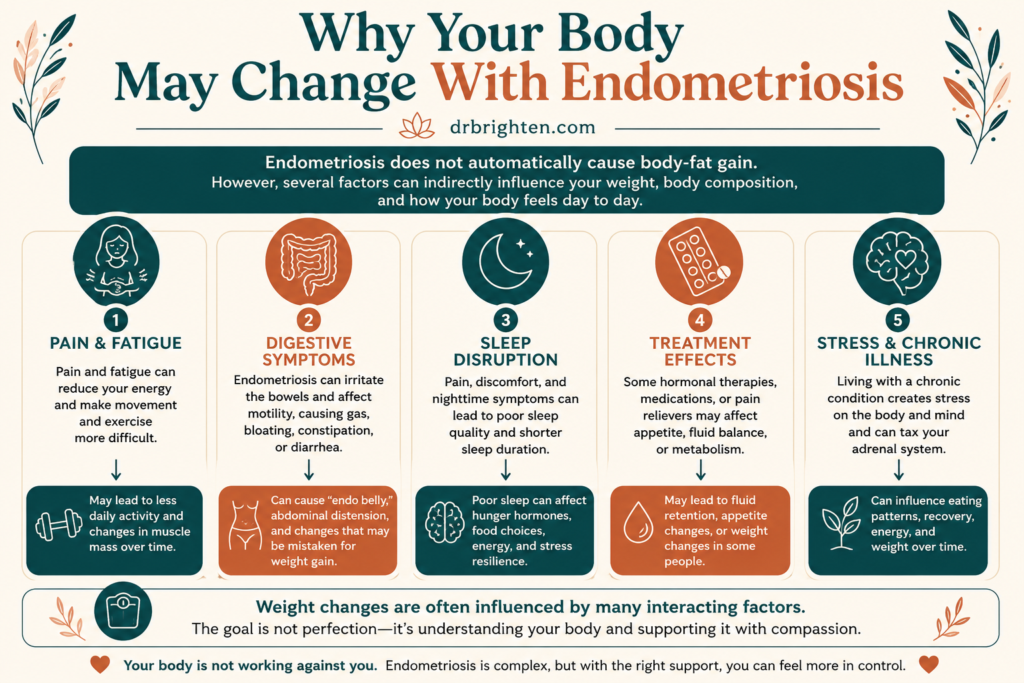
Endometriosis is not proven to directly cause body-fat gain. However, bloating, fluid retention, pain-related reductions in activity, sleep disruption, digestive symptoms and some treatments may change weight or make someone feel as though they have gained weight.
Can endometriosis cause weight gain? The short answer is yes, but not always in the way you might think. Endometriosis doesn’t directly cause weight gain the way conditions like insulin resistance or hypothyroidism can. But it can create internal changes that make weight regulation more difficult, such as through inflammation, hormonal changes, pain, and lifestyle disruptions.
For many women, this shows up as stubborn belly fat, bloating, or difficulty losing weight despite doing everything “right.” It’s no wonder that surveys show many women with endometriosis struggle with body disappointment[1], feeling like “food is an enemy,” and even stolen identity and joy.
You're in ✦
Check your inbox. Day one is on its way.
Your ADHD Hormone & Brain Sync Guide is heading to your inbox now — look for it from Dr. Brighten in the next few minutes.
New Book · Out October 6, 2026
The full system behind the guide
These five days are the doorway. ADHD and Women is the whole map — the ADHD-Hormone Profile and what to do across every hormonal transition.
Pre-Order ADHD and WomenWhy can endometriosis be associated with weight gain?
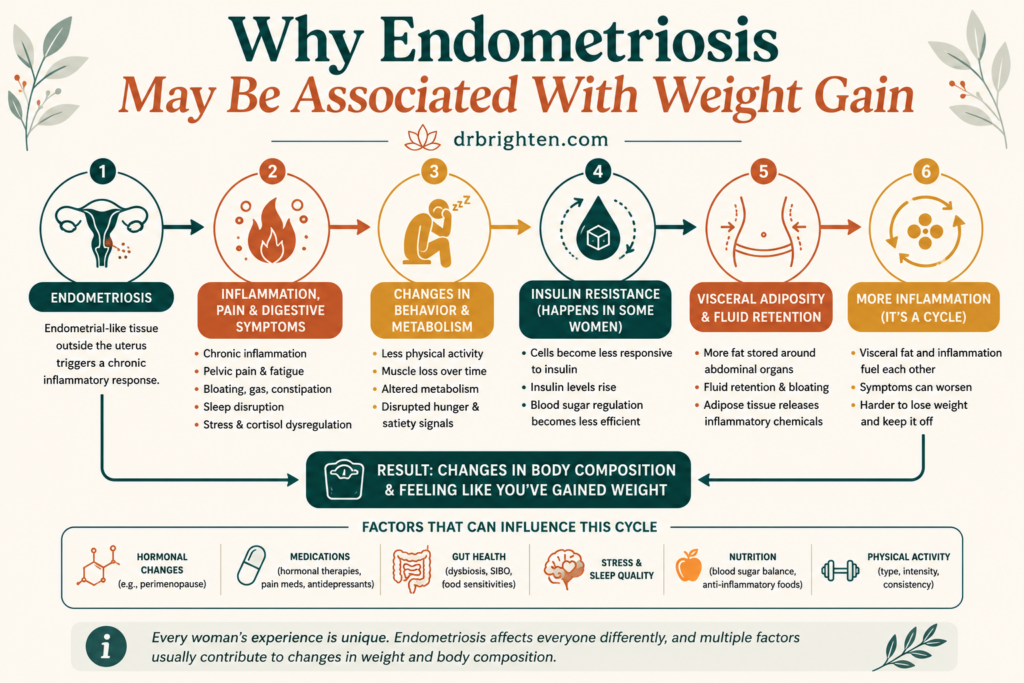
Endometriosis doesn’t directly cause body-fat gain. Instead, it may affect several systems that influence body composition:
- Chronic inflammation can contribute to bloating, fluid retention, and metabolic dysfunction.
- Pain and fatigue often reduce physical activity, making it harder to maintain muscle mass.
- Some women develop insulin resistance, which may promote visceral fat accumulation.
- Hormonal changes—particularly during perimenopause—can make abdominal fat more likely.
- Certain medications may contribute to appetite changes or fluid retention.
For many women, several of these factors occur at the same time.
Can Endometriosis Cause Weight Gain?
It’s common for women to notice changes in their weight after being diagnosed with endometriosis, and if that’s happening to you, you’re not imagining it.
So what’s really going on? Endometriosis can contribute to weight gain indirectly—as opposed to directly impacting someone’s metabolic rate—through mechanisms like:
- Chronic inflammation: Endometriosis is an inflammatory condition, and inflammation can promote fluid retention and fat storage, especially in the belly area. There’s also some evidence that being overweight or obese can make inflammation and endometriosis worse[2].
- Hormonal imbalances: Estrogen dominance is common in endometriosis[3] and can encourage fat storage, particularly around the hips and abdomen.
- Reduced activity: Pain and fatigue associated with endo can make regular exercise more difficult, which can lead to loss of muscle mass, fewer calories burned, and potentially increased body fat.
- Stress response: Chronic pain can increase stress and contribute to HPA dysfunction[4], which can disrupt normal production of cortisol. This is linked to increased cravings, poorer sleep, and sometimes more abdominal fat.
That said, not everyone with endo is overweight[5] (in fact, many are normal weight[6]). So while endometriosis itself isn’t usually a cause of weight gain on its own, it can create an internal environment where weight gain becomes more likely.
Related:
What Causes Endometriosis & Natural Treatments That Help
What Is Endometriosis? 4 Surgeons Explain the Symptoms, Misdiagnosis, and Whole-Body Impact
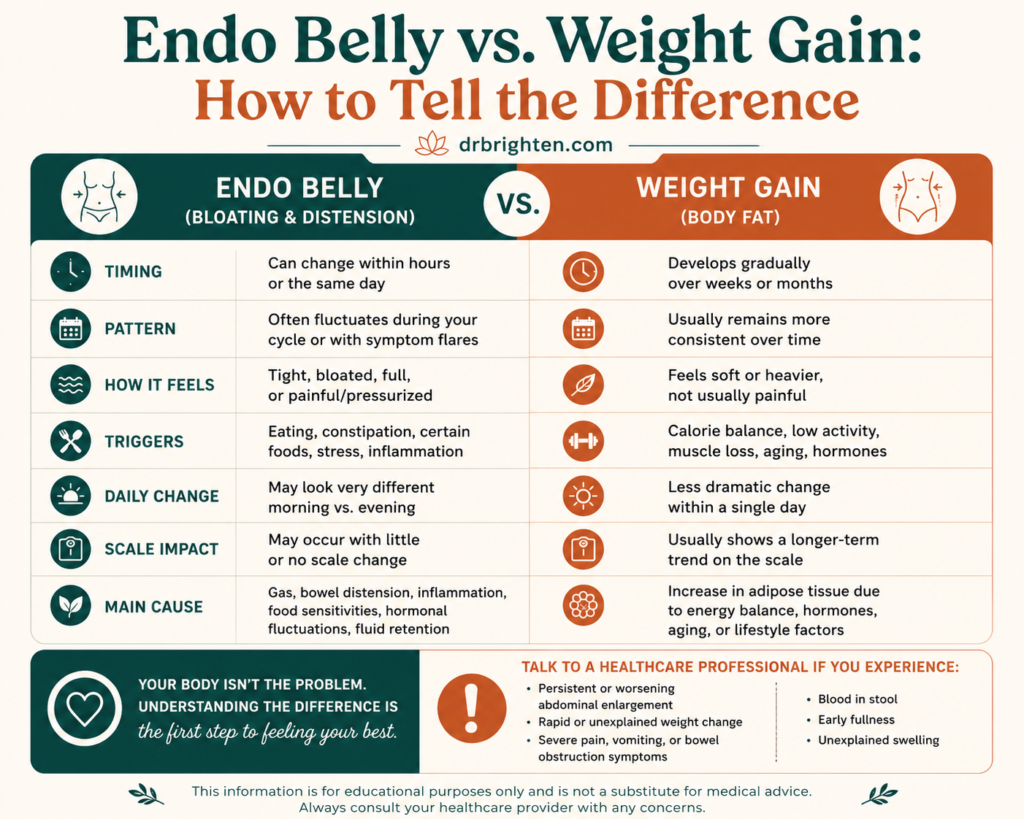
| What someone notices | What it may represent | Typical pattern |
|---|---|---|
| Abdomen changes size within hours | Gas, bowel distension or bloating | Fluctuates during the day |
| Scale rises around the period | Fluid retention, bowel changes or food volume | Often temporary |
| Clothes fit differently over months | Possible body-fat or muscle change | More persistent |
| Weight changes after treatment | Appetite, fluid, activity or treatment-related effects | Depends on the medication |
| Abdomen remains enlarged or painful | Requires medical evaluation | Should not automatically be labeled “endo belly” |
Rather than thinking about endometriosis causing weight gain through a single mechanism, it’s more accurate to think of it as affecting multiple systems that regulate body composition. Some women experience bloating that mimics weight gain. Others experience reduced activity because of chronic pain. Others develop metabolic changes that make storing abdominal fat easier. Understanding which pathway is affecting you is the key to choosing the right treatment strategy.
Why Endometriosis and Belly Fat Often Go Together
Some women with endo specifically notice changes around their midsection. So why is there a connection between endometriosis and belly fat?
As mentioned above, endo can cause women to gain more weight in their midsection due to:
- Inflammation, which increases abdominal fat storage
- Hormonal shifts, which affect where fat is stored
- Cortisol, which promotes central weight gain
Over time, this can lead to what some describe as an “endo belly,” which can feel very different from typical weight gain.
Related:
Endo Belly: Causes and Treatments for Endometriosis Bloating
Endometriosis Symptoms vs Normal Period Pain with Dr. Patrick Yeung
What Is “Endo Belly” and Why Does It Happen?:
One of the most talked-about symptoms of endometriosis is intense bloating, which is often severe enough to change how clothes fit throughout the day and how it feels to eat normally.
Why can endometriosis cause gas and bloating? These are two of the hallmark symptoms of endo[7], and they can happen because of how the condition affects the digestive system:
- Inflammation in the pelvic and abdominal cavity can cause severe or painful bloating
- Irritation of the bowel when lesions are nearby also contributes to
- Changes in gut motility also cause digestive discomfort and distention
- Increased sensitivity to certain foods can make pain or bloating worse
All of these factors can result in women with endometriosis experiencing:
- Gas and bloating
- Abdominal pressure
- Visible distension that fluctuates throughout the day
These symptoms can be mistaken for weight gain, even though they’re largely driven by inflammation and digestive changes.
So people with endo might think they’re gaining weight, especially at certain points in their cycle (such as the week leading up to their period), when they’re really dealing with mainly inflammation, gas, and water retention.
Related:
Endometriosis and Painful Ovulation: Why Ovulation Hurts, Where It’s Felt, and What Helps
Does Endometriosis Go Away After Menopause? Here’s the Truth
Why It Can Be Harder to Lose Weight With Endometriosis
Is it harder to lose weight with endometriosis? For some, the answer is yes, but it depends on their overall diet and lifestyle.
Endometriosis can potentially make weight loss more challenging due to:
- Inflammation that interferes with metabolism
- Hormonal imbalances affecting fat storage and appetite
- Chronic pain that reduces movement and exercise capacity
- Fatigue that makes it hard to consistently stick with healthy habits
- Insulin dysregulation
This is why some women feel frustrated when they feel like endometriosis makes it hard to lose weight, even when they’re eating well and exercising.
The reality is that if you have endo, your body might require a more supportive approach to weight loss that accounts for how your symptoms fluctuate throughout the month.
Related:
Endometriosis and IBS: Symptom Connection and Solutions
The Hidden Link Between Your Gut Issues and Endometriosis with Dr. Jill Ingenito
What Does the Research Say About Endometriosis and Insulin Resistance?
Insulin resistance isn’t traditionally considered one of the hallmark features of endometriosis, but it’s becoming an area of growing research interest. While scientists haven’t proven that endometriosis directly causes insulin resistance, several studies[8] suggest the two may be more closely connected than previously thought[9].
Endometriosis is a chronic inflammatory disease, and chronic inflammation is known to interfere with normal insulin signaling[10]. When cells become less responsive to insulin, the pancreas compensates by producing more insulin to keep blood sugar within a healthy range. Over time, this state of hyperinsulinemia can contribute to increased fat storage—particularly visceral fat surrounding the abdominal organs—which produces inflammatory molecules that can further amplify inflammation throughout the body. This creates a cycle in which inflammation and metabolic dysfunction may reinforce one another.
Researchers are also studying the role of adipokines—chemical messengers released by fat tissue. One of these, adiponectin, normally helps improve insulin sensitivity while reducing inflammation. Several studies have found lower adiponectin levels in women with endometriosis, suggesting this pathway may contribute to both inflammation and metabolic dysfunction, although it isn’t yet clear whether these changes are a cause of endometriosis, a consequence of the disease, or both.
More recently, population-based research has found that women with endometriosis tend to have higher markers of visceral adiposity and lipid accumulation, both of which are associated with insulin resistance and chronic inflammation[11]. These findings don’t prove that endometriosis causes insulin resistance, but they do suggest that metabolic health deserves more attention as part of comprehensive endometriosis care.
My Clinical Observation
During my years in clinical practice, I often found that women with endometriosis who also struggled with insulin resistance had the hardest time losing abdominal fat, despite eating well and exercising consistently. This became even more noticeable during perimenopause, when declining estrogen can reduce insulin sensitivity and promote the accumulation of visceral fat. Unlike fat stored just beneath the skin, visceral fat acts like an endocrine organ, releasing inflammatory compounds that can further fuel chronic inflammation.
While more research is needed to clarify exactly how these processes interact in women with endometriosis, this pattern aligns with what we know about estrogen deficiency, insulin resistance, visceral adiposity, and inflammation from broader metabolic research.
Does Severity Matter? (Stage 1 vs. Stage 4 Endometriosis)
You might assume that more severe disease leads to more weight gain, but that’s not always the case. Even early-stage endometriosis can cause changes in digestion and hormones, which can mimic weight gain or set the stage for it to potentially happen.
Here’s more about typical symptoms that occur with different stages of endometriosis:
Stage 1 Endometriosis:
A “stage 1 endometriosis belly” can still feel very noticeable, even if lesions are minimal. Symptoms at this stage can include:
- Significant bloating, aka endo belly
- Hormonal symptoms
- Digestive discomfort
Stage 2–3:
As endometriosis progresses into stages 2 and 3, lesions become more widespread and may begin to penetrate deeper into surrounding tissues. At this point, symptoms often become more consistent and harder to ignore, even if they still fluctuate.
A stage 2–3 endometriosis belly may involve a combination of bloating and more persistent abdominal changes, driven by both inflammation and structural involvement.
This is often the stage where women start to feel like their symptoms are no longer occasional, but something that’s regularly affecting their quality of life, including how their body looks and feels. Symptoms can include:
- More frequent or prolonged bloating
- Increased pelvic inflammation
- Greater digestive disruption, especially around the cycle
- More noticeable discomfort during or after eating
- Moderate pain that can begin to impact daily activity
Stage 4:
With more advanced endo, symptoms usually intensify. Weight gain in stage 4 endometriosis can involve both bloating and changes in body composition, especially if activity levels decrease. Symptoms often include:
- Greater inflammation
- More digestive involvement
- Increased pain and fatigue
Studies show that body composition can also influence endometriosis[12]. Both low body weight and obesity can affect inflammation and hormone balance[13] linked to the condition. In particular, obesity can increase inflammatory signals, which may support the growth and persistence of endometriosis.
Related:
Endometriosis Flare-Up Symptoms, Triggers, and Tips for Relief
How Endo Can Affect Body Image
Endometriosis doesn’t just affect your physical health; it can also change how you feel about your body. Many women experience increased body dissatisfaction[14] and find it harder to appreciate their bodies, especially when dealing with symptoms like bloating, weight changes, digestive issues, or surgical scarring.
Over time, these changes can impact self-esteem, mood, and overall quality of life. Some research even suggests that women with endometriosis might be more likely to struggle with disordered eating, often driven by frustration with physical symptoms and body changes.
In other words, endometriosis can shape not just how your body feels, but how you see and experience it day to day.
Endometriosis vs. PMOS Belly: What’s the Difference?
Some women experience both of these conditions, and as a result might struggle with weight gain that’s more complex or stubborn. While endo and PMOS can overlap, they’re different conditions in terms of the underlying causes:
- Endometriosis: Weight gain or fluid retention often fluctuates, driven by inflammation and bloating
- PMOS (formerly PCOS): Some women with PMOS describe feeling like they have a “belly pooch” no matter what they do. This type of weight gain is usually more consistent and involves fat storage due to insulin resistance, rather than just bloating.
Related: How to Lose Weight With PCOS
Can Medications for Endometriosis Affect Weight?
Another factor to consider is whether your treatment plan, including the use of certain medications, might be affecting your weight.
Many medications for hormonal, inflammatory, and mood-related conditions (like depression and anxiety) have side effects. Depending on your symptoms, you might be on medications for endometriosis, such as hormonal therapies or SSRIs (for your mood), that can make weight loss harder in some cases.
Certain medications can contribute to bloating or actual weight gain by:
- Affecting your appetite
- Influencing water retention
- Impacting your metabolism
Pay attention to changes in your weight and other symptoms when you start any medication, and discuss them with your doctor.
One pattern I’ve observed repeatedly in clinical practice is that many women with endometriosis find weight management becomes significantly more challenging as estrogen begins to decline during perimenopause and after menopause. This isn’t because endometriosis suddenly causes weight gain, but because estrogen plays an important role in maintaining insulin sensitivity and regulating where fat is stored.
As estrogen declines, research shows insulin resistance can increase and fat is more likely to accumulate around the abdominal organs as visceral fat. Unlike subcutaneous fat under the skin, visceral fat is metabolically active and produces inflammatory compounds that can further fuel inflammation throughout the body.
While we still need more research specifically in women with endometriosis, this helps explain why some women notice worsening body composition changes and feel like they’re caught in a cycle of increasing inflammation during the menopausal transition.
Related:
19 Ways to Find Endometriosis Relief Naturally
ADHD Endometriosis Connection: What You Should Know If You’re Diagnosed with ADHD
Endometriosis Awareness Month: Special Episode Clips
What Actually Helps Support Weight Balance With Endometriosis
If you have endometriosis and you’re struggling to maintain your weight or lose body fat, the goal isn’t to push harder with restrictive diets or intense workouts. Instead, it’s about supporting the underlying systems that influence metabolism, hormones, and inflammation.
Start with these foundational strategies:
1. Eat an Anti-Inflammatory, Hormone-Supportive Diet
Because endometriosis is an inflammatory and estrogen-sensitive condition, what you eat can have a big impact on how your body stores fat, manages bloating, and regulates hormones.
Focus on:
- Anti-inflammatory foods: Leafy greens, berries, colorful vegetables and other foods high in polyphenols, plus fatty fish like salmon and sardines, olive oil, nuts, and seeds
- Fiber-rich foods (as tolerated): Vegetables, fruits, legumes, and whole grains to support gut health and estrogen detoxification
- Protein at every meal: Helps stabilize blood sugar, preserve muscle, and support metabolism
- Healthy fats: Especially omega-3 fatty acids, which can help modulate inflammation and support hormone balance
- Key minerals: Magnesium– and zinc-rich foods can support muscle relaxation, mood, and hormone function
At the same time, consider limiting:
- Alcohol and excessive caffeine
- Refined sugar and processed foods
- Highly processed carbohydrates
For some women, a short-term low FODMAP approach may help reduce bloating and digestive discomfort, especially if IBS symptoms are also present.
Related: Best Foods to Help With Digestion: What to Eat for a Happy Gut
2. Support Blood Sugar and Metabolic Health
Blood sugar stability is a major player in hormone balance, energy, and fat storage. When blood sugar is more stable, cortisol and insulin are better regulated, which can make weight management easier. To support healthy blood sugar:
- Avoid extreme calorie restriction or skipping meals
- Pair carbohydrates with protein and fat
- Eat consistently throughout the day to prevent energy crashes
- Prioritize whole, minimally processed foods
3. Move Your Body in a Supportive Way
With endometriosis, more intense exercise is not always better, especially if you’re already dealing with inflammation and fatigue.
Consistent, moderate movement helps support metabolism, reduce inflammation, and improve insulin sensitivity without over-stressing the body. Instead, try:
- Walking and low-impact cardio
- Strength training to preserve muscle mass
- Pilates or gentle mobility work
4. Prioritize Gut Health and Reduce Bloating
Digestive symptoms are common with endometriosis and can really affect how your body feels and looks. Improving gut health can reduce bloating, improve nutrient absorption, and support estrogen metabolism.
You can support your gut by:
- Identifying and reducing trigger foods
- Including fermented foods or probiotics
- Supporting regular digestion and bowel movements
- Staying hydrated
5. Manage Stress and Support the Nervous System
Chronic stress and pain can elevate cortisol, which is closely linked to abdominal fat storage and hormone disruption. Helpful strategies include:
- Prioritizing sleep and recovery
- Gentle daily movement
- Breathing exercises or relaxation practices
- Physical therapy or body-based therapies for pelvic pain
- Emotional support, including therapy if needed
6. Consider Targeted Supplements
Supplements can be helpful as part of a comprehensive plan, especially when appetite, digestion, or nutrient intake are affected. Some of the most commonly used options include:
- Omega-3 fatty acids
- Magnesium glycinate
- Probiotics
- Vitamin D
- B vitamins, especially B
- NAC (N-acetylcysteine)
- Sulforaphane
- Resveratrol
- DIM
- Calcium d-glucarate
7. Medical Treatments and When to Consider Them
In some cases, diet and lifestyle changes alone may not be enough, especially with more advanced endometriosis. Medical options can include:
- Hormonal birth control
- GnRH agonists
- Progestins
- Pain relievers (such as NSAIDs)
- Surgical removal of endometrial lesions
These approaches can help manage symptoms, but they are often most effective when combined with nutritional and lifestyle support.
Bringing It All Together:
When you support inflammation, hormones, gut health, and stress, your body is better able to regulate weight naturally. For many women, this means less bloating, improved energy, and a body that feels more stable and predictable, rather than working against you.
Related:
Endometriosis Diet That Stopped 20 Years of Pain
Best Supplements for Endometriosis (Evidence-Based Guide)
When to Talk With a Healthcare Professional
Seek evaluation for:
- Rapid or unexplained weight change
- Persistent abdominal enlargement that does not fluctuate
- Early satiety
- New vomiting or inability to eat
- Blood in the stool
- Significant constipation or bowel obstruction symptoms
- Severe or escalating abdominal pain
- Shortness of breath
- New swelling in the legs or throughout the body
- Symptoms of thyroid disease, diabetes or medication-related adverse effects
The Bottom Line: Can Endometriosis Cause Weight Gain?
Yes, but usually it does so indirectly.
Endometriosis can influence weight through inflammation, hormones, digestive changes, and lifestyle factors. It can also make weight loss more difficult, especially when symptoms are not well-managed.
If you’re dealing with weight changes, know this: your body isn’t working against you. It’s responding to a complex condition that requires a more supportive, whole-body approach.
And when you address the root causes, not just the symptoms, everything from your energy to your metabolism can start to shift in the right direction.
FAQs About Whether Endometriosis Causes Weight Gain
Endometriosis can contribute to weight gain, but usually indirectly. Factors like inflammation, hormonal imbalances, reduced activity due to pain, and stress can all make it easier to gain weight or harder to maintain it.
For some women, yes. Endometriosis can make it harder to lose weight because of chronic inflammation, hormone shifts, fatigue, and digestive issues, all of which can affect metabolism and consistency with healthy habits.
Yes, gas and bloating are very common symptoms of endometriosis. Inflammation, irritation near the bowel, and changes in digestion can lead to noticeable abdominal distension, often referred to as “endo belly.”
Endometriosis belly is often caused by bloating, inflammation, and fluid retention, which can fluctuate throughout the day or cycle. True weight gain tends to be more consistent and related to changes in body fat rather than temporary swelling.
While no supplement directly causes weight loss, certain nutrients can support the underlying factors involved. Omega-3s, magnesium, probiotics, vitamin D, and B vitamins may help reduce inflammation, support hormone balance, and improve digestion, all of which can make weight easier to manage.