
Regularly feeling anxious, overwhelmed, or struggling with poor sleep are all signs that your body might be missing one key nutrient: magnesium.
Magnesium supports your nervous system and mental health in many ways, such as by helping to regulate neurotransmitters1 like GABA and serotonin, lowering levels of stress hormones like cortisol, and reducing inflammation in the brain. A well-balanced magnesium level can improve sleep quality, stabilize mood, and make you more resilient to daily stressors.
In this article, we’ll explore how magnesium affects anxiety, which forms work best for purposes like relaxation and sleep, how much to take, and how to combine magnesium with other nutrients for the biggest impact on mood and relaxation.
In this article:
- TL;DR: Magnesium and Anxiety
- Does magnesium help with anxiety?
- Why Magnesium Is Important for Anxiety and Mental Health
- Can Magnesium Deficiency Cause Anxiety?
- Signs of Low Magnesium That Can Cause or Worsen Anxiety
- How Magnesium Helps with Anxiety (What the Research Shows)?
- What Is the Best Magnesium Supplement for Anxiety and Sleep?
- Magnesium Supplements for Anxiety: Comparison of Forms, Benefits, and Side Effects
- Magnesium Doses for Anxiety
- Can Magnesium Cause Anxiety or Make It Worse?
- Where to Spray Magnesium Oil for Anxiety Relief
- Pair Magnesium With These Supplements for Even Better Anxiety Relief
- Final Thoughts on Magnesium Supplements and Anxiety
- Frequently Asked Questions About Magnesium and Anxiety
TL;DR: Magnesium and Anxiety
- Magnesium can help reduce anxiety, especially in people who are deficient, chronically stressed, or struggling with poor sleep
- It supports calm brain chemistry by enhancing GABA activity, regulating the stress response (HPA axis), and reducing nervous system overexcitability
- Research shows magnesium supplementation is most effective for mild to moderate anxiety, stress-related symptoms, and sleep-associated anxiety
- People with PMS, perimenopause, ADHD, high cortisol, or frequent muscle tension may benefit the most
- Well-absorbed forms matter—magnesium glycinate is often the best choice for anxiety and sleep support
- Magnesium Plus uses magnesium glycinate and is formulated to support calmness, sleep quality, and nervous system balance
- Subtle improvements may appear within 1–2 weeks, with more noticeable anxiety relief after 4–6 weeks of consistent use
- Magnesium works best when paired with good sleep, stable blood sugar, and supportive nutrients like vitamin D, B vitamins, or saffron
Does magnesium help with anxiety?
Yes—magnesium can help reduce anxiety, particularly in people who are deficient, under chronic stress, or experiencing poor sleep. Research suggests magnesium supports key calming pathways in the brain and nervous system, which can translate into improved emotional regulation, better sleep, and reduced physical tension when taken consistently.
Why it helps:
Magnesium plays a central role in nervous system balance. Adequate magnesium levels help the body shift out of a constant “fight-or-flight” state and into a calmer, parasympathetic mode by:
- Enhancing GABA activity, the brain’s primary calming neurotransmitter that quiets racing thoughts
- Regulating the HPA axis, which helps lower stress hormone signaling (including cortisol)
- Balancing excitatory neurotransmitters like glutamate, reducing nervous system overstimulation
- Improving sleep quality, which is tightly linked to anxiety severity and emotional resilience
Who is most likely to benefit:
Magnesium appears to be particularly helpful for people who:
- Experience anxiety alongside poor sleep, muscle tension, or heart palpitations
- Have high stress, PMS, perimenopause, or ADHD-related nervous system sensitivity
- Consume a low-mineral or highly processed diet
- Use medications or live lifestyles that increase magnesium depletion
What to expect:
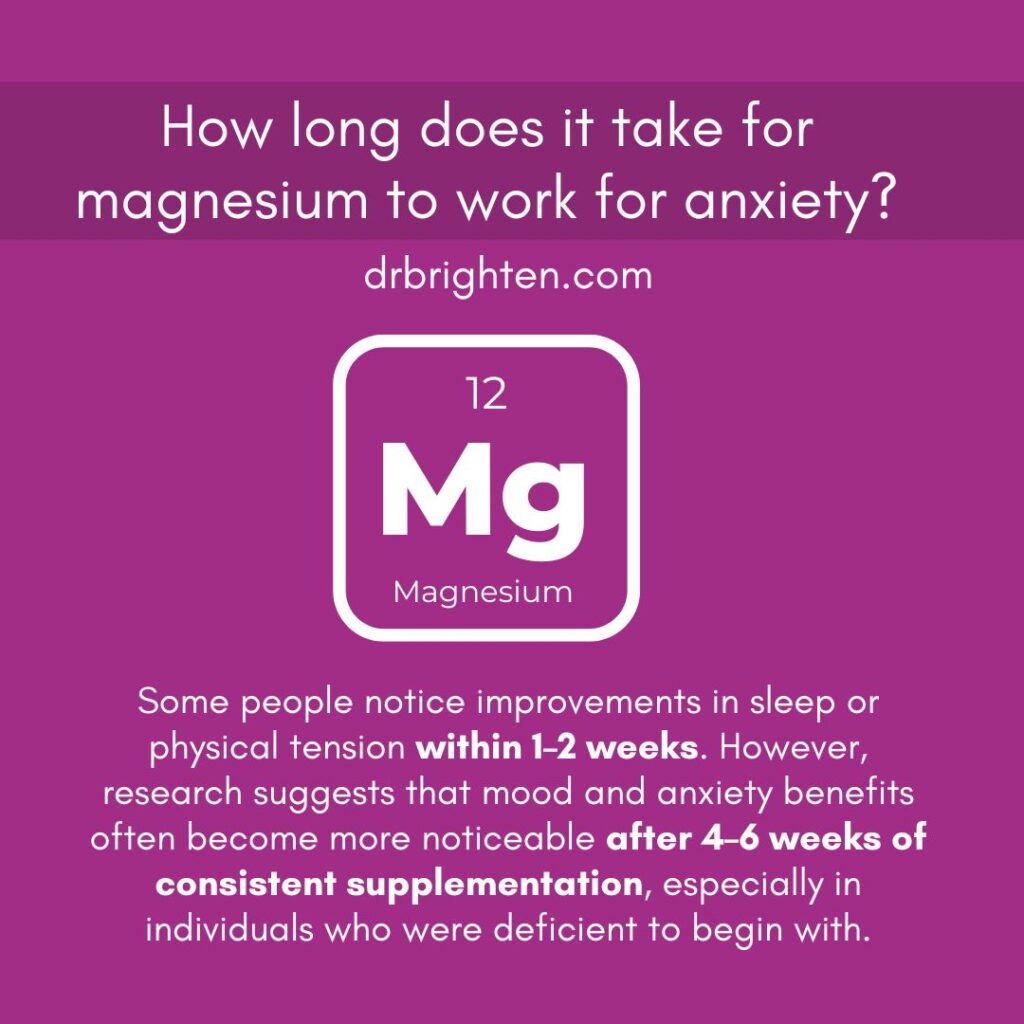
Some people notice subtle improvements in calmness or sleep within 1–2 weeks, but research suggests more meaningful anxiety benefits typically appear after 4–6 weeks of consistent supplementation, especially when magnesium deficiency is addressed.
Choosing the right form matters:
Not all magnesium supplements affect anxiety equally. Well-absorbed forms like magnesium glycinate—the form used in Magnesium Plus—are generally preferred for anxiety and sleep support because they’re gentle on digestion and include glycine, an amino acid with calming effects of its own.
Magnesium doesn’t “sedate” the brain or blunt emotions. Instead, it supports the biological systems that allow your nervous system to regulate stress more effectively. For many people, especially those who are depleted or hormonally sensitive, restoring magnesium levels can be a meaningful step toward feeling calmer, sleeping better, and responding to stress with more resilience.
Why Magnesium Is Important for Anxiety and Mental Health
Magnesium is an essential mineral involved in over 300 enzymatic reactions in your body. It helps regulate everything from energy production and muscle function to nerve signaling and hormone balance—and when you consume enough, it can be helpful for feeling calmer both mentally and physically.
When it comes to managing anxiety specifically, magnesium is especially important because it helps your brain and body shift from “fight-or-flight” into a more relaxed, parasympathetic state. It does this by helping to:
- Regulate the stress response system (the HPA axis)
- Support GABA, a calming neurotransmitter that quiets racing thoughts
- Lower inflammation and oxidative stress in the brain
- Maintain healthy serotonin and dopamine levels, both of which are tied to mood and motivation
- Reduce excitability in the nervous system and muscle tension
Related: Magnesium Benefits: 15 Ways This Mineral Boosts Health
Can Magnesium Deficiency Cause Anxiety?
Yes, it potentially can—and magnesium deficiency is more common than you probably realize.
Some estimates suggest that up to 50% of adults in the U.S.2 do not get enough magnesium, largely due to factors like low intake (from processed or low-mineral foods), chronic stress, medications like diuretics or PPIs), poor absorption, and soil depletion that reduces magnesium levels in produce.
It's no wonder that, considering deficiency is widespread, we're seeing rising rates of issues like anxiety, fatigue, muscle tension, and poor sleep.
Related:
The Anxiety Hormone Connection
Healing Anxiety With Functional Medicine

Signs of Low Magnesium That Can Cause or Worsen Anxiety
Low magnesium levels are linked to increased irritability, restlessness, tension, and poor sleep.
And according to one systematic review3 of 18 studies, magnesium deficiency can also contribute to the development of mood disorders like anxiety and depression (in some people)by disrupting neurotransmitter activity and elevating stress hormones like cortisol. It can also increase the risk of sleep-related issues, such as insomnia, which in turn can cause even more anxiety.
Studies4 consistently show that there are associations between magnesium status, sleep quality, and symptoms of anxiety—meaning the more deficient you are, the more likely you are to experience these issues.
Common signs of low magnesium include:
- Anxiety and restlessness
- Muscle cramps or twitching
- Headaches or migraines
- Fatigue
- Trouble sleeping
- PMS or mood swings
- Heart palpitations
Related: Magnesium for Sleep: Complete Guide to Best Forms and Dosage
How Magnesium Helps with Anxiety (What the Research Shows)?
Multiple clinical studies suggest that yes, magnesium can be helpful for those with anxiety.
Magnesium helps calm the nervous system by enhancing GABA signaling, which is your brain’s main inhibitory (relaxing) neurotransmitter. This helps you feel more at ease and less reactive to stress. To give you a fuller picture of magnesium's benefits for the brain and nervous system, here's what recent research says:
1. Helps Reduce Anxiety and Improve Sleep
A 2024 review5 looked at clinical studies testing magnesium for anxiety and sleep issues and found mostly positive results. Out of 15 high-quality trials, most showed improvements in anxiety symptoms or sleep quality, particularly in people who were low in magnesium to begin with.
While the studies varied in dose, form, and design (so we can't say there's one perfect protocol), the takeaway is encouraging: magnesium supplements appear to be a safe and helpful option for easing mild anxiety and improving sleep, particularly when used consistently and paired with other calming nutrients.
2. Reduces PMS-Related Anxiety
In another randomized controlled trial6, magnesium supplementation was associated with reduced anxiety (and other symptoms) in women with premenstrual syndrome (PMS). Overall, studies show that magnesium helps with the relief and prevention of PMS7, dysmenorrhea, and postmenopausal symptoms.
3. Supports Brain Health and Stress Resilience
A 2025 review in Nutrients8 looked at how magnesium impacts brain health and several major conditions, including depression, migraines, and even Alzheimer’s disease. Researchers found that low magnesium levels are linked to mood disorders and higher stress reactivity because magnesium helps balance neurotransmitters like GABA and glutamate and regulates the HPA axis (your stress-response system).
The review also noted magnesium’s anti-inflammatory effects and support for long-term brain health9, which may explain its ability to ease depressive and anxious symptoms while supporting clearer thinking and cognitive function.
4. Magnesium for Depression and Anxiety
Another 2023 review in Nutrients10 found that magnesium may also reduce mild-to-moderate depression in adults, especially those with magnesium deficiency or stress-related symptoms. Participants felt calmer and experienced fewer physical signs of depression and anxiety, without side effects.
Related:
Anxiety and Supplements: What Really Works for Stress, Mood, and Sleep
Understanding Magnesium for Menopause: Your Comprehensive Guide

What Is the Best Magnesium Supplement for Anxiety and Sleep?
Given that there are many types of magnesium available—including magnesium glycinate, taurate, sulfate, chloride, malate, threonate, aspartate, citrate, and orotate—it's common to wonder what the best magnesium is for anxiety versus other benefits, such as sleep or digestion.
Magnesium Supplements for Anxiety: Comparison of Forms, Benefits, and Side Effects
| Magnesium Form | Best For | Anxiety Support | Absorption | Common Side Effects | Notes |
| Magnesium Glycinate | Anxiety, sleep, nervous system regulation | ⭐⭐⭐⭐⭐ | High | Rare; very gentle on digestion | Contains glycine, a calming amino acid. This is the form used in Magnesium Plus and is often the top choice for anxiety. |
| Magnesium L-Threonate | Brain health, cognitive stress, anxiety with brain fog | ⭐⭐⭐⭐☆ | High (crosses blood–brain barrier) | Minimal | Particularly useful for anxiety tied to mental overload, focus issues, or cognitive fatigue. |
| Magnesium Taurate | Anxiety with heart palpitations or cardiovascular stress | ⭐⭐⭐⭐☆ | Moderate–High | Minimal | Taurine supports both nervous system calm and heart rhythm regulation. |
| Magnesium Malate | Anxiety with fatigue or muscle pain | ⭐⭐⭐☆☆ | Moderate | Mild GI upset in some | Better for energy and muscle recovery than emotional regulation. |
| Magnesium Citrate | Constipation relief | ⭐⭐☆☆☆ | Moderate | Loose stools | Not ideal for anxiety; digestive effects can worsen nervous system sensitivity. |
| Magnesium Oxide | Occasional constipation | ⭐☆☆☆☆ | Low | Bloating, diarrhea | Poorly absorbed and generally ineffective for anxiety or mood support. |
| Topical Magnesium (Oil/Spray) | Muscle tension, acute stress | ⭐⭐☆☆☆ | Variable | Skin tingling | Evidence for absorption is limited, but some people experience subjective relaxation. |
Magnesium Glycinate for Anxiety (Dosage & Benefits)
Best for anxiety, sleep, and emotional regulation.
This form—which is the type found in Magnesium Plus—combines magnesium with glycine, an amino acid that promotes relaxation. It’s gentle on the stomach and has calming effects without making you groggy.
A typical magnesium glycinate anxiety dosage starts at 100–200 mg at night, and increases up to 400 mg/day if needed.
Magnesium L-Threonate for Anxiety and Brain Health
Great for cognitive function, mental clarity, and anxiety relief.
This type crosses the blood-brain barrier and directly supports brain health. It's often used for magnesium for depression and anxiety due to its neurological benefits.
Does Magnesium Citrate Help With Anxiety?
Does magnesium citrate help with anxiety? It's better for constipation relief and less ideal for anxiety support. It can cause loose stools in some people, so it’s not always well-tolerated long-term.
Similarly, magnesium oxide tends to have poor absorption. It's not very effective for mood or anxiety, but it has other uses, mostly for digestion/constipation relief.
Related: What's The Best Magnesium Supplement?
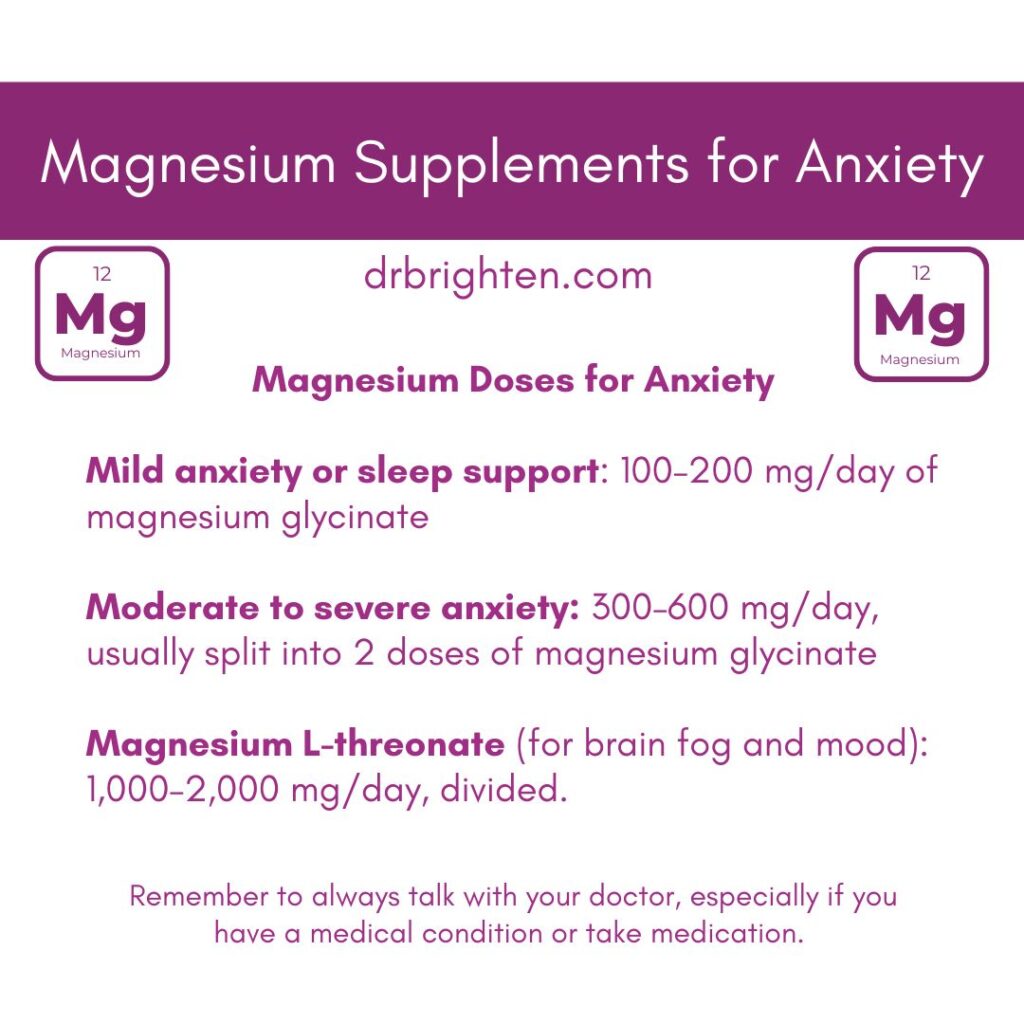
Magnesium Doses for Anxiety
Remember to always talk with your doctor, especially if you have a medical condition or take medication. Here’s a general guide for magnesium doses for anxiety:
- Mild anxiety or sleep support: 100–200 mg/day (ideally of magnesium glycinate, such as Magnesium Plus)
- Moderate to severe anxiety: 300–400 mg/day, usually split into 2 doses
- Magnesium L-threonate (for brain fog and mood): 1,000–2,000 mg/day, divided.
Related:
12 Ways to Reduce Anxiety Before Your Period
ADHD and Anxiety: How to Tell the Difference and What to Do About It
Perimenopause Anxiety Disorder: Can Unbalanced Hormones Like Progesterone Cause Anxiety?
How Long Does Magnesium Take to Work for Anxiety?
Most people begin to notice subtle improvements in calmness, sleep, and focus within one to two weeks of consistent use. However, research suggests that full benefits, especially for mood and anxiety, tend to appear after four to six weeks of daily supplementation.
Combining magnesium with vitamin D or calming adaptogens (like ashwagandha or saffron) may enhance these effects (more on that below).
Always check the product's label, as supplements can differ in terms of their density and recommended dosages.
Related: 10 Best Sleep Supplements Besides Melatonin
Best Magnesium for Anxiety and Heart Palpitations
Magnesium assists in heart rhythm regulation and nervous system function, so if you’re dealing with anxiety-induced heart palpitations or “fluttering” feelings in your chest, supplementing with magnesium may help stabilize your heart rate and ease physical tension.
The best forms for this purpose include magnesium glycinate or magnesium taurate, both of which support calmness and cardiovascular function.
Can Magnesium Cause Anxiety or Make It Worse?
While rare, some people do report feeling slightly jittery or restless when starting to take magnesium supplements, especially if:
- They take a large dose all at once
- They're already using other calming supplements, which can cause over-relaxation then rebound effects.
- The form they’re using is poorly absorbed (like magnesium oxide, for example)
Start low, go slow, and try forms known for mood support, like glycinate or threonate. Always take magnesium with food to improve absorption and reduce digestive upset.
If these side effects continue to occur after changing the dosage and timing, stop using it and get your doctor's opinion.
Related: 7 Natural Ways to Curb Your Anxiety
Where to Spray Magnesium Oil for Anxiety Relief
While evidence for transdermal magnesium absorption is limited and mixed, many people report subjective improvements in relaxation and muscle tension, likely due to localized neuromuscular effects.
Magnesium spray for sleep and anxiety is a great non-oral option for those with sensitive stomachs or who need help calming down fast.
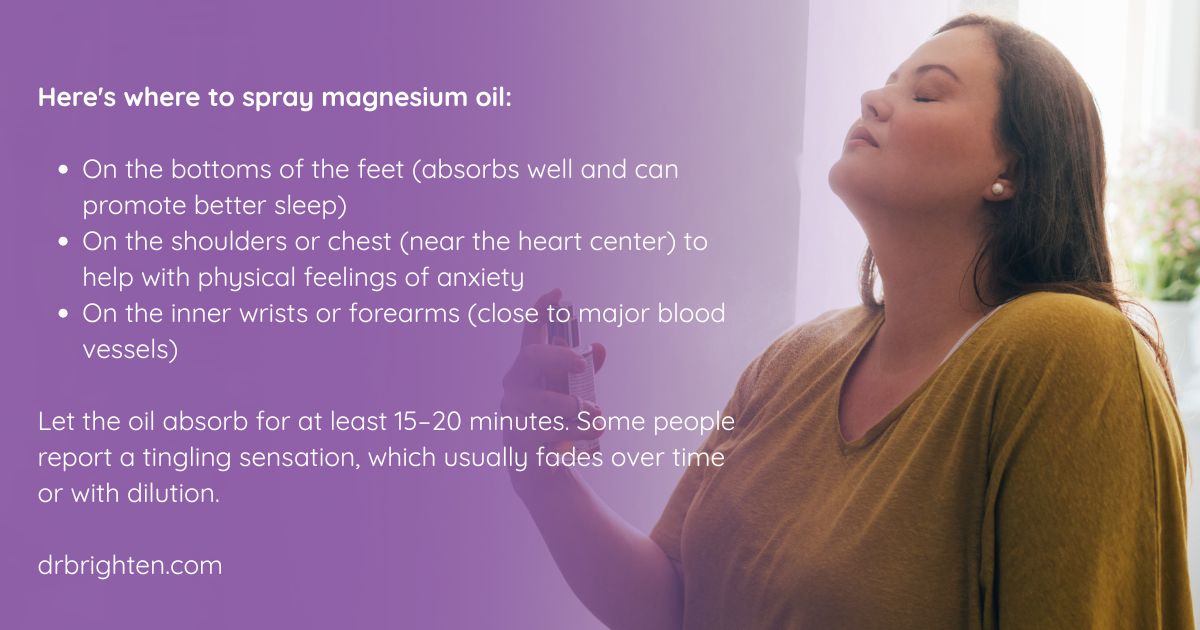
Here's where to spray magnesium oil for anxiety relief:
- On the bottoms of the feet (absorbs well and can promote better sleep)
- On the shoulders or chest (near the heart center) to help with physical feelings of anxiety
- On the inner wrists or forearms (close to major blood vessels)
Let the oil absorb for at least 15–20 minutes. Some people report a tingling sensation, which usually fades over time or with dilution.
Pair Magnesium With These Supplements for Even Better Anxiety Relief
Magnesium works even better when combined with other natural compounds that support a balanced nervous system.
Vitamin D and Magnesium for Anxiety:
Magnesium and vitamin D work synergistically to support cognitive/mental health. In fact, magnesium is required to activate and regulate vitamin D in the body, and low magnesium can impair the beneficial effects of vitamin D (and vice versa).
Both nutrients:
- Support immune and nervous system function
- Improve sleep quality
- Balance mood and reduce anxiety
If you’re already taking vitamin D (especially D3, the type found in my Vitamin D3//K2 drops), adding magnesium to your routine can boost its effectiveness and help avoid common side effects, which potentially can include insomnia or overstimulation.
Other Calming Supplements:
Here are a few evidence-backed combinations that can be effective for managing anxiety and other mood issues:
- Magnesium + L-Theanine (found in Adrenal Calm): L-theanine is great for calm alertness and improved focus.
- Magnesium + Ashwagandha (also found in Adrenal Calm): Adaptogens like ashwagandha can help reduce cortisol and stress reactivity.
- Magnesium + Saffron (found in Radiant Mind): Supports mood, focus, and sleep, plus has anti-inflammatory and neuro-protective effects.
- Magnesium + B vitamins (such as B Active Plus): Supports neurotransmitter synthesis (like serotonin and dopamine). Studies show that B vitamins like vitamin B6 combined with magnesium11 can be especially helpful for mood support.
Looking for a targeted formula that combines magnesium with mood-boosting and anxiety-reducing nutrients? Radiant Mind features saffron, zinc, magnesium, Cognizin® citicoline, and bacopa to support calmness, clarity, and overall emotional resilience.
Final Thoughts on Magnesium Supplements and Anxiety
- Can low magnesium cause anxiety? Potentially, yes. That's because magnesium is needed to help regulate neurotransmitters, calm the nervous system, and ease emotional overwhelm (which is why we need to consume it consistently).
- If you’ve been struggling with tension, stress, or trouble sleeping, adding a magnesium supplement for sleep and anxiety can be beneficial for your mood and resilience.
- Start with a gentle form like magnesium glycinate, such as Magnesium Plus, combine it with lifestyle support, and consider stacking it with other calming ingredients like saffron (in Radiant Mind), L-theanine, or ashwagandha for even better results.
- Always consult your healthcare provider if you’re on medication, pregnant, or have kidney concerns.
Want More Tools to Boost Your Mood Naturally?
If you're looking for other ways to sharpen your concentration, steady your emotions, and feel more aligned with your cycle, be sure to check out my free resource: The ADHD Woman’s Hormone & Brain Sync Guide.
It’s packed with practical, research-backed tips to help you support your brain and hormones—whether you’re navigating work, relationships, motherhood, or just trying to make it through the day with a little more energy and calm. It’s designed to help you naturally support concentration, energy, and emotional balance through every phase of your cycle.
Frequently Asked Questions About Magnesium and Anxiety
Yes, magnesium can help reduce anxiety, particularly in people who are deficient or under chronic stress. Magnesium supports the nervous system by enhancing GABA activity (a calming neurotransmitter), regulating the stress response (HPA axis), and improving sleep quality. Clinical studies suggest magnesium may be especially helpful for mild to moderate anxiety and stress-related symptoms when taken consistently.
Low magnesium levels are associated with increased anxiety, irritability, restlessness, and poor sleep. Magnesium deficiency can disrupt neurotransmitter balance, raise cortisol levels, and increase nervous system excitability—all of which can worsen anxiety symptoms. Because magnesium depletion is common due to stress, medications, and low-mineral diets, deficiency-related anxiety is often overlooked.
Magnesium glycinate is widely considered the best form of magnesium for anxiety. It is well absorbed, gentle on the stomach, and includes glycine—an amino acid with calming effects on the brain. Magnesium L-threonate may also be helpful for anxiety tied to brain fog or cognitive stress, as it crosses the blood–brain barrier.
Magnesium Plus contains magnesium glycinate and is formulated specifically to support calmness, sleep, and nervous system balance.
Magnesium doses for anxiety typically range from:
• 100–200 mg per day for mild anxiety or sleep support
• 300–400 mg per day for moderate anxiety, often split into two doses
Most adults should not exceed 350–400 mg per day from supplements unless supervised by a healthcare provider. Starting with a lower dose and gradually increasing helps minimize digestive side effects.
Some people notice improvements in sleep or physical tension within 1–2 weeks. However, research suggests that mood and anxiety benefits often become more noticeable after 4–6 weeks of consistent supplementation, especially in individuals who were deficient to begin with.
In rare cases, magnesium may temporarily cause restlessness or jitteriness, particularly if taken in large doses, on an empty stomach, or in poorly absorbed forms like magnesium oxide. These effects are usually dose-related and resolve by lowering the dose, switching to a better-absorbed form (such as glycinate), or taking magnesium with food.
Yes, magnesium can support both anxiety and heart palpitations. Magnesium plays a key role in regulating heart rhythm and calming the nervous system. Magnesium glycinate and magnesium taurate are often preferred when anxiety is accompanied by palpitations, muscle tension, or stress-related cardiovascular symptoms.
Magnesium is commonly used to support both anxiety reduction and sleep quality. By calming the nervous system and supporting GABA activity, magnesium can help quiet racing thoughts, reduce nighttime muscle tension, and improve sleep onset and depth. Magnesium glycinate is especially helpful for sleep-related anxiety.
Topical magnesium (often called magnesium oil or spray) may help reduce physical tension and promote relaxation, though scientific evidence on absorption through the skin is limited. Many people report subjective calming effects, especially when applied to areas like the feet, shoulders, or chest in the evening. It can be a useful option for those who don’t tolerate oral supplements well.
Magnesium often works best as part of a broader nervous system support strategy. Research and clinical experience suggest benefit from combinations such as:
• Magnesium + vitamin D (for mood and nervous system regulation)
• Magnesium + B vitamins (for neurotransmitter support)
• Magnesium + saffron or L-theanine (for emotional balance and calm focus)
Magnesium Plus can be paired with products like Radiant Mind or Adrenal Calm for more comprehensive anxiety and mood support.
People with kidney disease, those taking certain medications (such as diuretics or medications affecting electrolytes), or individuals who are pregnant should consult a healthcare provider before supplementing with magnesium. Always review supplement use with your clinician if you have underlying medical conditions.
References
- https://pmc.ncbi.nlm.nih.gov/articles/PMC11381753/ ↩︎
- https://pmc.ncbi.nlm.nih.gov/articles/PMC11136869/ ↩︎
- https://pubmed.ncbi.nlm.nih.gov/28445426/ ↩︎
- https://pmc.ncbi.nlm.nih.gov/articles/PMC11136869/ ↩︎
- https://pmc.ncbi.nlm.nih.gov/articles/PMC11136869/ ↩︎
- https://www.ijwhr.net/pdf/pdf_IJWHR_624.pdf ↩︎
- https://www.gynaecology-obstetrics-journal.com/wp-content/uploads/2020/11/06.pdf ↩︎
- https://pmc.ncbi.nlm.nih.gov/articles/PMC12252419/ ↩︎
- https://pmc.ncbi.nlm.nih.gov/articles/PMC12252419/ ↩︎
- https://www.frontiersin.org/journals/psychiatry/articles/10.3389/fpsyt.2023.1333261/full ↩︎
- https://onlinelibrary.wiley.com/doi/10.1002/smi.3051 ↩︎
About The Author