
If you are living with both ADHD and endometriosis, you have likely experienced something that is still widely under-recognized in conventional medicine: your symptoms do not exist in isolation. Instead, they interact in ways that can make both conditions more difficult to manage.
You may notice that your ability to focus declines during a flare, that your motivation drops significantly before your period, or that your emotional regulation becomes more fragile when your pain increases. Many women describe a sense that their brain feels “offline,” even when they are doing everything they can to stay on track.
This is not a lack of discipline, and it is not simply “hormones.” It reflects the interaction of multiple biological systems, including immune signaling, neuroinflammation, neurotransmitter regulation, and endocrine function.
Emerging research, combined with clinical observation, suggests that ADHD and endometriosis overlap through shared pathways. Once you understand these connections, the treatment approach shifts from managing two separate diagnoses to addressing the systems that drive both.
ADHD and Endometriosis: Quick Answer
Can endometriosis worsen ADHD symptoms?
Yes. Endometriosis can worsen ADHD symptoms through inflammation, hormonal fluctuations, and stress-related changes that disrupt dopamine and brain function.
Why does this happen?
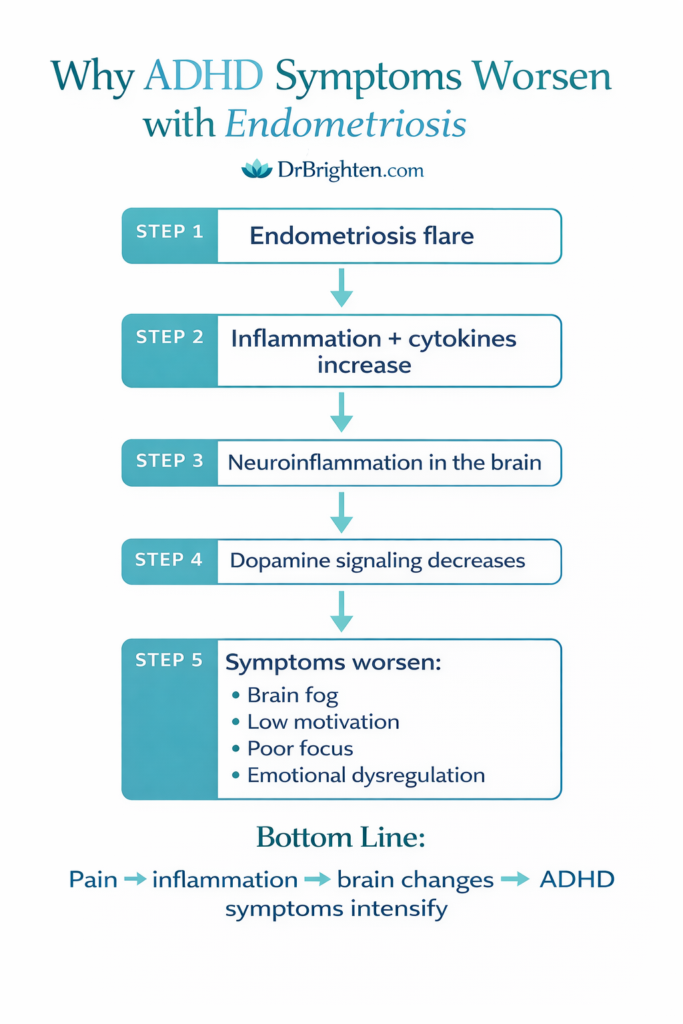
Endometriosis increases inflammatory cytokines and activates the stress response, which can impair dopamine signaling and lead to brain fog, low motivation, and poor focus.
What helps both ADHD and endometriosis?
A multi-pathway approach that supports inflammation, neurotransmitters (dopamine + serotonin), and stress physiology is often most effective.
What You Will Learn in This Article
In this article, you will learn:
- How inflammation associated with endometriosis can affect brain function and cognition
- Why ADHD symptoms often worsen across the menstrual cycle and during flares
- The role of dopamine, serotonin, and estrogen in symptom expression
- Why conventional ADHD treatment may not fully address symptoms in women with endometriosis
- A systems-based treatment approach that integrates inflammation, neurotransmitters, hormones, and stress physiology
- Where targeted supplementation, including Dr. Brighten Essentials formulas, can provide support
In this article:
- ADHD and Endometriosis: Quick Answer
- What You Will Learn in This Article
- ADHD and Endometriosis: Understanding the Biological Connection
- How Inflammation in Endometriosis Affects ADHD Symptoms
- Dopamine Dysfunction in ADHD and Endometriosis
- How Estrogen and Hormones Impact ADHD in Women with Endometriosis
- Why Conventional ADHD Treatment May Not Be Enough
- A Systems-Based Treatment Approach to ADHD and Endometriosis
- Where Targeted Supplementation Fits
- When a Multi-Pathway Formula Like Radiant Mind Is the Better Fit
- Key Takeaway
- Frequently Asked Questions
- Take the Next Step: Understand Your ADHD-Hormone Connection

ADHD and Endometriosis: Understanding the Biological Connection
ADHD is typically categorized as a neurodevelopmental condition, while endometriosis is classified as a gynecologic disorder. However, this distinction does not fully capture the complexity of either condition, particularly in women.
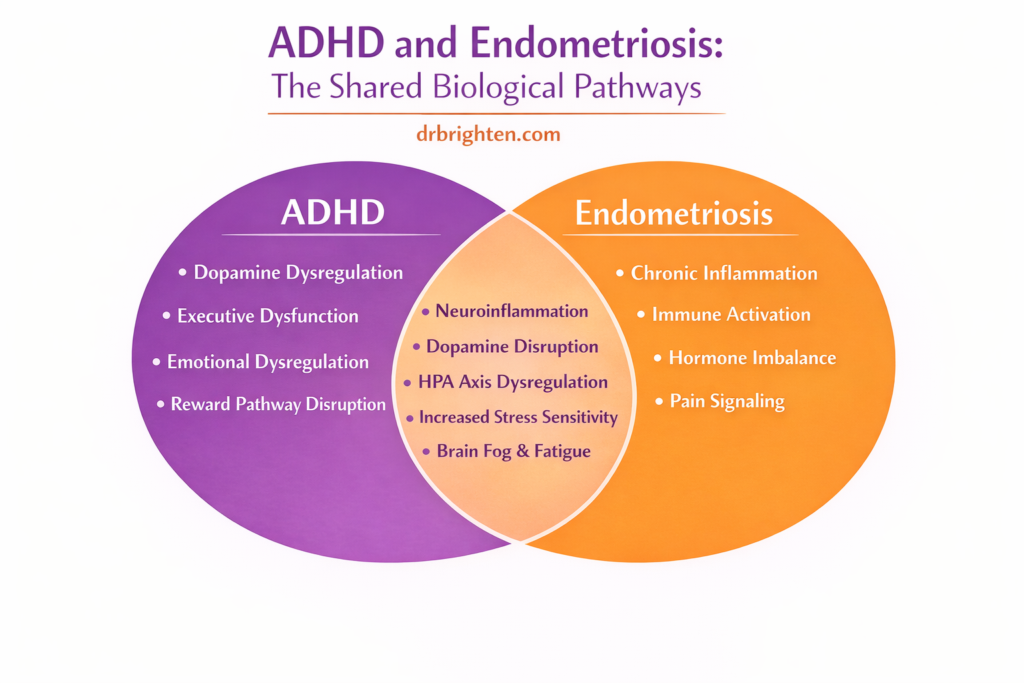
Both ADHD and endometriosis involve:
- Chronic immune activation
- Inflammatory signaling pathways
- Alterations in neurotransmitter function
- Sensitivity to hormonal fluctuations
Endometriosis is characterized by elevated inflammatory cytokines, increased oxidative stress, and dysregulated immune responses. These same processes are increasingly being explored in ADHD, particularly in women, where symptoms are more variable and closely tied to hormonal changes.
Clinically, women with endometriosis frequently report symptoms that overlap with ADHD, including:
- Difficulty concentrating and completing tasks
- Brain fog and reduced cognitive clarity
- Low motivation and mental fatigue
- Mood instability and irritability
These symptoms are not incidental. They reflect systemic changes that affect both the body and the brain.
Symptoms of ADHD and Endometriosis Overlap
Women with both conditions often experience:
- Brain fog during flares or before menstruation
- Difficulty initiating or completing tasks
- Increased emotional sensitivity
- Low motivation despite intention
- Fatigue that does not improve with rest
These symptoms are often driven by inflammation, hormone fluctuations, and neurotransmitter disruption—not a lack of effort.
How Inflammation in Endometriosis Affects ADHD Symptoms
Endometriosis is fundamentally an inflammatory condition. Elevated levels of cytokines such as interleukin-6 (IL-6), tumor necrosis factor-alpha (TNF-α), and prostaglandins contribute to pain, lesion progression, and immune dysregulation.
These inflammatory mediators are not confined to the pelvic environment. They can cross into the central nervous system and influence brain function, contributing to what is known as neuroinflammation.
Neuroinflammation has been associated with:
- Altered dopamine signaling
- Impaired executive function
- Increased fatigue
- Changes in mood regulation
For women with ADHD, this creates a compounding effect. When inflammation increases, cognitive function often declines. This is one of the key reasons ADHD symptoms may worsen during endometriosis flares.

Dopamine Dysfunction in ADHD and Endometriosis
Dopamine plays a central role in ADHD. It regulates motivation, attention, reward processing, and the ability to initiate and complete tasks.
However, dopamine signaling is highly sensitive to physiological stressors, including:
- Inflammatory cytokines
- Cortisol fluctuations
- Hormonal changes
In endometriosis, chronic pain activates the stress response system, leading to dysregulation of the hypothalamic-pituitary-adrenal (HPA) axis. This can result in altered cortisol patterns and downstream suppression of dopamine activity.
The clinical presentation often includes:
- Reduced motivation despite intention
- Difficulty initiating tasks
- Increased mental fatigue
- A sense of cognitive overwhelm
These symptoms are frequently misinterpreted as behavioral issues, but they are rooted in underlying biochemical changes.
How Estrogen and Hormones Impact ADHD in Women with Endometriosis
Estrogen has a significant influence on neurotransmitter function, particularly dopamine. It enhances dopamine synthesis, increases receptor sensitivity, and supports overall signaling efficiency.
When estrogen levels fluctuate or decline, dopamine activity is affected. This can lead to changes in focus, mood, and cognitive performance.
Women with endometriosis often experience:
- Estrogen dominance patterns
- Greater hormonal variability
- Severe premenstrual symptoms or PMDD
These hormonal shifts can destabilize neurotransmitter systems, contributing to:
- Worsened ADHD symptoms in the luteal phase
- Increased emotional reactivity
- Greater difficulty with focus and executive function
This pattern highlights the importance of considering hormonal context when evaluating ADHD symptoms in women.
Related articles
ADHD in Women: Symptoms and Solutions
Why Conventional ADHD Treatment May Not Be Enough
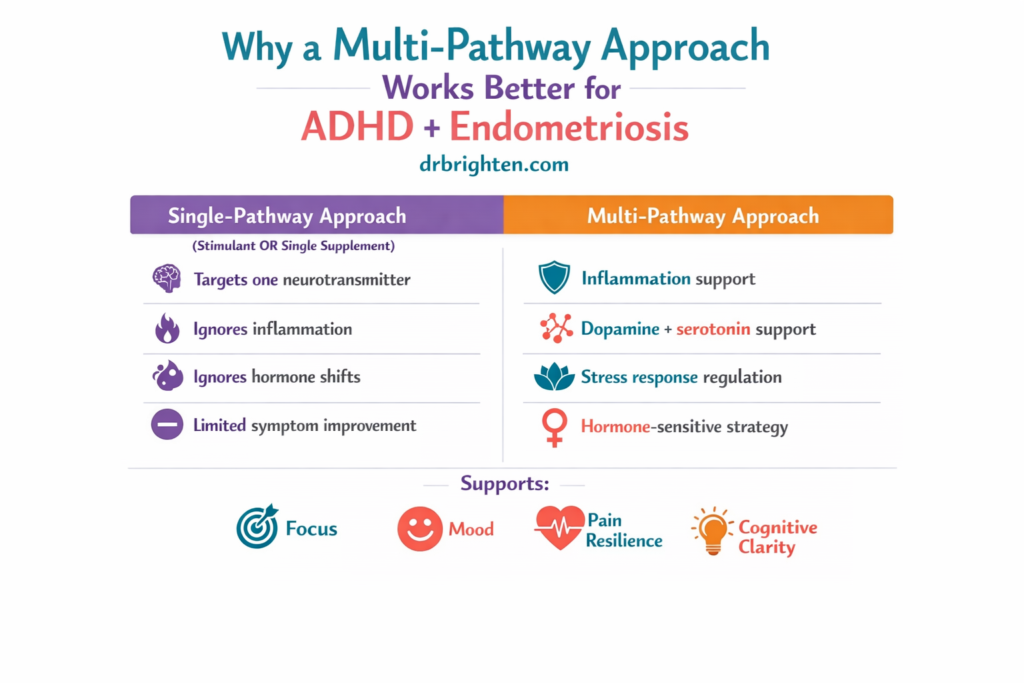
Standard ADHD treatment typically focuses on stimulant medications and behavioral interventions. While these approaches can be effective, they do not address several key drivers present in women with endometriosis.
These include:
- Chronic inflammation
- Hormone-related neurotransmitter changes
- Stress physiology and HPA axis dysregulation
- Nervous system sensitization due to chronic pain
As a result, women may find that their ADHD symptoms worsen during endometriosis flares, even when their treatment plan has previously been effective.
This does not mean that treatment has failed. It means that additional biological factors are influencing symptom expression.
A Systems-Based Treatment Approach to ADHD and Endometriosis
Effectively managing ADHD and endometriosis together requires addressing the shared pathways that contribute to both conditions.
Inflammation Regulation
Reducing inflammation can improve both physical and cognitive symptoms. This may involve:
- Following an anti-inflammatory dietary pattern
- Increasing intake of omega-3 fatty acids
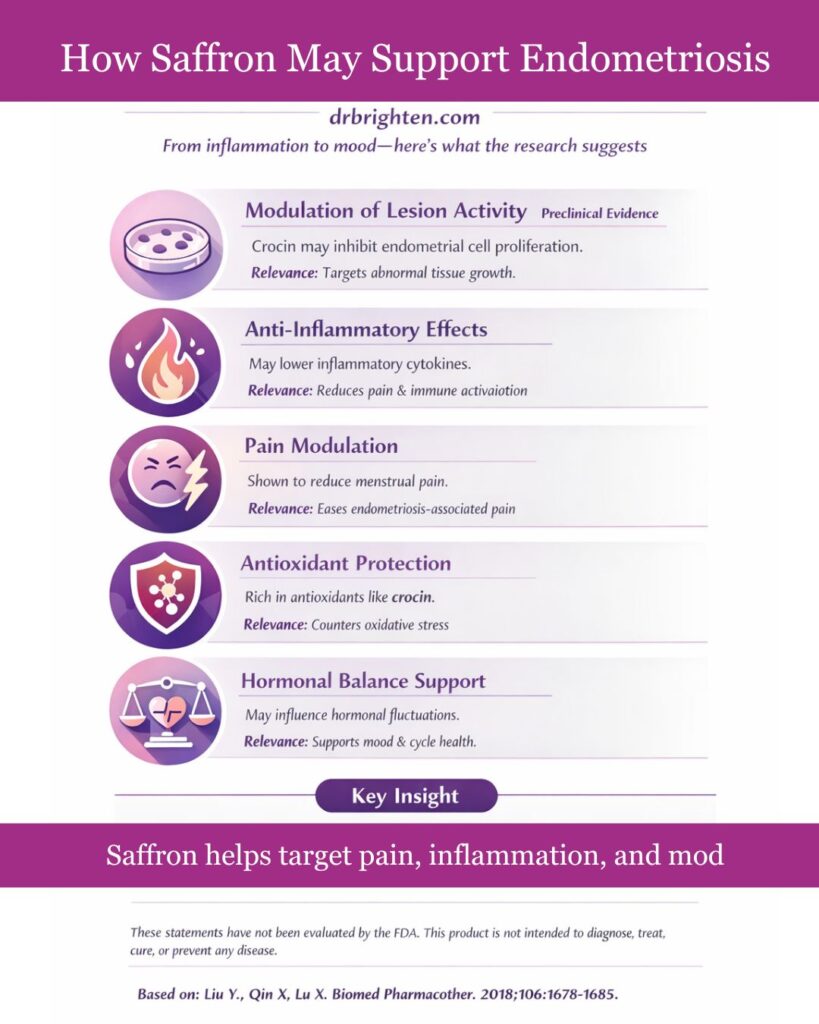
- Incorporating polyphenol-rich compounds, such as saffron
Neurotransmitter Support
Both serotonin and dopamine need to be supported.
- Serotonin plays a role in mood, emotional regulation, and pain perception
- Dopamine is essential for focus, motivation, and executive function
Focusing on only one neurotransmitter often leads to incomplete results.
Stress Response and HPA Axis Support
Chronic pain acts as a persistent stressor, which can dysregulate cortisol patterns and increase sympathetic nervous system activity.
Supporting the stress response may include:
- Targeted nutrients that support resilience and recovery
Hormonal Stability
Hormonal fluctuations influence both inflammation and neurotransmitter function. Supporting hormone balance can help reduce symptom variability across the cycle.
Blood Sugar Stability
Blood sugar fluctuations can negatively impact cognitive performance, mood, and energy levels. Stabilizing blood sugar is a foundational component of both ADHD and endometriosis management.
Where Targeted Supplementation Fits
Given the complexity of these overlapping systems, a multi-pathway approach to supplementation is often more effective than relying on a single ingredient.
Dr. Brighten Essentials formulations are designed to reflect this systems-based approach.
For example:
- Radiant Mind™ includes clinically studied saffron to support serotonin signaling, along with citicoline to support dopamine and cognitive function, bacopa for stress adaptation, and zinc for neurotransmitter and immune support
- Magnesium Plus supports nervous system regulation, sleep quality, and stress resilience
- Omega Plus provides anti-inflammatory support and contributes to brain health and neurotransmitter function
This type of comprehensive support is particularly relevant for women who experience:
- Brain fog during endometriosis flares
- Low motivation or difficulty focusing
- Mood instability across the menstrual cycle
- Increased sensitivity to stress
Supplementation should always be used as part of a broader strategy that includes nutrition, lifestyle, and appropriate medical care.
When a Multi-Pathway Formula Like Radiant Mind Is the Better Fit
Saffron alone can support mood and inflammation, but many women with ADHD and endometriosis are dealing with multiple overlapping systems at once.
You may benefit more from a multi-pathway formula if you experience:
- Brain fog during endometriosis flares
- Low motivation or difficulty initiating tasks
- Mood changes that worsen before your period
- Feeling “wired but tired” or easily overwhelmed
- Pain that increases anxiety or mental fatigue
In these cases, supporting only serotonin is often not enough.
A formula like Radiant Mind is designed to support:
- Serotonin (mood, emotional regulation)
- Dopamine (focus, motivation, executive function)
- Stress response (adaptation to chronic pain and inflammation)
- Neuroinflammation (brain-based immune signaling)
This is why many women see more noticeable improvements with a multi-ingredient approach rather than a single compound.
Key Takeaway
ADHD and endometriosis are interconnected conditions that share underlying biological pathways involving inflammation, neurotransmitters, hormones, and stress physiology.
When these systems are addressed together, treatment becomes more effective and more aligned with how the body functions. This approach allows for improvements not only in symptom management, but also in overall quality of life.
Frequently Asked Questions
Yes. Inflammation, hormonal fluctuations, and chronic pain can disrupt neurotransmitter function and exacerbate ADHD symptoms.
Brain fog may be related to neuroinflammation, dopamine disruption, and the effects of chronic stress on the nervous system.
A comprehensive approach that addresses inflammation, neurotransmitters, hormonal balance, and stress physiology is often most effective.
Take the Next Step: Understand Your ADHD-Hormone Connection
If you want to better understand how your hormones are influencing your ADHD symptoms—and what to do about it—I created a free resource for you.
The ADHD Brain Hormone Sync 5-Day Mini Course walks you through:
- How your cycle impacts focus, mood, and energy
- The specific patterns that drive your symptoms
- Practical strategies to support your brain and hormones
You can join here: drbrighten.com/adhdsync
Related Resource
Check out this podcast for a deeper exploration of the connection between ADHD and endometriosis, including clinical insights and discussion.
References:
https://pmc.ncbi.nlm.nih.gov/articles/PMC9361724
https://pmc.ncbi.nlm.nih.gov/articles/PMC9000812
https://pmc.ncbi.nlm.nih.gov/articles/PMC6266642
https://pmc.ncbi.nlm.nih.gov/articles/PMC4643654
https://pubmed.ncbi.nlm.nih.gov/38694315
https://pmc.ncbi.nlm.nih.gov/articles/PMC10855755
https://pmc.ncbi.nlm.nih.gov/articles/PMC6235659
https://pubmed.ncbi.nlm.nih.gov/19787421
https://pubmed.ncbi.nlm.nih.gov/18271889
https://www.sciencedirect.com/science/article/abs/pii/S0165032713007970?via%3Dihub
https://onlinelibrary.wiley.com/doi/10.1002/hup.2434?prg140729=daaba3d3-057c-4131-bfb1-2095ab6cd1b6
https://pubmed.ncbi.nlm.nih.gov/38558480
https://pmc.ncbi.nlm.nih.gov/articles/PMC11426294
https://pmc.ncbi.nlm.nih.gov/articles/PMC12277363/
About The Author