

If you have ADHD, you’ve probably noticed that your ability to focus isn’t always consistent. Some days, your brain probably seems to cooperate very well, but on others, simple tasks might feel mentally exhausting, as though your cognitive “battery” has been drained.
ADHD is usually discussed through the lens of neurotransmitters like dopamine and norepinephrine. However, researchers are now exploring another piece of the puzzle: brain energy metabolism. And that’s where creatine enters the conversation.
For years, creatine was mostly used by athletes to support strength and performance. But we now know that creatine doesn’t only fuel muscle cells; it also helps to generate and recycle energy, particularly in regions involved in attention, working memory, decision-making, and executive function.
At this time, creatine is not considered a treatment for ADHD, nor should it replace evidence-based approaches such as medication, behavioral strategies, or psychotherapy when appropriate.
That said, the latest research suggests that creatine’s role in cellular energy production may support brain energy metabolism, but direct evidence for ADHD symptom improvement is limited.
You're in ✦
Check your inbox. Day one is on its way.
Your ADHD Hormone & Brain Sync Guide is heading to your inbox now — look for it from Dr. Brighten in the next few minutes.
New Book · Out October 6, 2026
The full system behind the guide
These five days are the doorway. ADHD and Women is the whole map — the ADHD-Hormone Profile and what to do across every hormonal transition.
Pre-Order ADHD and WomenQuick answer
Creatine is not an ADHD treatment and should not replace medication or behavioral therapy. However, creatine monohydrate may support brain energy metabolism, mental fatigue, working memory, and cognitive performance under stress. The strongest evidence is for general cognitive support, not direct ADHD symptom treatment.
What Is Creatine and Why Does the Brain Need It?
Creatine is a naturally occurring compound made from amino acids, which are described as the “building blocks of protein.”
Your body produces creatine in the liver, kidneys, and pancreas, and you also obtain small amounts from foods such as red meat and fish.
Although creatine is best known for its role in muscle function[1]—including significantly improving muscle strength and mass when paired with resistance training—approximately 5% of the body’s total creatine[2] stores are found in the brain.
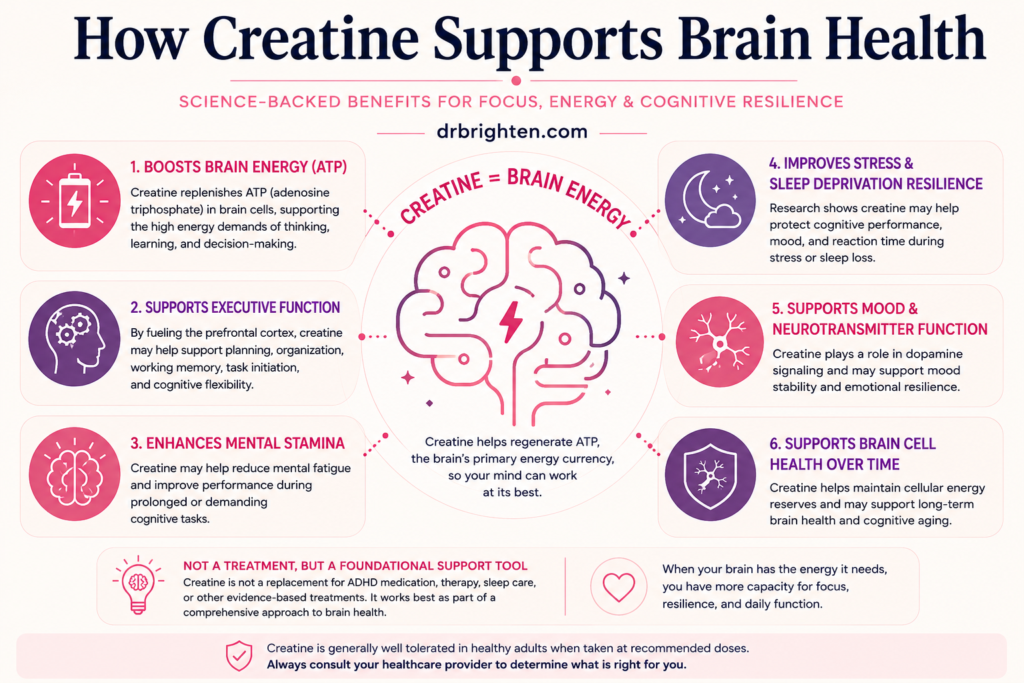
Creatine helps regenerate adenosine triphosphate (ATP), which serves as the primary energy currency of the cell. Think of ATP as the fuel that powers everything your cells do.
Your brain is very “energy hungry” and requires a lot of ATP to function well.
The brain accounts for only about 2% of most people’s body weights, yet it consumes approximately 20% of the body’s energy. Regions involved in executive function, attention regulation, decision-making, and working memory are especially energy demanding, which helps explain why you feel wiped after a mentally demanding day.
Creatine acts as a reserve energy system, helping to replenish ATP when energy demands increase. This is one reason researchers have become interested in creatine monohydrate for ADHD and other conditions involving cognitive performance.
Does Creatine Help with ADHD?
Currently, there is not enough evidence to conclude that creatine directly treats ADHD.
However, there is evidence that it can support biological processes that are relevant to ADHD symptoms.
ADHD is associated with differences in neurotransmitter signaling, particularly involving dopamine and norepinephrine. Studies show that alterations in brain energy metabolism[3] can contribute to some aspects of ADHD.
Researchers have explored whether interventions that support cellular energy production could help optimize cognitive function. While direct studies examining creatine for ADHD are limited, creatine has demonstrated potential benefits in areas that overlap with ADHD-related challenges. These include:
- Mental fatigue
- Cognitive performance under stress
- Mood regulation
- Sleep deprivation resilience
- Working memory support
For instance, a 2024 meta-analysis[4] published in Frontiers in Nutrition found that creatine monohydrate supplementation may provide modest benefits for cognitive performance in adults, particularly in areas such as memory, attention time, and information processing speed. However, the authors emphasized that larger clinical trials are still needed.
So does creatine affect ADHD? Possibly. But more research is needed before definitive recommendations can be made. Based on all that we know, creatine should be viewed as a complementary tool for managing ADHD, but not a primary ADHD intervention.
Related:
Exploring Natural Solutions for Adult ADHD — How To Find Relief
Best Natural ADHD Supplements for Focus and Attention (Science-Backed Guide)
What Research Actually Shows
| Evidence | What it shows |
|---|---|
| Direct creatine + ADHD trials | Limited / not enough |
| Creatine + cognition studies | Modest support, especially under stress/fatigue |
| Creatine + mood studies | Emerging, not definitive |
| Safety data | Generally favorable in healthy adults |
How Might Creatine Help ADHD?
Several mechanisms help explain why more and more people in the ADHD community are recommending creatine:
Creatine Supports Brain Energy Production:
The prefrontal cortex, which helps to control executive function, has substantial energy demands. Executive functions include:
- Planning
- Organization
- Inhibitory control
- Task initiation
- Sustained attention
By supporting ATP regeneration, creatine may help maintain cellular energy availability during periods of increased cognitive demand.
A 2022 review[5] examining creatine supplementation and brain function concluded that creatine could support cognitive performance, particularly during periods of metabolic stress when brain energy demands are elevated.
Related: ADHD Burnout? Your Hormones Might Be Sabotaging You
Creatine May Support Mental Performance During Stress or Fatigue:
Sleep deprivation, chronic stress, and intense cognitive workloads can impair executive functioning.
Findings from some studies show that creatine supplementation can help preserve aspects of cognitive performance during periods of acute stress or insufficient sleep.
Since many people with ADHD experience sleep disturbances and susceptibility to fatigue and mood swings, this effect of creatine can be very helpful for some.
For instance, in a study[6] examining the effects of sleep deprivation, creatine improved mood state and performance on tasks that heavily relied on prefrontal cortex function following 24 hours without sleep.
More recently, a 2024 study[7] found that a single high dose of creatine partially reversed fatigue-related declines in cognitive performance, suggesting that creatine’s effects on the brain are most relevant during periods of increased energetic demand.
Related:
ADHD, Sleep & Hormones: Why Your Brain Won’t Shut Off at Night
Creatine May Influence Mood Regulation:
Mood difficulties such as anxiety and depression are common among those with ADHD, and there’s evidence suggesting that creatine can have a potentially positive role in managing mood issues, particularly among women.
A 2024 review[8] of creatine use among those with depression reported that creatine supported mood and cognitive function by enhancing cellular energy metabolism in brain regions involved in emotional regulation.
Related:
ADHD and Anxiety: How to Tell the Difference and What to Do About It
ADHD, Motherhood, and Invisible Overload
Clinical Perspective: How I Think About Creatine for Women with ADHD
When patients ask me whether creatine is worth considering for ADHD, my answer is that it depends less on the diagnosis itself and more on the context in which their brain is trying to function.
ADHD doesn’t exist in isolation. The brain is influenced every day by hormones, nutrition, sleep, inflammation, stress, and metabolic health. This is especially true for women, whose hormonal fluctuations can substantially change cognitive performance and ADHD symptom severity throughout life.
Many women notice that their focus, motivation, emotional regulation, and working memory worsen during the late luteal phase of the menstrual cycle, after giving birth, during perimenopause, or after menopause. These are all times when hormonal changes affect dopamine signaling, mitochondrial function, and the brain’s ability to meet its energy demands. If the brain is already working harder to regulate attention and executive function, any additional strain on its energy supply can make symptoms feel even more pronounced.
This is one reason I find the emerging research on creatine so interesting. Creatine doesn’t increase dopamine the way stimulant medications do. Instead, it supports one of the brain’s most fundamental needs: the ability to rapidly regenerate cellular energy. While we still need clinical trials specifically evaluating creatine in women with ADHD, supporting brain energy metabolism is a biologically plausible strategy that deserves further investigation.
In my clinical experience as a board certified naturopathic endocrinologist, I am more likely to consider whether creatine could be a helpful addition for women who have ADHD alongside factors that increase their energy demands or reduce creatine availability. That might include women who:
- Experience significant mental fatigue or “brain fog”
- Have disrupted sleep or are chronically sleep deprived
- Eat little or no red meat, such as vegetarians and vegans
- Participate in regular resistance training or high levels of physical activity
- Are navigating perimenopause or menopause and noticing worsening cognitive symptoms
- Feel mentally depleted despite otherwise well-managed ADHD
That doesn’t mean creatine is the missing piece for everyone. It also doesn’t mean every woman with ADHD should take it.
When someone presents with worsening focus or cognitive fatigue, I first want to understand why. Is iron deficiency contributing? Could low vitamin B12, thyroid dysfunction, inadequate protein intake, poor sleep quality, chronic stress, or hormonal changes be impairing brain function? Have we optimized the evidence-based treatments already available?
Creatine is best viewed as one potential tool within a comprehensive treatment plan—not as a replacement for a thorough evaluation or individualized care.
For many women, improving ADHD symptoms requires addressing the whole neuroendocrine picture. That may include medication when appropriate, cognitive behavioral strategies, adequate protein intake, resistance training, sleep optimization, hormone-aware care during reproductive transitions, and correcting nutrient deficiencies. Creatine may complement these interventions by supporting the brain’s energy metabolism, but it works best when the foundation is already in place.
As the science continues to evolve, I’m optimistic that we’ll better understand which women are most likely to benefit from creatine supplementation and when it has the greatest clinical value. Until then, I view creatine as a promising adjunct—not because it treats ADHD directly, but because supporting the brain’s energy needs may help some women build greater cognitive resilience.
Does Creatine Increase Focus?
The short answer is: not in the same way stimulant medications do.
Stimulants work primarily by increasing the availability of dopamine and norepinephrine within specific brain regions that are involved in attention and executive function.
Creatine works differently. Rather than directly altering neurotransmitter concentrations, creatine supports the energetic demands of neurons. Because of this, some adults using creatine report improvements in:
- Mental stamina
- Sustained cognitive effort
- Reduced feelings of mental fatigue
- Better concentration during demanding tasks
However, creatine should not be expected to produce the immediate or dramatic effects that are often seen with ADHD medications.
Related: ADHD Types and Hormones: The Unexpected Link You Need to Know with Ludovico Saint amour di Chanaz
Creatine for ADHD Women: Why This Conversation Matters
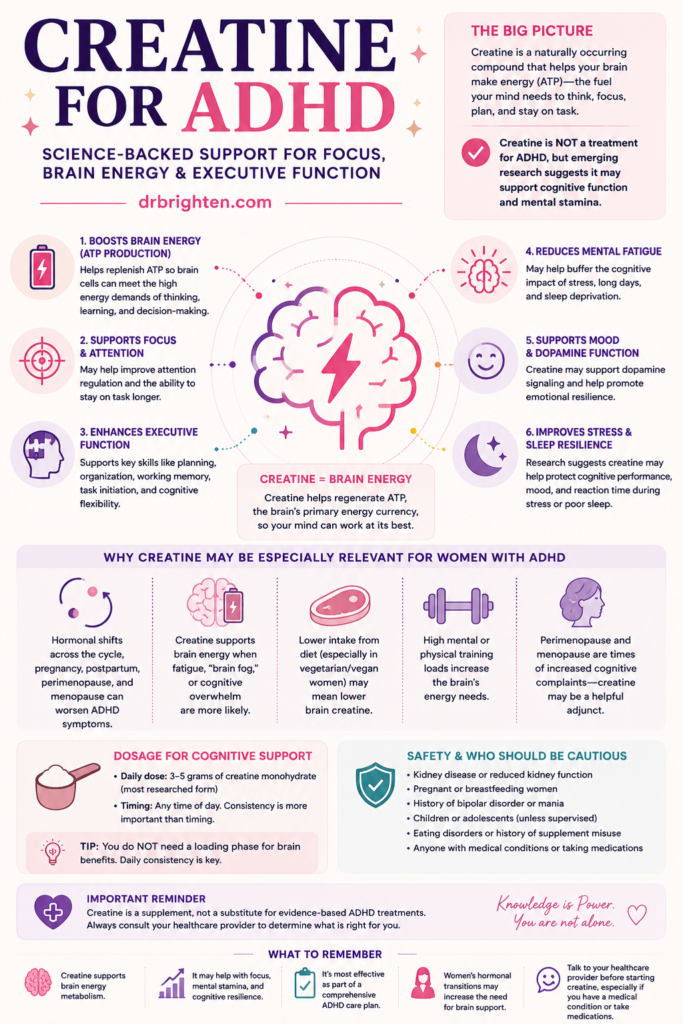
Women with ADHD have historically been underrepresented in research. Yet we know that symptoms of ADHD in women can be impacted by hormonal transitions, and that hormones can significantly influence cognitive performance and symptom severity.
For example, estrogen affects dopamine production, receptor sensitivity, and executive functioning, which is one reason why many women notice cyclical changes in their ADHD symptoms throughout their menstrual cycle.
Additionally, women experience several life stages associated with increased energetic demands, including:
- Pregnancy
- Postpartum recovery
- Perimenopause
- Menopause
Creatine requirements are thought to potentially differ between men and women, and some experts have proposed that women in particular might benefit from creatine supplementation during hormonally dynamic periods[9].
It’s believed that women have up to 70-80% lower endogenous creatine[10] stores compared to males, which means replenishing their creatine more frequently may be one way to support their energy and mental health.
Based on certain studies, supplementing with creatine can potentially help alleviate fatigue-related symptoms[11] associated with the menstrual cycle, particularly during the early follicular and luteal phases. For vegans and vegetarians, who often have reduced creatine stores due to the absence of creatine, it might be especially useful for lifting their energy and mood.
Overall, the intersection between hormones, brain energy metabolism, and cognitive function represents an important area for future investigation, especially for women.
Related:
The Hidden Brain Risk Every Woman Over 30 Needs To Know with Max Lugavere
What Is ADHD Masking? The Perimenopause ADHD Connection
Combining Creatine and ADHD Medication
Can you take creatine and ADHD medication together? At present, there are no well-established contraindications between creatine monohydrate and commonly prescribed ADHD medications.
Still, there are important considerations to keep in mind when using both creatine and ADHD medication:
- Creatine should not replace prescribed ADHD medication without medical supervision
- Those taking multiple medications should discuss supplements with their healthcare provider
- Any changes in symptoms, medication response, or side effects should be monitored carefully.
- Individualized guidance is still important in determining how creatine and ADHD medication can coexist within a broader ADHD treatment plan.
Creatine Dosage Recommendations for Cognitive Support
When considering creatine for ADHD or cognitive support, the most commonly studied form is creatine monohydrate.
Creatine monohydrate has the strongest evidence base for both safety and effectiveness. It’s also widely available, usually well tolerated, and inexpensive.
Most studies investigating creatine supplementation for ADHD use:
- 3 to 5 grams daily of creatine monohydrate
- Some protocols include a “loading phase” involving larger doses for several days. However, loading is now generally considered to be unnecessary for cognitive applications and is more likely to cause side effects (like indigestion and water retention) than starting with 3-5 grams/day
In terms of how to use it, creatine can be taken:
- With or without meals
- After or before exercise
- At any convenient time of day
The goal is to maintain adequate tissue saturation over time, which means taking it daily is the best way to keep levels within an ideal range.
However, check with your medical provider about what is best for your particular case.
Related:
Daily Protein Intake for Women: Why You Don’t Need 200 Grams (And What to Do Instead)
Diet for ADHD: How Nutrition Shapes Focus, Mood, and Brain Health with Timothy Frie
How Much Can Creatine Raise Creatinine Levels?
Creatinine is a waste product generated during normal creatine metabolism. Healthcare providers usually measure serum creatinine as part of kidney function assessments.
Because supplemental creatine increases total creatine availability in the body, it can modestly increase creatinine levels on laboratory tests. But importantly, a mild increase in serum creatinine does not automatically indicate kidney damage.
In healthy people with normal kidney function, creatine supplementation has generally been shown to be safe when used appropriately.
If you are already taking creatine, it’s also helpful to inform your healthcare provider before routine blood work. And it’s recommended that you speak with your healthcare provider before starting supplementation if you have:
- Kidney disease
- Reduced kidney function
- A history of kidney problems
- Concerns about abnormal laboratory values
Do not stop or adjust ADHD medication because you start creatine.
Who Should Use Caution with Creatine?
Although creatine has an excellent safety profile for many adults, including women[12], certain populations should seek medical guidance before using it. These include people who:
- Have kidney disease
- Take medications that affect kidney function
- Are pregnant or breastfeeding
- Have a history of bipolar disorder
- Have complex medical conditions requiring multiple medications
Always talk to your medical provider if you have a pre-existing medical condition or are currently taking medications. Creatine is not a replacement for ADHD medications.
The Takeaway: Is Creatine Worth Considering for ADHD?
Creatine is no longer viewed solely as a sports supplement or muscle builder. Its role in cellular energy production and brain health has now positioned it as an intriguing area of research within neuroscience and psychiatry.
At this time, evidence doesn’t support using creatine as a stand-alone treatment for ADHD.
But there is a good deal of research suggesting that supporting brain energy metabolism can positively influence aspects of cognition, mental stamina, and resilience under stress.
To sum it up, creatine may be “good for ADHD” because of its ability to support one of the brain’s most fundamental needs: energy availability.
Whether that translates into meaningful improvements in ADHD symptoms likely depends on the individual, their hormonal environment, their nutritional status, and the other strategies already in place.
As with many aspects of ADHD care, the most effective approach usually involves a combination of treatments, such as:
- Medication when appropriate
- Behavioral interventions
- Sleep optimization
- Stress regulation
- Nutrient adequacy
- Hormone-aware care, especially for women
- Thoughtful use of evidence-informed supplements, which can include creatine
FAQs About Creatine for ADHD
It seems likely that it can, but the evidence remains limited. Creatine may support brain energy metabolism and cognitive resilience, but based on what we know right now, it should not replace evidence-based ADHD treatments.
Creatine supports ATP production, which helps provide energy to brain cells involved in executive functioning, attention regulation, and cognitive performance.
Creatine does not appear to increase focus in the same way stimulant medications do. However, it can often support mental stamina and reduce cognitive fatigue.
Creatine monohydrate is the most studied form and is generally considered the preferred option based on current evidence.
Most studies use 3 to 5 grams of creatine monohydrate daily. It can be taken with or without food and before or after workouts. Using it daily usually provides the best results.
Many women can use creatine safely, but circumstances vary. Women who are pregnant, breastfeeding, or managing complex health conditions should consult their healthcare provider.
There are currently no widely recognized contraindications, but it is always best to discuss supplements with the healthcare professional managing your ADHD treatment.
Creatine supplementation can modestly increase serum creatinine because creatinine is a normal breakdown product of creatine metabolism. This increase does not necessarily indicate kidney dysfunction, but kidney concerns should always be discussed with a healthcare provider.