

Pomegranate juice is one of those foods that sounds almost too simple to be interesting, but when you look at what happens after you drink it, there’s actually quite a bit going on.
Pomegranates are very rich in polyphenols, including ellagitannins and anthocyanins, which are plant compounds that have antioxidant and anti-inflammatory properties. And that’s only part of the story.
Your gut bacteria can transform pomegranate compounds into metabolites called urolithins, which are linked to benefits for cellular health, control of inflammation, muscle function, and brain health. Interestingly, because people’s microbiomes differ, two women drinking the same pomegranate juice might not produce exactly the same metabolites.
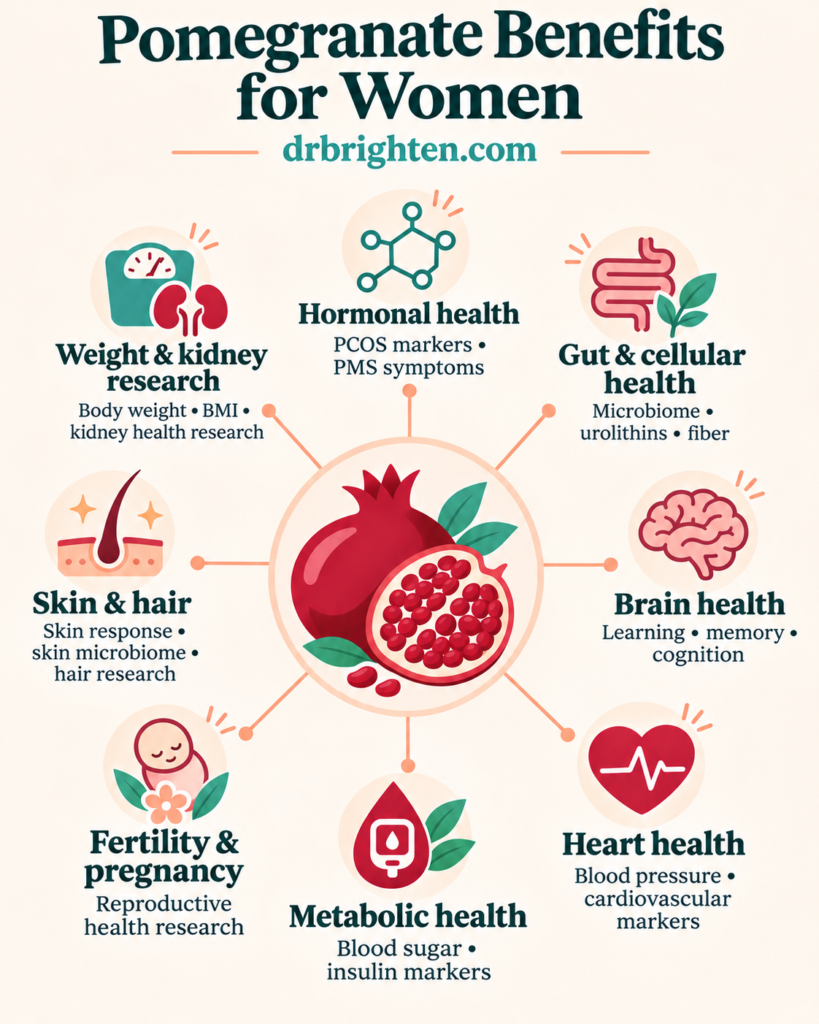
For women specifically, new research suggests that pomegranate can potentially have positive effects on sex hormones, PMOS (formerly PCOS), PMS, fertility, pregnancy, skin, metabolic health, and cardiovascular health.
So, why is pomegranate juice good for you, and is it worth drinking regularly? Let’s look at what the research actually shows.
You're in ✦
Check your inbox. Day one is on its way.
Your ADHD Hormone & Brain Sync Guide is heading to your inbox now — look for it from Dr. Brighten in the next few minutes.

New Book · Out October 6, 2026
The full system behind the guide
These five days are the doorway. ADHD and Women is the whole map — the ADHD-Hormone Profile and what to do across every hormonal transition.
Pre-Order ADHD and WomenIn this article:
- Quick Answer: What Are the Main Pomegranate Juice Benefits?
- Nutritional Benefits of Pomegranate Juice
- How Pomegranate Juice May Support Women’s Hormonal Health
- Your Gut Bacteria Transform Pomegranate Polyphenols
- Pomegranate May Support Brain Health and Memory
- Is Pomegranate Juice Good for Your Heart?
- Pomegranate May Support Blood Sugar and Metabolic Health
- Pomegranate Benefits for Fertility
- What About Pomegranate Juice Benefits for Pregnancy?
- Benefits for Skin and Hair
- Is Pomegranate Juice Good for Kidneys?
- Pomegranate Juice and Weight Loss
- Pomegranate Juice vs. Pomegranate Seeds
- How Much Pomegranate Juice to Drink Daily
- Potential Pomegranate Juice Side Effects
- The Bottom Line on Pomegranate Juice Benefits for Women
- FAQs About the Health Benefits of Pomegranate Juice
In this article, we’ll cover:
- Pomegranate juice benefits
- Pomegranate juice benefits for female health
- Hormones and PMOS or PCOS
- Gut health and the microbiome
- Brain health and memory
- Pomegranate benefits for fertility
- Pomegranate juice benefits for pregnancy
- Heart and metabolic health
- Pomegranate juice and weight loss
- Pomegranate juice benefits for skin and hair
- Advantages of pomegranate seeds
- How much pomegranate juice to drink daily
- Potential pomegranate juice side effects
Quick Answer: What Are the Main Pomegranate Juice Benefits?
Most of the health benefits of pomegranate juice are due to its high concentration of polyphenols, plant compounds that help protect cells against oxidative stress and influence inflammatory pathways.
There’s evidence that pomegranate can support cardiovascular health, including healthy blood pressure, as well as blood sugar regulation, cognition, skin health, and certain aspects of women’s hormonal health.
That doesn’t make pomegranate juice medicine, and it certainly isn’t going to “balance your hormones” overnight. But as part of a nutrient-dense diet, it’s one of the more research-backed polyphenol-rich foods that you can seek out for help with healthy aging.
Related:
Foods High in Polyphenols: Polyphenol-Rich Foods List, Health Benefits, and Best Sources
Nutritional Benefits of Pomegranate Juice
Before getting into hormones and your microbiome, let’s talk about what you’re actually drinking when you consume pomegranate juice.
Pomegranate juice contains carbohydrates, including natural sugar, along with potassium and an impressive amount of phytochemicals.
Its standout nutritional feature, however, is its polyphenol content. Pomegranates contain compounds including:
- Ellagitannins
- Ellagic acid
- Anthocyanins
- Flavonoids
- Other phenolic compounds
So, does pomegranate juice have antioxidants? Absolutely. In fact, pomegranate juice is particularly well known for its polyphenol content and antioxidant activity.
USDA researchers[1] have reported its antioxidant capacity (ORAC score) to be comparable to blueberry and grape juice.
Related: Cellular Aging: Why Your Body May Be Aging Faster Than You Think with Dr. Will Cole
How Pomegranate Juice May Support Women’s Hormonal Health
When we look at the research focused on pomegranate juice benefits for female health, hormone balance is often at the top of the list.
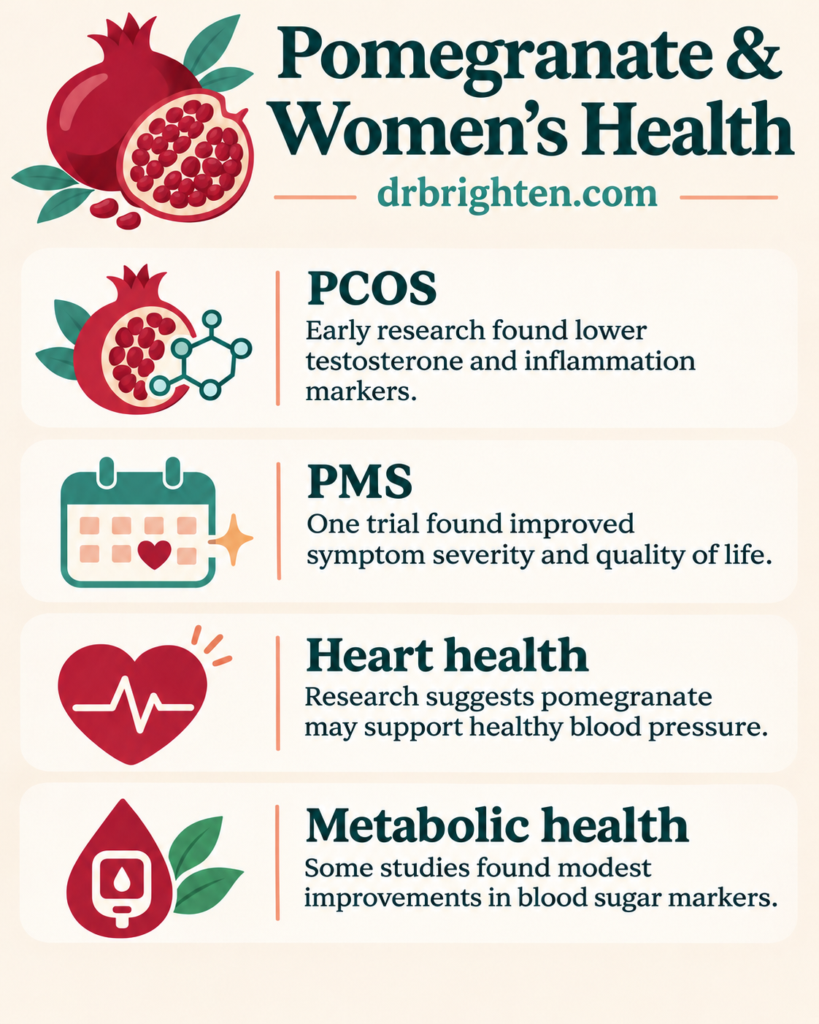
We don’t have evidence that drinking pomegranate juice universally “balances female hormones.” But we do have some intriguing research in women with PMOS (formerly PCOS).
A 2025 systematic review[2] and meta-analysis involving 128 women with PMOS found that pomegranate juice was associated with lower testosterone and high-sensitivity C-reactive protein (hs-CRP), a marker of inflammation. Researchers also found improvements in HDL cholesterol and triglycerides, although not in LH, LDL cholesterol, total cholesterol, or BMI.
Pomegranate isn’t a cure for PMOS, but the combination of lower testosterone and improvements in certain inflammatory and metabolic markers makes it worthy of further study.
Another recent randomized controlled trial[3] looked at pomegranate supplementation in women with PMS. After two menstrual cycles, women taking pomegranate experienced improvements in PMS symptom severity and quality of life compared with the control group.
Again, this is early evidence, but it’s an interesting area to watch.
Related: 5 Hormone Superfoods for Women
Your Gut Bacteria Transform Pomegranate Polyphenols
Here’s one of my favorite things about pomegranate: Some of its most interesting compounds don’t act alone; they depend on your gut microbes.
Pomegranate contains ellagitannins that your gut bacteria can metabolize into compounds called urolithins, including urolithin A[4], which is linked to benefits for healthy aging.
And not everyone produces these compounds equally. In a human study[5], researchers found distinct groups of people based on their ability to produce urolithin A after consuming pomegranate extract. Certain differences in gut bacteria were also associated with being a urolithin producer.
Another study[6] found that drinking pomegranate juice increased several microbial-derived phenolic metabolites, including urolithin A. The juice didn’t dramatically overhaul the participants’ overall gut microbiome. Instead, the microbes they already had appeared to influence which pomegranate metabolites they produced.
Think about what that means. Your microbiome isn’t just affected by the foods you eat. Your microbiome also helps determine what your body does with those foods.
Pomegranate May Support Brain Health and Memory
Your brain is especially vulnerable to oxidative stress, which has made polyphenol-rich foods a focus of cognitive health research.
One of the better human studies[7] followed adults ages 50 to 75 for a year. Participants drank either eight ounces of pomegranate juice daily or a placebo beverage.
The researchers found that pomegranate juice appeared to help maintain the ability to learn visual information over the 12 months, although it didn’t significantly improve every measure of memory.
More recently, a 2024 randomized study[8] examined pomegranate seed oil in 80 people with mild cognitive impairment. After one year, those combining pomegranate seed oil with a Mediterranean diet performed better on measures of global cognition, verbal episodic memory, processing, and executive function than those following the Mediterranean diet alone.
Keep in mind that pomegranate seed oil isn’t the same thing as pomegranate juice, so we can’t apply those results directly to your morning glass of juice.
Still, the broader relationship between pomegranate compounds and brain health is worth considering, especially as women move through perimenopause and menopause, when protecting metabolic, vascular, and brain health is key.

Is Pomegranate Juice Good for Your Heart?
This is probably where we have some of the strongest evidence.
A 2024 systematic review[9] found that pomegranate consumption reduced both systolic and diastolic blood pressure, with a greater reduction in systolic blood pressure among people who started with levels above 130 mmHg.
A 2025 meta-analysis[10] also found improvements in several cardiometabolic markers, including blood pressure, fasting glucose, total cholesterol, and HDL cholesterol.
So, is pomegranate juice good for your heart? Potentially, yes. But I would think of it as one small component of a heart-healthy diet, not an alternative to exercise, adequate sleep, blood pressure treatment when needed, or eating plenty of fiber-rich whole foods.
Related:
Healthy Foods for Heart Health
Heart Palpitations in Menopause: What Every Woman Needs to Know
Pomegranate May Support Blood Sugar and Metabolic Health
Here’s a common question: Is it good for diabetics? It can be, but there’s an obvious caveat: pomegranate juice does contain sugar, although it’s not added sugar (assuming you buy 100% juice with no additives).
Despite its sugar, studies show that pomegranate products can still have modest beneficial effects on glucose (blood sugar) regulation.
A 2025 meta-analysis found small reductions in fasting blood sugar[11], insulin, and insulin resistance following pomegranate consumption, although HbA1c didn’t significantly change and there was substantial variation among studies.
A 2024 meta-analysis[12] similarly found improvements in fasting glucose, insulin, HbA1c, and insulin resistance.
If blood sugar is a concern, I generally prefer whole pomegranate seeds because their fiber slows digestion. You can also have a smaller serving of juice alongside a meal containing protein, fat, and fiber rather than drinking a large glass by itself.
Related:
Is a Low Carb Diet Good for PCOS?
20 Best Prebiotics for Gut Health and Hormonal Balance
Pomegranate Benefits for Fertility
You’ll sometimes see claims that pomegranate boosts fertility because of its antioxidants or effects on reproductive hormones. But that’s getting ahead of the science.
There are reasons researchers are studying pomegranate and reproductive health, including its polyphenols, antioxidant activity, potential metabolic effects, and newer research in women with PMOS (formerly PCOS).
For example, the 2025 PMOS meta-analysis found lower testosterone with pomegranate juice. Since PMOS is a common cause of ovulatory infertility, that’s noteworthy. But it doesn’t prove that pomegranate improves ovulation, egg quality, pregnancy rates, or live birth rates.
So when discussing pomegranate benefits for fertility, I would put it this way: pomegranate can absolutely be part of a fertility-supportive, nutrient-dense diet, but we don’t have enough human evidence to call it a natural fertility treatment.
Related:
Natural Solutions in the Treatment of PCOS
What About Pomegranate Juice Benefits for Pregnancy?
Pomegranate juice can be beneficial during pregnancy because of its high concentration of polyphenols.
One small randomized controlled pilot study gave pregnant women whose babies had intrauterine growth restriction eight ounces of pomegranate juice or a polyphenol-free placebo each day. Researchers then used MRI to examine the infants’ brains after birth.
The findings suggested possible differences in brain development and connectivity[13], although this was a pilot study and wasn’t designed to establish pomegranate juice as a pregnancy treatment.
A more recent randomized trial[14] compared about 230 mL (just under 8 ounces) of pomegranate juice daily with sildenafil in pregnant women with intrauterine growth restriction and found some promising changes in fetal growth and Doppler measurements. However, this was a small study of women with a specific pregnancy complication, so it doesn’t tell us that all pregnant women need pomegranate juice.
According to the National Center for Complementary and Integrative Health[15], drinking pomegranate juice during pregnancy appears to be safe, while much less is known about concentrated extracts and other parts of the plant.
Keep in mind that if you’re pregnant, food and juice are very different from taking a high-dose pomegranate supplement.
Benefits for Skin and Hair
One of the more interesting pomegranate juice benefits for skin comes from an actual trial in women.
Researchers randomly assigned women ages 30 to 45 to consume pomegranate juice, pomegranate extract, or a placebo for 12 weeks. Women consuming pomegranate juice or extract became more resistant to UVB-induced skin redness[16] compared with placebo. Researchers also detected changes in the skin microbiome.
Does this mean pomegranate replaces sunscreen? Absolutely not. But it adds to a growing body of research showing that skin health isn’t only about what you put on your face (your diet affects your skin too!).
What about pomegranate juice for hair growth or thickness?
Pomegranate contains polyphenols and other compounds that could theoretically support scalp and hair health through antioxidant and anti-inflammatory effects. But we don’t currently have strong human clinical evidence showing that drinking pomegranate juice prevents hair loss or makes hair grow faster.
That’s important because hair loss in women can be caused by iron deficiency, thyroid dysfunction, PMS/ PCOS and androgen excess, inadequate protein or calorie intake, postpartum hormone changes, perimenopause, stress, and several types of alopecia.
Is Pomegranate Juice Good for Kidneys?
There’s some preliminary research examining its antioxidant and cardiovascular effects in people with kidney disease. But kidney disease is also exactly where I don’t recommend adding concentrated juices or supplements without talking with your healthcare provider.
Kidney function affects how your body manages minerals, fluids, medications, and other compounds. What is perfectly healthy for one person isn’t necessarily appropriate for someone with advanced kidney disease.
So while pomegranate can be part of a healthy diet for many people, don’t think of it as a kidney treatment.
Pomegranate Juice and Weight Loss
Can pomegranate juice help you lose weight? Probably not in any dramatic way.
Some studies have found modest reductions in body weight and BMI[17] with pomegranate consumption, although it didn’t significantly change fat mass, body fat percentage, or several other body composition measurements.
But remember that these studies included different pomegranate products, not simply juice.
Pomegranate juice and weight loss aren’t directly linked strongly enough for me to recommend drinking more juice to lose weight. Liquid calories are also much easier to consume quickly than whole fruit.
If body composition is your goal, prioritize protein, fiber, resistance training, sleep, and overall energy balance.
Related:
How to Lose Weight With PCOS
Does Fiber Help You Lose Weight?
Tips to Help With Menopause Weight Loss
Pomegranate Juice vs. Pomegranate Seeds
There are advantages of pomegranate seeds that juice simply can’t provide.
Technically, the juicy red structures you’re eating are called arils, and each surrounds a seed.
Whole pomegranate gives you fiber, which juice largely removes. Fiber supports bowel regularity, feeds gut microbes, slows the absorption of carbohydrates, and makes food more filling.
The seeds also contain fats and other nutrients that aren’t present in the same amounts in juice.
I like both. If you’re looking primarily for concentrated polyphenols and enjoy the juice, a small serving of 100% pomegranate juice is an easy option.
If blood sugar, fullness, or gut health is your priority, I’d lean more heavily on the whole fruit.
Does It Need to Be Organic Pomegranate Juice?
Organic pomegranate juice benefits are essentially the same as those you’d get from regular (non-organic) pomegranate juice.
Organic juice is likely to be lower in pesticides, but an organic label doesn’t mean the juice contains more polyphenols or produces greater health benefits.
What I care about more is what’s actually in the bottle. Look for 100% pomegranate juice rather than a “pomegranate beverage” containing added sugar, flavors, or mostly cheaper fruit juices.
How Much Pomegranate Juice to Drink Daily
Many human studies have used around eight ounces, or roughly 240 mL to 300 mL, daily.
For most women, somewhere around four to eight ounces of 100% pomegranate juice is a reasonable food-sized serving if it fits your diet.
You can also dilute it with sparkling water, add a splash to a smoothie, or alternate juice with whole pomegranate arils.
Potential Pomegranate Juice Side Effects
Pomegranate juice is generally considered safe as a food, but side effects can occur.
Some people experience digestive symptoms, and allergic reactions are possible. The root, peel, and stem aren’t considered equivalent to the fruit or juice and may be unsafe in large quantities.
I’d also use extra caution if you:
- Take medications that affect blood pressure, in which case, speak with your provider
- Take glucose-lowering medication
- Have kidney disease
- Are pregnant and considering concentrated extracts or supplements
- Have a known pomegranate allergy
The Bottom Line on Pomegranate Juice Benefits for Women
The best-supported pomegranate juice benefits relate to its high polyphenol content and potential effects on cardiovascular and metabolic health.
For women, emerging research is especially interesting. Studies are exploring pomegranate’s effects on PMOS (formerly PCOS), testosterone, inflammation, PMS, pregnancy, skin health, cognition, and the gut microbiome.
The health benefits of pomegranate juice don’t mean you need to drink huge quantities of it. A modest serving of 100% pomegranate juice can be part of a healthy diet, while whole pomegranate arils give you the additional advantage of fiber.
And as always, it’s your overall dietary pattern that matters most.
FAQs About the Health Benefits of Pomegranate Juice
Pomegranate juice contains high concentrations of polyphenols, including ellagitannins and anthocyanins. These compounds have antioxidant and anti-inflammatory properties, and gut bacteria can convert some pomegranate compounds into metabolites called urolithins. Research suggests pomegranate may support cardiovascular and metabolic health, with emerging evidence for brain, skin, gut, and women’s hormonal health.
Yes. Pomegranate juice is rich in antioxidant polyphenols. These compounds help protect against oxidative stress and may also influence inflammatory and cell-signaling pathways.
What are the main pomegranate juice benefits women should know about?
Potential pomegranate juice benefits women may be particularly interested in include support for cardiovascular and metabolic health, along with emerging research involving PMOS/ PCOS, PMS, skin health, pregnancy, cognition, and the gut microbiome.
There’s no official recommended amount. Many clinical studies have used approximately eight ounces, or 240 mL, per day. For most people, four to eight ounces of 100% pomegranate juice is a reasonable food-sized serving.
Studies have found reductions in systolic and diastolic blood pressure with pomegranate consumption, although results vary among studies.
We don’t have enough evidence to say pomegranate improves female fertility. Research in women with PMOS suggests pomegranate juice may influence testosterone and inflammatory markers, but studies haven’t established that it improves ovulation, pregnancy, or live birth rates.
Pomegranate juice appears to be safe for most pregnant women when consumed as a food. Concentrated extracts and other pomegranate products haven’t been studied as extensively during pregnancy, so discuss supplements with your healthcare provider.
Research has found small reductions in body weight and BMI in some analyses, but the evidence doesn’t show that pomegranate juice itself is an effective weight-loss strategy.
It depends on your goal. Juice provides concentrated pomegranate polyphenols, while whole pomegranate arils also contain fiber that supports the microbiome, bowel regularity, fullness, and blood sugar regulation. Ideally, you don’t have to choose one exclusively. Both can fit into a healthy diet.