
Fiber might get all the attention when it comes to gut health, but it’s actually just the fuel that helps your gut bacteria produce one of the body’s most powerful anti-inflammatory molecules: butyrate.
This short-chain fatty acid butyrate strengthens your gut lining, supports immune health, and even influences your weight. Yet modern diets, stress, and antibiotics leave many women deficient.
When your microbiome is healthy, it continuously generates microbiome-derived butyrate, a key compound for maintaining gut, immune, and hormone balance.
If you’ve ever wondered why your gut still feels “off” even when you’re eating healthy, low butyrate may be the missing piece, especially if you struggle with digestive issues, inflammation, or microbiome imbalances.
Below, you’ll learn what butyrate is, how your body makes it, the best butyrate foods, and the top butyrate supplement benefits. At the end, I’ll also share why supporting your gut with a high-quality probiotic can naturally increase butyrate levels, without relying solely on supplements.
In this article:
- At a Glance: What is butyrate and why does it matter?
- What Is Butyrate?
- Symptoms of Low Butyrate
- How the Body Makes Butyrate
- Why Many Women Lack Butyrate
- Benefits of Butyrate
- Top Butyrate Foods
- Butyrate Supplement Benefits
- How Women’s Probiotics Naturally Support Butyrate Production
- Potential Butyrate Supplement Side Effects
- Final Thoughts: Is Butyrate Good for You & What Are the Benefits?
- FAQ: Butyrate and Gut Health
At a Glance: What is butyrate and why does it matter?
- Butyrate is a short-chain fatty acid made by gut bacteria when they ferment fiber
- It fuels colon cells and helps maintain the gut lining
- Low levels are linked to bloating, inflammation, hormone imbalance, and poor digestion
- You can increase it through fiber, resistant starch, and specific probiotics
What Is Butyrate?
Butyrate (also called butyric acid) is a short-chain fatty acid butyrate produced by butyrate-producing gut bacteria when they ferment dietary fiber. You can think of butyrate as “fuel” for your colon cells since it’s their primary energy source, helping them repair, regenerate, and maintain a strong intestinal barrier.
This process—known as natural butyrate production—is one of the most important functions of a healthy gut microbiome.
So is butyrate good for you? Yes, especially for gut, brain, and hormone support.
Without enough butyrate, the gut lining becomes more vulnerable to inflammation1, irritation, and “leaky gut,” which can then impact everything from digestion and nutrient absorption to immunity, metabolism, and even hormone balance.
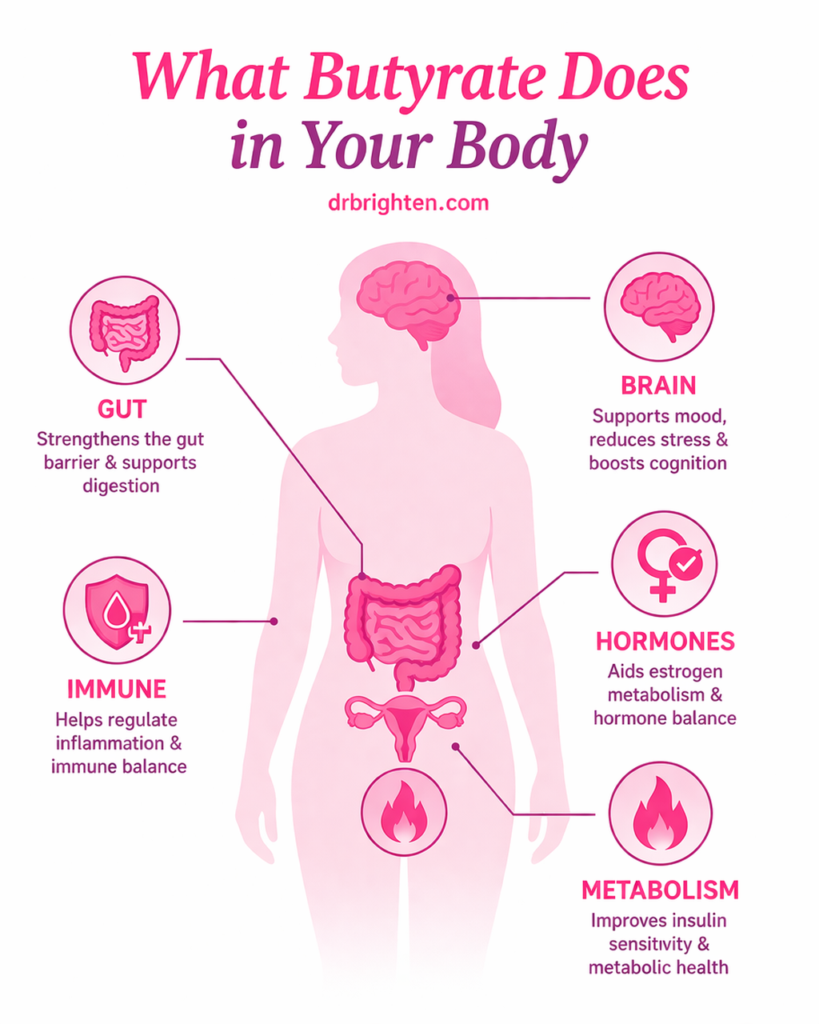
We primarily need butyrate for:
- Healthy digestive function
- Immune system balance
- Brain and mood regulation
- Estrogen metabolism
- Weight balance
- Protecting the gut lining
Symptoms of Low Butyrate
Because butyrate is beneficial to many symptoms, the signs that you’re not making enough butyrate can show up outside the gut.
Signs You May Not Be Producing Enough Butyrate
- Bloating after eating fiber
- Constipation or inconsistent bowel movements
- Food sensitivities
- Brain fog or low mood
- Hormonal symptoms (PMS, estrogen imbalance)
- Frequent inflammation or immune issues
How the Body Makes Butyrate
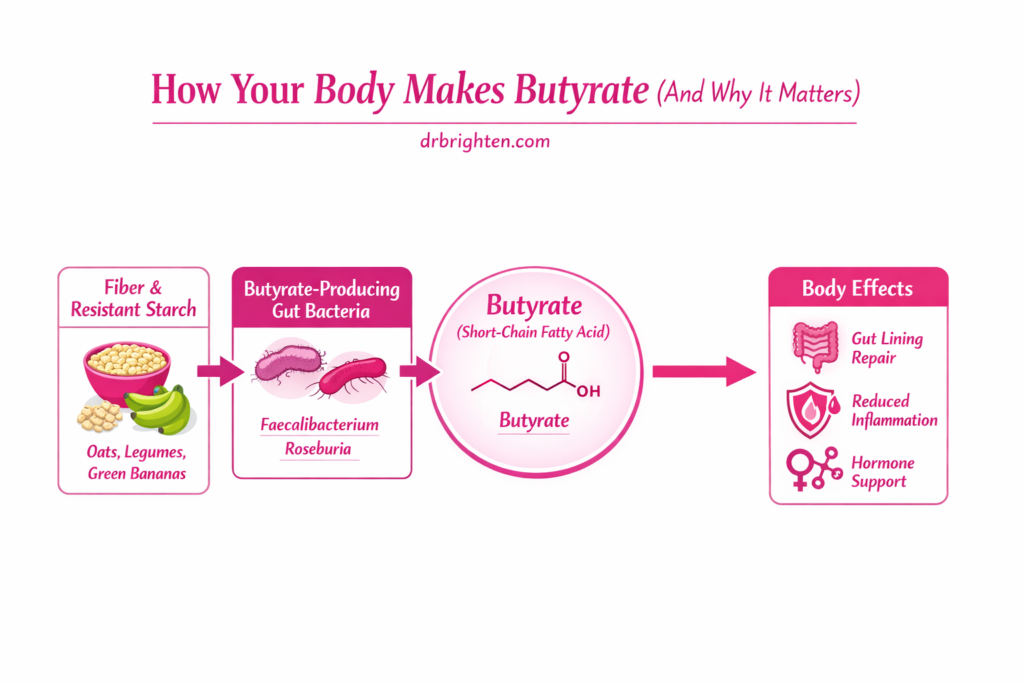
Your body does not make butyrate on its own. Your gut microbes, specifically butyrate-producing gut bacteria, generate butyrate by fermenting fiber and resistant starch.
When these microbes are thriving, they support steady natural butyrate production, which fuels your gut lining and reduces inflammation. Disruptions to the microbiome—like antibiotics, chronic stress, or low fiber intake can reduce microbiome-derived butyrate, leaving the gut more vulnerable.
Butyrate-producing bacteria2 include:
- Faecalibacterium prausnitzii
- Roseburia species
- Eubacterium rectale
These microbes thrive when your diet is rich in plant fibers. When they break down fiber, they release butyrate, which then nourishes the gut lining and supports healthy digestion.
Related: 20 Best Prebiotics for Gut Health and Hormonal Balance
Why Many Women Lack Butyrate
It's thought that the majority of women with gut symptoms aren’t making enough of this fatty acid3, which makes sense considering that only 5% of Americans eat rough fiber (which the gut needs to make butyrate).
In many women, the issue isn’t just fiber intake, it’s the loss of butyrate-producing gut bacteria. Without these microbes, even a healthy diet may not result in adequate natural butyrate production, which is why gut symptoms can persist despite “doing everything right.
If you struggle with bloating, constipation, food sensitivities, or microbiome imbalance, chances are you fall into this category—and boosting butyrate may be one of the most beneficial steps you can take for your health.
Low butyrate production has been linked with a higher risk for:
- Fatigue4
- Constipation or diarrhea
- Leaky gut and immune dysregulation
- Insulin resistance and diabetes
- Inflammation and related issues, such as heart disease5
- Estrogen metabolism issues
- Certain neurological and cognitive issues
- Sleep-related problems6
This is why boosting natural butyrate production is essential for women’s health—especially in perimenopause and menopause when gut health becomes more fragile.

Benefits of Butyrate
Here are the top science-backed benefits of butyrate, including for women with PMS, PMDD, or who are in perimenopause or menopause:
1. Supports Gut Health and a Strong Gut Lining
One of the most important benefits of microbiome-derived butyrate is its ability to strengthen your gut barrier7. Butyrate helps colon cells to regenerate quickly and maintain a tight intestinal lining. This helps prevent “leaky gut,” reduces inflammation, and supports regular digestion.
This is why many people consider taking a butyrate supplement for gut health when dealing with issues like bloating, constipation, IBS, or dysbiosis. It's been shown to help reduce symptoms of IBS8 as well as irritable bowel disease (IBD), including Crohn's and colitis.
2. Reduces Gut and Systemic Inflammation
Butyrate interacts with inflammatory pathways (especially NF-κB) to help cool down inflammation throughout the body. This means that butyrate benefits can be especially impactful for those with health concerns like:
- Autoimmune conditions
- Food sensitivities
- Gut irritation
- Chronic stress
- Hormonal swings
For women in perimenopause and menopause, supporting butyrate levels can help calm their entire system and potentially improve symptoms such as bloating, hot flashes, and others.
3. Supports Hormone Balance and Estrogen Metabolism
The link between butyrate and hormone health is one reason I often focus on gut repair when treating hormonal imbalances.
Healthy butyrate levels improve estrogen detoxification pathways in the liver and gut. This can then help to manage estrogen dominance and support balanced hormone metabolism.
Due to its balancing and anti-inflammatory effects, butyrate is a useful option for helping to:
- Improve PMS symptoms
- Support a healthy weight
- Lift your mood (due to positive effects on the gut-brain axis)
Related:
Connection Between Gut Health, Menopause, and Perimenopause
What's the Best Supplement for Estrogen?
4. Improves Metabolism and Weight Balance
Because of its positive influence on metabolic health, butyrate is sometimes used for weight management or to help ward off weight gain during times like perimenopause (including menopause belly fat).
Does it really work for weight management? Butyrate won’t magically melt body fat off, but it can help create a healthier metabolic environment, especially when paired with a fiber-rich diet and regular movement.
Research9 suggests that butyrate can help you lose or maintain a healthy weight by:
- Improving insulin sensitivity
- Supporting mitochondrial energy production
- Reducing cravings through gut-brain signaling
- Helping to regulate fat storage hormones
Related: Tips to Help With Menopause Weight Loss
5. Strengthens the Immune System
The butyrate-immune system connection is strong. About 70% of your immune system lives in your gut, and butyrate helps modulate immune cell activity10.
It promotes regulatory T-cells, which help prevent the immune system from becoming overly reactive. This is why low butyrate is linked to inflammation, allergies, and autoimmune issues—and it's even been found to help prevent hospitalization from serious infections11.
6. Supports Brain Health and Mood
Recent research has focused on butyrate as a neuroprotective agent, since it's been shown to help protect the brain from damage, support mood regulation, and aid in cognitive performance in many people, including by defending against neurological disorders.
Studies show that butyrate can alleviate neurological disorders, including Alzheimer's, Parkinson's, autism spectrum disorder, and Huntington's disease, such as by reducing neuroinflammation and assisting in neurotransmitter modulation.
It's also useful for boosting stress resilience and can even improve serotonin pathways, which can lead to more emotional stability and improvements in your mood and energy. Women often notice fewer stress responses and improved mental clarity when their microbiome is producing healthy levels of butyrate.
7. Can Help Prevent Constipation
Butyrate stimulates intestinal motility and improves stool formation, making it helpful for:
- Constipation
- IBS
- Slow digestion
- Bloating
Many women notice smoother, more regular bowel movements when they increase butyrate-producing foods or take a supplement.
How to Increase Butyrate Naturally
While supplements like sodium butyrate can be helpful in certain situations, long-term gut health depends on your microbiome’s ability to produce it consistently. That’s why combining fiber-rich foods with targeted probiotic support is often the most sustainable strategy
- Feed the right bacteria: Fiber and resistant starch (green bananas, oats, legumes)
- Support butyrate-producing microbes: Faecalibacterium, Roseburia, etc.
- Use targeted probiotics: Certain probiotic strains help create an environment that supports butyrate production
- Reduce microbiome disruptors: Antibiotics, ultra-processed foods, chronic stress.
Because butyrate depends on specific microbes, supporting butyrate-producing gut bacteria is one of the most effective ways to increase levels naturally.
Certain probiotic strains help create the conditions needed for natural butyrate production, even if those strains don’t produce butyrate directly.
This is why focusing on the overall microbiome, not just taking a butyrate supplement, can be a more sustainable way to increase microbiome-derived butyrate.
My Women’s Probiotic is formulated to support microbial balance, helping create an environment where beneficial bacteria, including those involved in butyrate production, can thrive.
Top Butyrate Foods
Butyrate is naturally found in dairy foods12, especially those rich in milk fat (since it's a fatty acid). Butter and ghee (clarified butter) are among the highest sources, followed by Parmesan cheese, goat cheese, and whole cow’s milk (not non-fat or low-fat)
Even though the body mostly creates butyrate internally, certain foods—especially those high in prebiotics, fiber, and resistant starch—can increase production. These foods contain fermentable fibers that feed the microbes responsible for butyrate production.
Your goal should be to eat at least 25-30 grams of fiber each day from a variety of foods, including those below.
The best butyrate foods include:
- Legumes (like lentils, chickpeas, and black beans)
- Wheat and oat bran, oats, and barley
- Root vegetables (like sweet potatoes, carrots, and beets)
- Green bananas or plantains
- Apples and pears
- Onions, garlic, and leeks
- Nuts and seeds
- Flax and chia seeds
- Ghee (contains small, direct amounts of butyrate)
Related:
Does Fiber Help You Lose Weight?
Best Food to Help Digestion: What to Eat for a Happy, Healthy Gut
How to Fix a Hormone Imbalance With Diet

Butyrate Supplement Benefits
If someone has dysbiosis (an imbalance of microbes in their gut), plus they take antibiotics, eat a low-fiber diet, and/or have chronic gut issues, they may not produce enough butyrate13 naturally.
This is where a butyrate acid supplement (such as butyrate sodium) can help. Benefits of supplementing with butyrate often include:
- Reduced bloating and gut discomfort
- Better motility and digestion
- Improved gut barrier function
- Lower inflammation and enhanced immune balance
- More stable blood sugar
- Better tolerance to previously triggering foods
Among supplemental forms, sodium butyrate is one of the most widely used thanks to its stability and absorption.
Many women find that sodium butyrate benefits digestion, hormone balance, and inflammation when dietary changes aren’t enough.
Wondering what's the best butyrate supplement for weight loss?
There isn't a single type that works for everyone for this purpose. In (mostly animal) studies, supplementation with sodium butyrate has been shown to help prevent weight gain14, reduce fat mass, help defend against obesity15, and improve insulin sensitivity, glucose metabolism, and healthy lipid metabolism16 (in some cases, even when animals are fed a high-fat diet17).
Some studies show that butyrate may reduce appetite or alter metabolism (increasing fat oxidation, improving energy balance, or metabolic rate), which could support weight regulation over time. And other research shows a connection between low butyrate and a higher risk for obesity and diabetes.
Beyond weight, butyrate supports gut health and mental wellbeing, which can indirectly influence your appetite and metabolism.
How Women’s Probiotics Naturally Support Butyrate Production
You don’t have to rely only on a butyrate supplement to raise your levels.
One of the best ways to naturally increase butyrate is by improving the balance of beneficial bacteria in your gut. And that's where probiotics come in handy—particularly strains like Bifidobacterium18,Faecalibacterium, Eubacterium, and Roseburia, which help with butyrate production the most19.
Because butyrate is produced by specific gut bacteria, one of the most effective strategies is supporting those microbes directly. Certain probiotic strains, particularly Bifidobacterium species, help create an environment where butyrate-producing bacteria can thrive.
My Women’s Probiotic is specifically formulated to support healthy colonies of butyrate-producing bacteria, improve digestion and motility, and reduce bloating and inflammation. It does this by defending against dysbiosis and crowding out harmful microbes, which helps to strengthen the gut lining and support healthy immune responses.
Probiotics for women can also help improve estrogen metabolism through the estrobolome, assisting in hormone balance and potentially managing symptoms like PMS or those of perimenopause.
When paired with fiber-rich foods and polyphenols, probiotics are a simple way to significantly boost natural butyrate production, helping you get the benefits of butyrate without needing large supplemental doses.
Related:
Gut Health Probiotics: What Every Woman Needs to Know to Balance Hormones Naturally
How Long Does It Take Probiotics to Work?

Potential Butyrate Supplement Side Effects
While it's generally safe, butyrate supplement side effects can sometimes include:
- Temporary gas or bloating
- Mild digestive upset
- Nausea, especially if taken on an empty stomach
- Odor (butyrate naturally smells like cheese!)
Most symptoms resolve as the gut adjusts. Start low and increase slowly if needed to keep side effects in check.
Final Thoughts: Is Butyrate Good for You & What Are the Benefits?
As a clinician who trains other practitioners, I’ve seen that many women struggling with hormone symptoms, bloating, or inflammation aren’t lacking effort—they’re lacking the microbial support needed to produce key compounds like butyrate.
Short-chain fatty acid butyrate is one of the most important compounds your microbiome produces.
Supporting butyrate-producing gut bacteria through diet and targeted probiotics is key to maintaining consistent natural butyrate production and long-term gut, immune, and hormone health.
- Butyrate is one of the most beneficial molecules for gut health, immune balance, hormone metabolism, and overall inflammation control.
- The key is making sure your microbiome is capable of producing enough—and taking steps to boost your production and potentially supplement to raise levels.
- If you're considering a supplement, choose a high-quality butyrate acid supplement or sodium butyrate, and pair it with diet and lifestyle habits that support a thriving microbiome.
- Taking a probiotic (such as my formula, Women’s Probiotic) and eating a fiber-rich diet are also effective ways to support gut health long term.
FAQ: Butyrate and Gut Health
Yes. Butyrate supports gut lining integrity, immune balance, and metabolic health.
Fiber-rich foods like oats, legumes, green bananas, and resistant starch sources.
Certain probiotics help support the bacteria that produce butyrate, indirectly increasing levels.
Sodium butyrate is commonly used, but supporting natural production through diet and probiotics is often more sustainable.
Changes in diet and microbiome support can begin influencing production within days to weeks.
References
- https://www.clinicalnutritionjournal.com/article/S0261-5614(22)00384-3/fulltext ↩︎
- https://pubmed.ncbi.nlm.nih.gov/40284169/ ↩︎
- https://newsroom.uw.edu/blog/butyrate-microbiome-abates-host-ills-studies-find ↩︎
- https://pmc.ncbi.nlm.nih.gov/articles/PMC10183837/ ↩︎
- https://www.frontiersin.org/journals/pharmacology/articles/10.3389/fphar.2021.837509/full ↩︎
- https://www.nature.com/articles/s41598-019-43502-1 ↩︎
- https://pubmed.ncbi.nlm.nih.gov/36763294/ ↩︎
- https://pubmed.ncbi.nlm.nih.gov/37242159/ ↩︎
- https://pubmed.ncbi.nlm.nih.gov/35185553/ ↩︎
- https://pubmed.ncbi.nlm.nih.gov/36763294/ ↩︎
- https://pubmed.ncbi.nlm.nih.gov/38909617/ ↩︎
- https://pmc.ncbi.nlm.nih.gov/articles/PMC12029953/ ↩︎
- https://health.clevelandclinic.org/butyrate-benefits ↩︎
- https://pmc.ncbi.nlm.nih.gov/articles/PMC9999029/ ↩︎
- https://pubmed.ncbi.nlm.nih.gov/38367596/ ↩︎
- https://pmc.ncbi.nlm.nih.gov/articles/PMC9541926/ ↩︎
- https://pmc.ncbi.nlm.nih.gov/articles/PMC10392013/ ↩︎
- http://linkinghub.elsevier.com/retrieve/pii/S0378-5173(18)30838-X ↩︎
- https://newsroom.uw.edu/blog/butyrate-microbiome-abates-host-ills-studies-find ↩︎
About The Author