

Waking up with a stiff, aching shoulder in midlife? Learn how declining estrogen affects frozen shoulder, the three stages, exercises, and treatments.
You wake up with an achy shoulder and figure you slept on it wrong or overdid it at the gym. But a few weeks later, it’s still sore, and now it won’t move the way it used to, like when you reach for a seatbelt or hook a bra.
If you’re in your 40s or 50s, there’s a contributing cause worth knowing about: menopause.
Frozen shoulder, also called adhesive capsulitis, is more common in women than in men, and it tends to show up in midlife, right when estrogen starts to fluctuate and decline.
Estrogen helps maintain connective tissue, regulate inflammation, and repair tissue, so researchers now believe that hormonal shifts could help explain why some women develop shoulder stiffness at this stage. The link isn’t fully understood, though, and not every case of frozen shoulder is hormonal.
Let’s look at what frozen shoulder feels like, what the research tells us about its connection to menopause, and the treatments and exercises that can help you regain movement.
In this article, we’ll cover:
- What is frozen shoulder in menopause?
- Menopause frozen shoulder symptoms
- Why frozen shoulder affects women in midlife
- What causes frozen shoulder in menopause?
- The connection between estrogen and frozen shoulder
- Does HRT help frozen shoulder?
- Frozen shoulder menopause exercises
- Medical treatments that can help
- How to avoid frozen shoulder in menopause
- When to see a healthcare provider
- Frequently asked questions
You're in ✦
Check your inbox. Day one is on its way.
Your ADHD Hormone & Brain Sync Guide is heading to your inbox now — look for it from Dr. Brighten in the next few minutes.
New Book · Out October 6, 2026
The full system behind the guide
These five days are the doorway. ADHD and Women is the whole map — the ADHD-Hormone Profile and what to do across every hormonal transition.
Pre-Order ADHD and WomenQuick Answer: Is Frozen Shoulder Related to Menopause?
Possibly. Frozen shoulder, or adhesive capsulitis, happens when the connective tissue capsule around your shoulder joint becomes inflamed, thick, and tight. The result is pain and a gradual loss of movement.
According to the American Academy of [1]Orthopaedic Surgeons (AAOS), frozen shoulder commonly shows up between ages 40 and 60 and affects women more often than men, which lines up with perimenopause and menopause.
Researchers suspect that falling estrogen levels may be involved, since estrogen influences connective tissue and inflammation. But there isn’t enough evidence yet to say menopause directly causes frozen shoulder.
What’s reassuring is that it often gets better with time. Physical therapy, the right exercises, pain management, and sometimes a corticosteroid injection can ease symptoms and help you get your range of motion back.
What Is Frozen Shoulder in Menopause?
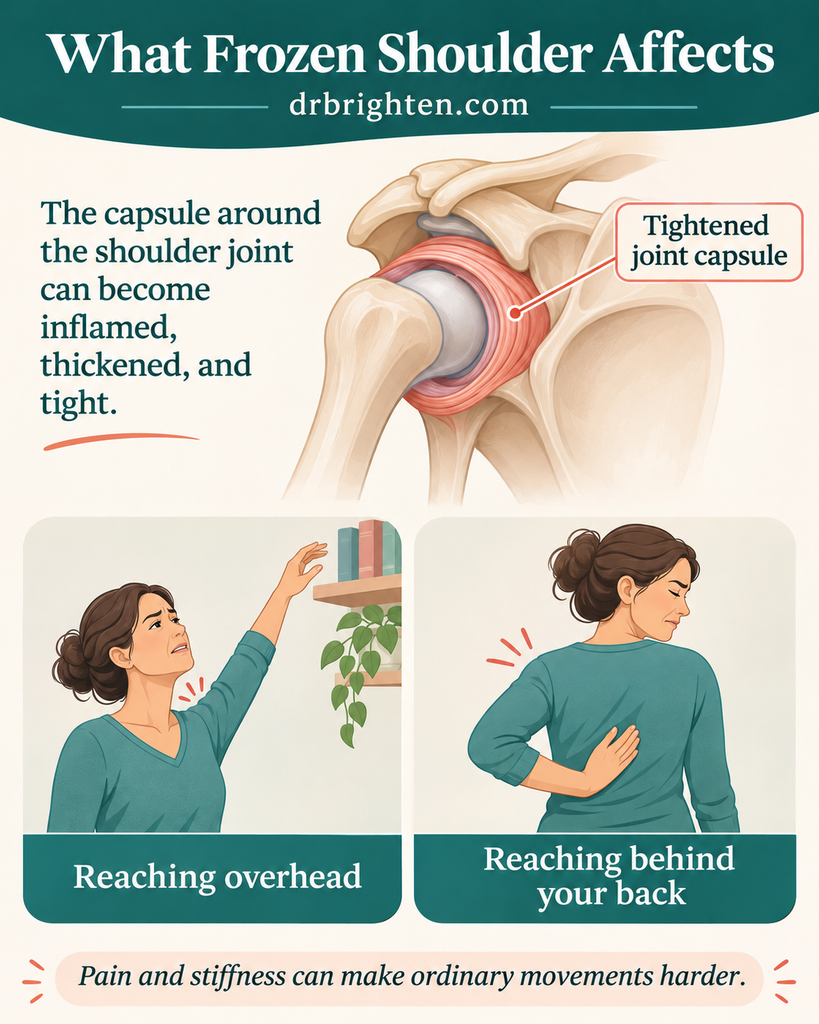
Frozen shoulder is a condition in which the capsule surrounding your shoulder joint becomes inflamed, thickened, and stiff.
Your shoulder is a ball-and-socket joint, surrounded by connective tissue that helps stabilize it while allowing a wide range of movement.
Normally, this capsule is flexible enough to let you raise your arm, reach behind your back, and rotate your shoulder. But with adhesive capsulitis, the capsule becomes tighter and less flexible. Bands of thickened tissue, called adhesions, can develop, making movement increasingly difficult.
One of the defining features and clearest indicators of frozen shoulder is that you lose both active and passive range of motion. In other words, you can’t move your shoulder normally on your own, and someone else can’t easily move it through its normal range either.
This helps distinguish frozen shoulder from some other causes of shoulder pain, such as rotator cuff problems.
Related:
The 10 Most Unusual Symptoms of Perimenopause (and What They Really Mean)
What Does Menopause Frozen Shoulder Feel Like?
Most people find that frozen shoulder symptoms develop gradually, without an obvious injury.
The pain might begin as a dull ache deep in the shoulder, sometimes extending into the upper arm. Then, as the condition progresses, ordinary movements become more and more uncomfortable or difficult.
Common frozen shoulder symptoms in menopause can include:
- A persistent, dull, or aching pain in one shoulder
- Pain that worsens at night, particularly when lying on the affected side
- Difficulty reaching overhead or behind your back
- Trouble getting dressed, washing your hair, or fastening a bra
- Increasing stiffness that makes the shoulder feel stuck
- Reduced ability to rotate your arm outward
- Difficulty sleeping because of shoulder discomfort
One important distinction is that frozen shoulder usually involves a noticeable loss of movement, not just pain. If you can move your shoulder through its full range but certain movements hurt, there’s a chance that another condition might be responsible.
Related:
The Medical System Is Misleading Women About Symptoms of Menopause with Dr. Tara Scott
Menopause Fatigue Solved: Proven Ways to Reclaim Energy, Focus, and Vitality
The Three Stages of Frozen Shoulder
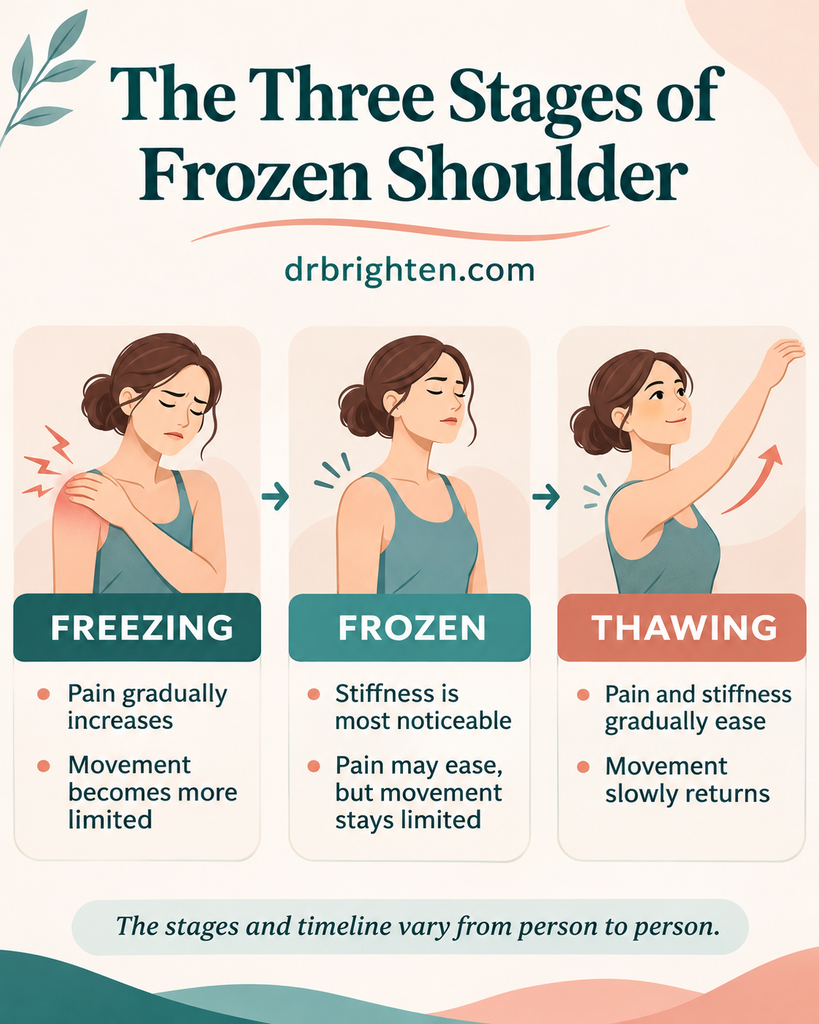
Frozen shoulder typically moves through three stages[2].
1. Freezing Stage
This is the early, painful stage. This stage can last approximately six weeks to nine months.
Shoulder pain usually increases over time, and it often becomes more noticeable at night. You begin losing range of motion as inflammation and stiffness develop.
2. Frozen Stage
During this stage, pain might actually begin to improve, but stiffness becomes the dominant problem. You might find that it’s extremely difficult to lift your arm, reach behind your back, or perform everyday activities. This phase often lasts several months.
3. Thawing Stage
Eventually, the shoulder begins regaining movement. Pain continues to decrease, and range of motion slowly improves. However, recovery can take many months in some cases, and some people continue to experience stiffness or limitations.
The AAOS notes that frozen shoulder can take up to three years to improve, although the timeline varies considerably.
Why Is Frozen Shoulder Common in Menopause?
Frozen shoulder affects an estimated 2% to 5% of the general population[3], although it’s more prevalent in certain age groups.
Women are more likely to develop it, and the highest-risk age range overlaps with the menopause transition. That overlap has led researchers to investigate whether changes in estrogen could contribute to frozen shoulder.
Frozen shoulder due to menopause isn’t a separate medical diagnosis, and we don’t currently know what percentage of cases in midlife women are directly attributable to hormonal changes. Some women develop frozen shoulder before menopause, others afterward, and many never develop it at all.
Related:
What Causes Frozen Shoulder in Menopause?
The exact cause of frozen shoulder isn’t always known and depends on the specific person. In some cases, it develops after an injury, surgery, or a period when the shoulder hasn’t been moving normally.
In other cases, it appears without any obvious trigger and may be due to systemic inflammation[4], meaning inflammation that affects many parts of the body.
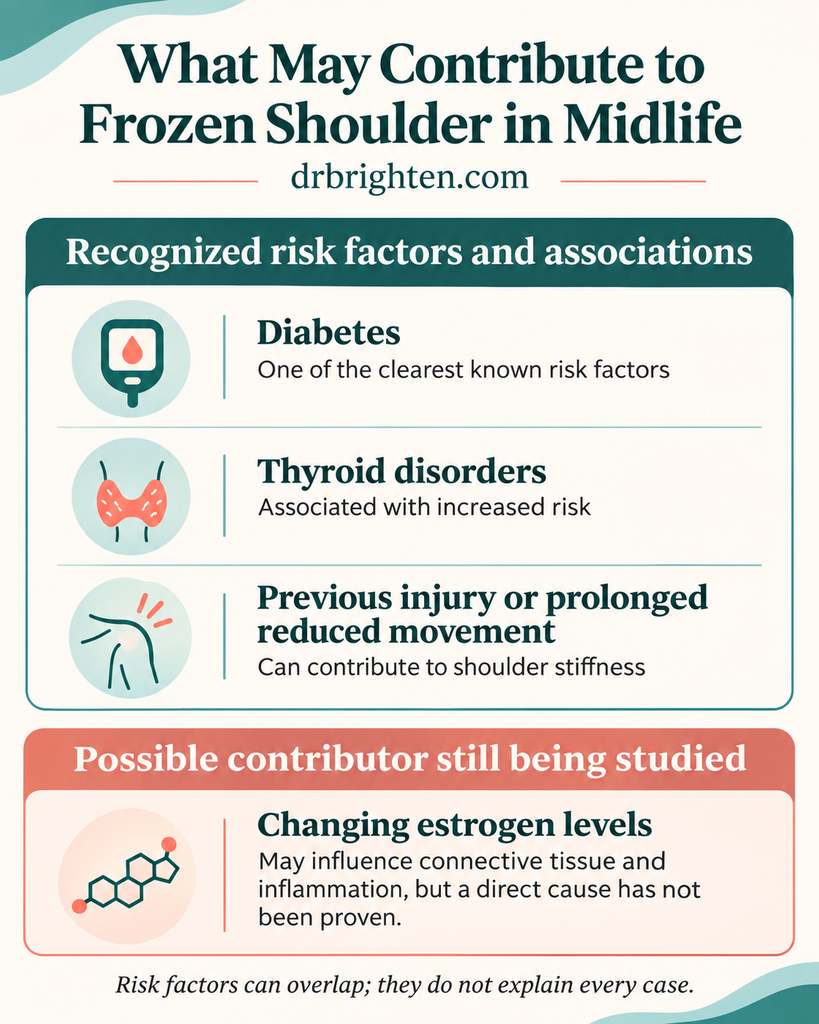
Several factors increase your risk for developing frozen shoulder.
1. Changes in Estrogen
Estrogen receptors are present in many tissues beyond the reproductive system, including tissues involved in musculoskeletal health. For instance, estrogen helps regulate inflammatory signaling, collagen metabolism, and tissue repair, in addition to impacting the nervous system and more.
There’s evidence[5] that lower levels of estrogen during menopause could make certain connective tissues more susceptible to inflammation[6] and fibrosis, a process involving excessive buildup or tightening of connective tissue.
This is biologically plausible, but it’s not the same as proving that estrogen deficiency directly causes frozen shoulder.
2. Diabetes and Insulin Resistance
Diabetes is one of the most established risk factors for adhesive capsulitis. Frozen shoulder affects up to 20% of people with diabetes[7]. Not only does this population develop frozen shoulder more frequently, but they may experience more persistent stiffness, too.
One proposed explanation involves advanced glycation end products, or AGEs, which are compounds that form when sugars react with proteins and then contribute to changes in collagen structure and tissue stiffness.
This doesn’t mean that every woman with frozen shoulder has insulin resistance, but blood sugar health is worth considering if you have other metabolic risk factors.
3. Thyroid Disorders
Both hypothyroidism and hyperthyroidism have been associated with increased frozen shoulder risk[8]. This is important because thyroid conditions are common in women, and symptoms such as fatigue, weight changes, and sleep problems can sometimes overlap with those experienced during perimenopause.
If you have persistent shoulder stiffness along with symptoms suggesting a thyroid disorder, your healthcare provider may recommend thyroid testing.
4. Previous Injury or Reduced Movement
Frozen shoulder can also develop after shoulder surgery, a fracture, or another injury that limits normal movement.
When the shoulder remains immobilized for an extended period, the joint capsule can become increasingly stiff, which is one reason clinicians recommend appropriately timed movement and rehabilitation following an injury or procedure.
The AAOS identifies diabetes, thyroid disorders, and prolonged immobilization as important frozen shoulder risk factors.
Related:
Genitourinary Syndrome of Menopause: What Every Woman Should Know
Why You’re Gaining Weight in Midlife: Ozempic, Muscle Loss, and Longevity with Dr. Mary Pardee
Does Estrogen Help Frozen Shoulder?
Because estrogen influences connective tissue biology and inflammatory signaling, it’s reasonable to consider whether estrogen therapy could affect frozen shoulder risk[9].
One study examined just under 2000 menopausal women ages 45–60, including 152 women receiving hormone replacement therapy. Frozen shoulder was diagnosed in 4% of women using HRT compared with nearly 8% of women who weren’t using HRT.
Women not receiving HRT had approximately twice the odds of frozen shoulder, although the difference wasn’t considered statistically significant.
The study was relatively small in terms of HRT users, and its findings could have been influenced by chance or other differences between the groups. The researchers concluded that larger studies were needed before determining whether hormone therapy protects against adhesive capsulitis.
Related: GLP-1 Weight Loss in Menopause: How HRT Amplifies Results
Does HRT Help Frozen Shoulder?
At this point, we don’t have convincing clinical trial evidence just yet that menopausal hormone therapy treats an existing frozen shoulder or reliably prevents one from developing.
Overall, the preliminary research is still ongoing[10] but not currently strong enough to recommend starting HRT specifically for shoulder pain.
Menopausal hormone therapy can be an effective treatment for symptoms such as hot flashes, night sweats, and genitourinary symptoms, depending on the type of therapy used. Whether it’s appropriate for you depends on your symptoms, medical history, and individual risk factors.
If you’re already considering HRT for menopause symptoms, shoulder health can be part of the broader conversation about musculoskeletal changes during midlife. But frozen shoulder still deserves its own evaluation and treatment plan.
Related:
Hormone Replacement Therapy for Menopause: What the FDA’s Black Box Removal Really Means for Women
HRT for Menopause & Perimenopause: Benefits, Side Effects & Menopause Solutions with Dr. Amy Killen
How Is Frozen Shoulder Diagnosed?
Frozen shoulder is usually diagnosed through a physical examination and discussion of symptoms and medical history.
Your healthcare provider will ask when the pain started, whether you had an injury, and which movements have become difficult.
They’ll also examine how far you can move your shoulder on your own, and how far it moves when they gently assist.
Restricted passive movement, especially difficulty with external rotation, is an important finding.
Imaging isn’t always necessary to diagnose frozen shoulder, but X-rays or other tests can be used to rule out conditions such as arthritis or rotator cuff injuries.
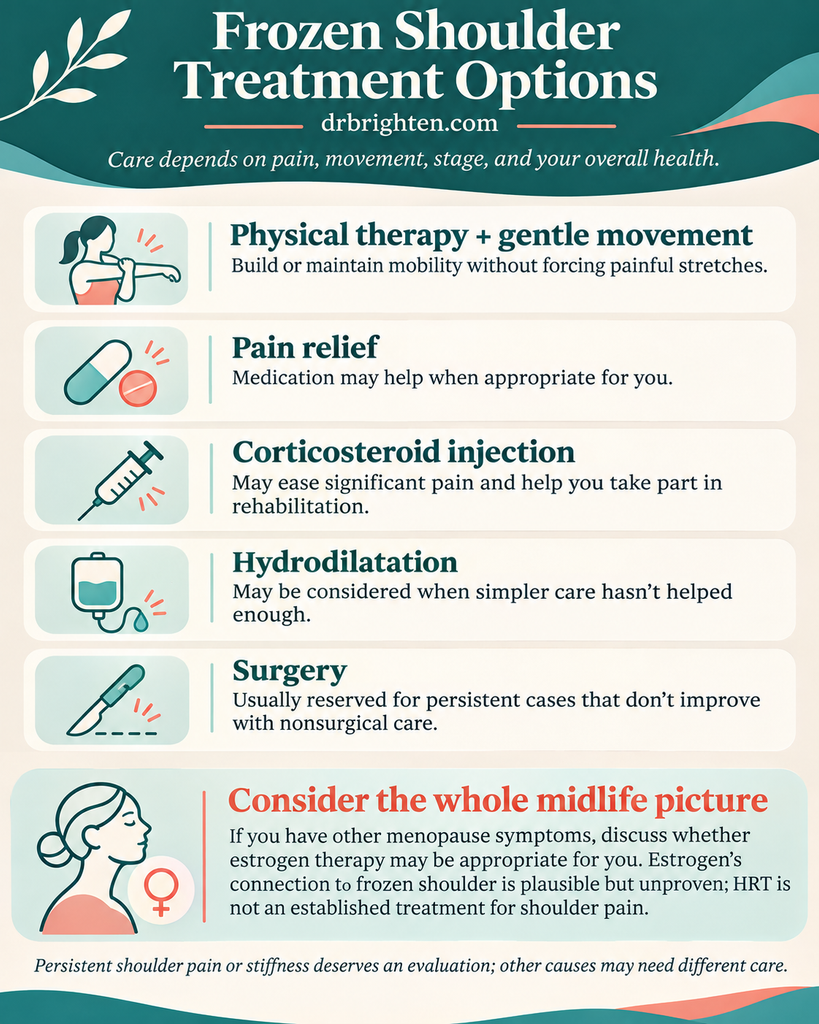
Treatments for Frozen Shoulder in Menopause
The main goals of treatment are to reduce pain, preserve as much movement as possible, and gradually restore shoulder function. Treatment also depends on which stage of frozen shoulder you’re in.
Physical Therapy:
Physical therapy is a common first-line approach[11]. A physical therapist can help you maintain or gradually improve shoulder mobility using movements appropriate for your symptoms.
During the early, painful stage, aggressive stretching may make symptoms worse. Gentler exercises are usually more appropriate. As pain decreases, treatment can gradually focus more on restoring range of motion and rebuilding strength.
Pain Relief and Corticosteroid Injections:
Over-the-counter pain medications, including acetaminophen or nonsteroidal anti-inflammatory drugs (NSAIDs), can usually help manage symptoms if they’re safe for you to use.
For significant pain, a corticosteroid injection into the shoulder joint may provide short-term relief. These injections can be useful during the painful inflammatory stage, potentially making it easier to sleep and participate in rehabilitation.
A 2026 review[12] of adhesive capsulitis treatments found evidence supporting early corticosteroid injections as a way to potentially shorten the overall course of symptoms.
Hydrodilatation:
Hydrodilatation involves injecting fluid into the shoulder joint capsule, often under imaging guidance, to help stretch the tightened capsule and improve movement. It’s typically considered when symptoms aren’t responding adequately to simpler treatments.
Surgery:
Most women won’t need surgery for frozen shoulder. Surgery is generally reserved for persistent cases that don’t improve sufficiently with nonsurgical treatment. Procedures can include manipulation under anesthesia or arthroscopic capsular release, which involves releasing tightened portions of the joint capsule.
Frozen Shoulder Menopause Exercises That Can Help
Gentle movement is one of the most useful things you can do for frozen shoulder, but the type and intensity of exercise matter. You can use exercises to help improve mobility, but you want to do this without repeatedly aggravating an already painful joint.
These exercises are commonly recommended by physical therapists, but they should be adjusted to your symptoms and stage of recovery.
Pendulum Swings:
- Lean forward slightly, supporting yourself with your unaffected arm on a table or countertop.
- Let your painful arm hang loosely toward the floor.
- Gently shift your body to create small circles with your hanging arm, first clockwise and then counterclockwise.
- Try about 10 circles in each direction, provided the movement is comfortable.
Wall Walks:
- Stand facing a wall, with your fingertips resting against it.
- Slowly walk your fingers upward, allowing your arm to rise as far as is comfortable.
- Pause briefly, then walk your fingers back down.
- Repeat several times without forcing your shoulder into a painful position.
External Rotation Stretch:
- Hold a lightweight stick or cane horizontally with both hands, keeping your elbows bent and close to your sides.
- Use your unaffected arm to gently guide the affected forearm outward, rotating the shoulder.
- Stop when you feel a comfortable stretch, without pushing through sharp pain.
Cross-Body Stretch:
- Use your unaffected arm to gently bring your painful arm across your chest.
- Hold the stretch briefly, then release.
- This can help maintain mobility in the back of the shoulder, although it may be uncomfortable during the earliest, most painful stage.
These movements are included in shoulder rehabilitation guidance from the AAOS and NHS[13].
I would avoid intense yoga poses, heavy overhead lifting, or aggressive stretching while your shoulder is particularly painful. A physical therapist can help you determine when it’s appropriate to reintroduce strengthening exercises.
How to Avoid Frozen Shoulder in Menopause
There’s no guaranteed way to prevent frozen shoulder, especially when it develops without an identifiable cause. However, there are several practical steps worth taking to support shoulder health.
- Keep your shoulders moving regularly through a comfortable range of motion.
- Include upper-body strength training appropriate for your fitness level.
- Address shoulder injuries promptly rather than allowing pain to limit movement for months.
- Work with your healthcare provider to manage diabetes or thyroid conditions.
- Follow rehabilitation instructions after shoulder surgery or injury.
- Seek an evaluation if shoulder stiffness begins increasing, especially when you’re losing the ability to rotate your arm.
We don’t have evidence that a particular stretching routine or supplement prevents adhesive capsulitis in menopausal women. But avoiding unnecessary prolonged immobilization and managing established risk factors are sensible steps.
When Should You See a Healthcare Provider?
Don’t assume that shoulder pain during perimenopause is simply another hormonal symptom.
If pain or stiffness persists, interferes with sleep, or makes ordinary movements difficult, schedule an evaluation. Seek more urgent care if shoulder pain follows a significant injury, you suddenly cannot use your arm, or you develop fever, marked swelling, redness, or neurological symptoms.
Chest discomfort, shortness of breath, sweating, or pain radiating into the shoulder or arm can also signal a medical emergency rather than a shoulder-joint problem.
My Clinical Perspective
One concern I have about the growing conversation around menopause and frozen shoulder is that women may start attributing every new ache or injury to declining estrogen.
Hormones influence musculoskeletal health, and I think that connection deserves considerably more research.
But recognizing that estrogen affects connective tissue shouldn’t lead us to overlook other explanations for pain.
A woman in her late 40s might be experiencing perimenopause, an undiagnosed thyroid disorder, changes in blood sugar regulation, and a shoulder problem at the same time.
Those conditions can overlap without necessarily having one shared cause.
What I would encourage is a more complete approach to midlife musculoskeletal symptoms.
That means taking pain seriously, evaluating changes in mobility, identifying relevant metabolic or endocrine conditions, and discussing hormone therapy when there are established reasons to consider it.
It also means recognizing that women deserve effective treatment for pain and loss of function, regardless of whether researchers ultimately establish a direct hormonal cause.
The Bottom Line
Frozen shoulder in menopause is common due to how hormones in midlife affect connective tissues. Adhesive capsulitis affects women more frequently than men and commonly develops during the same years as the menopause transition.
Declining estrogen may contribute to changes in connective tissue and inflammation, but the evidence connecting menopause directly to frozen shoulder is still emerging.
For women who develop the condition, treatment generally focuses on pain relief, gentle mobility exercises, physical therapy, and sometimes corticosteroid injections or other procedures. Recovery can be slow, but many women gradually regain substantial shoulder movement and function.