

An endometrioma is an ovarian cyst caused by endometriosis. Also called an ovarian endometriotic cyst or “chocolate cyst,” it contains old blood and inflammatory material and can affect one or both ovaries.
Finding an endometrioma matters because it confirms ovarian involvement from endometriosis and may be associated with additional endometriosis elsewhere in the pelvis. Treatment depends on symptoms, imaging findings, fertility goals, ovarian reserve, cyst characteristics, and whether other endometriosis is suspected.
An endometrioma is more than just an ovarian cyst; it’s often a sign of endometriosis and may indicate that the disease extends beyond the ovary. It can contribute to chronic pelvic pain, affect fertility, and influence long-term ovarian health. Yet many women leave appointments without fully understanding what an endometrioma means or what they should do next.
One of the biggest misconceptions is that “benign” means harmless. In medicine, benign simply means a condition isn’t cancer. It doesn’t mean it can’t cause pain, inflammation, or interfere with your quality of life.
Below, I’ll explain exactly what endometrioma is to help you make informed decisions about your health. Whether you’ve recently been diagnosed, are struggling with pelvic pain, or are trying to conceive, this article will walk you through what the research tells us, what questions to ask your doctor, and how to advocate for the care you deserve.
You're in ✦
Check your inbox. Day one is on its way.
Your ADHD Hormone & Brain Sync Guide is heading to your inbox now — look for it from Dr. Brighten in the next few minutes.

New Book · Out October 6, 2026
The full system behind the guide
These five days are the doorway. ADHD and Women is the whole map — the ADHD-Hormone Profile and what to do across every hormonal transition.
Pre-Order ADHD and WomenQuick Answer
An endometrioma is a type of ovarian cyst caused by endometriosis.[1] They can affect up to 44%[2] of women with endometriosis (studies show a range of 17-44%), although they vary in severity. Endometriosis itself is much more common, affecting approximately 10% of reproductive-aged women.[3]
Unlike functional ovarian cysts that typically disappear on their own, endometriomas are made up of endometriosis tissue and are considered a manifestation of more advanced disease.
They can contribute to pelvic pain, inflammation, and fertility challenges, and may signal that additional endometriosis is present elsewhere in the pelvis. Endometrioma treatment is tailored to people’s unique symptoms, fertility goals, the size of the cyst, and overall health.
“When I see an endometrioma, I don’t think only about the cyst. I want to know whether there may be additional endometriosis, whether ovarian reserve or fertility needs to be considered, how symptoms are affecting daily life, and whether the person has access to a clinician with genuine expertise in endometriosis.” – Dr. Jolene Brighten, NMD, FABNE, MSCP, Certified Sex Counselor
| Question | Quick answer |
|---|---|
| What is an endometrioma? | An ovarian cyst caused by endometriosis. |
| Is it cancer? | Usually no. Endometriomas are benign, although certain atypical findings require evaluation. |
| Does it go away? | Usually not spontaneously. |
| Can it shrink? | Sometimes, particularly with hormonal treatment. |
| Can it affect fertility? | It can be associated with reduced ovarian reserve and infertility, although many women with endometriomas become pregnant. |
| Can it rupture? | Yes, although rupture is uncommon. Sudden severe pelvic pain warrants urgent evaluation. |
| How is it diagnosed? | Usually ultrasound; MRI is useful in selected cases and for mapping more extensive disease. |
| Does every endometrioma need surgery? | No. Management should be individualized. |
Related: Endometrioma:
The Hidden Sign of Deep Endometriosis That Could Affect Fertility with Amanda Chu
What Is an Endometrioma?
An endometrioma is a type of ovarian cyst that forms when tissue similar to the lining of the uterus (the endometrium) grows within or on the ovary.
This tissue behaves much like endometriosis elsewhere in the body, including responding to hormonal changes, bleeding, and creating ongoing inflammation.
What makes endometrioma different from other ovarian cysts is how they persist.
Cysts commonly develop during ovulation and often resolve on their own, but an endometrioma is associated with endometriosis and typically does not disappear without treatment. Instead, it represents a chronic disease process that can continue to develop or change over time.[4]
You might also hear an endometrioma called a “chocolate cyst.” While the name sounds relatively harmless, it refers to the thick, dark fluid inside the cyst, which is made up of old blood, inflammatory debris, and iron deposits.
These cysts are biologically active, not simply fluid-filled sacs, and can contribute to inflammation, pain, and changes within the ovary itself.
One of the most important things to understand is that an endometrioma should rarely be viewed as an isolated finding.
When an experienced endometriosis specialist identifies an endometrioma, they’re often thinking beyond the ovary.
These cysts are frequently associated with deep infiltrating endometriosis (DIE), meaning additional disease may be present elsewhere in the pelvis, even if it isn’t immediately visible on routine imaging.[5]
According to Dr. Amanda Chu, a board certified gynecologist and endometriosis excision specialist, an endometriosis specialist and minimally invasive gynecologic surgeon, “Endometriomas are suggestive of deep infiltrating endometriosis,” and “in many ways, an endometrioma is the ‘tip of the iceberg,’ meaning it’s a visible clue pointing to a much larger condition beneath the surface.”
How Are Endometriomas Diagnosed
Endometriomas are often found during a transvaginal ultrasound, either because you are being evaluated for symptoms such as pelvic pain, painful periods, or infertility, or because an ovarian cyst is discovered during imaging for another reason.
Your healthcare provider will usually consider several pieces of information together, including:
- Your symptoms and menstrual history
- Whether you have known or suspected endometriosis
- The size, location, and appearance of the ovarian cyst
- Findings on transvaginal ultrasound
- MRI findings when more detailed pelvic imaging is needed
A transvaginal ultrasound is usually the first imaging test used to evaluate a suspected endometrioma. Endometriomas often have a recognizable appearance on ultrasound, particularly when the scan is performed and interpreted by clinicians experienced in endometriosis imaging.
MRI may be recommended when the ultrasound findings are unclear, when a clinician suspects deep endometriosis elsewhere in the pelvis, or when more detailed mapping is needed before treatment or surgery.
Finding an endometrioma also tells your healthcare provider something important beyond the cyst itself: endometriosis has involved the ovary. Because endometriomas are often found alongside disease elsewhere in the pelvis, identifying one should prompt consideration of whether additional endometriosis may be present.
Imaging does have limitations. An ultrasound or MRI can identify an endometrioma and may detect some forms of deep endometriosis, but neither test can rule out all endometriosis. Peritoneal or microscopic lesions may not appear on imaging.
That makes the experience of the person reading your scan important. As endometriosis surgeon Dr. Ana Sierra, board certified gynecologist, endometriosis excision specialist explains, and neuropelveologist, “You can’t see what the mind doesn’t know.” A radiologist or sonographer who regularly evaluates endometriosis may recognize findings that someone without that experience could miss.
Once an ovarian cyst is identified, the next question is whether its appearance is consistent with an endometrioma or another type of ovarian cyst.
Related: Endometriosis Flare-Up Symptoms, Triggers, and Tips for Relief
Is Endometrioma the Same as Endometriosis?
An endometrioma is one specific manifestation of endometriosis. It develops when endometriosis tissue involves the ovary and forms a cyst.
There are three types of endometriosis:
- Superficial or peritoneal endometriosis
- Deep infiltrating endometriosis
- Endometriomas (endometriosis of the ovary)
Endometriosis is the underlying disease. It occurs when tissue similar to the uterine lining grows outside the uterus, leading to inflammation, scarring, and pain.
Not every woman with endometriosis develops an endometrioma. Likewise, an endometrioma doesn’t occur independently; it develops because endometriosis is already present.
This is one reason specialists pay close attention when an endometrioma is found, to determine if there are additional lesions in the pelvis. The severity of your symptoms doesn’t always match the apparent severity of your disease.
Some women with extensive endometriosis have relatively mild symptoms, while others with smaller or earlier-stage lesions experience debilitating pain. Researchers believe this is because inflammation, nerve involvement, and hormone activity, not simply lesion size, determine symptom development.
As Dr. Ram Cabrera, board certified gynecologist and endometriosis specialist explains, “if you see an endometrioma, there is about an 80% chance you’ll find deep infiltrating endometriosis too.”
Related: What Is Endometriosis? 4 Surgeons Explain the Symptoms, Misdiagnosis, and Whole-Body Impact
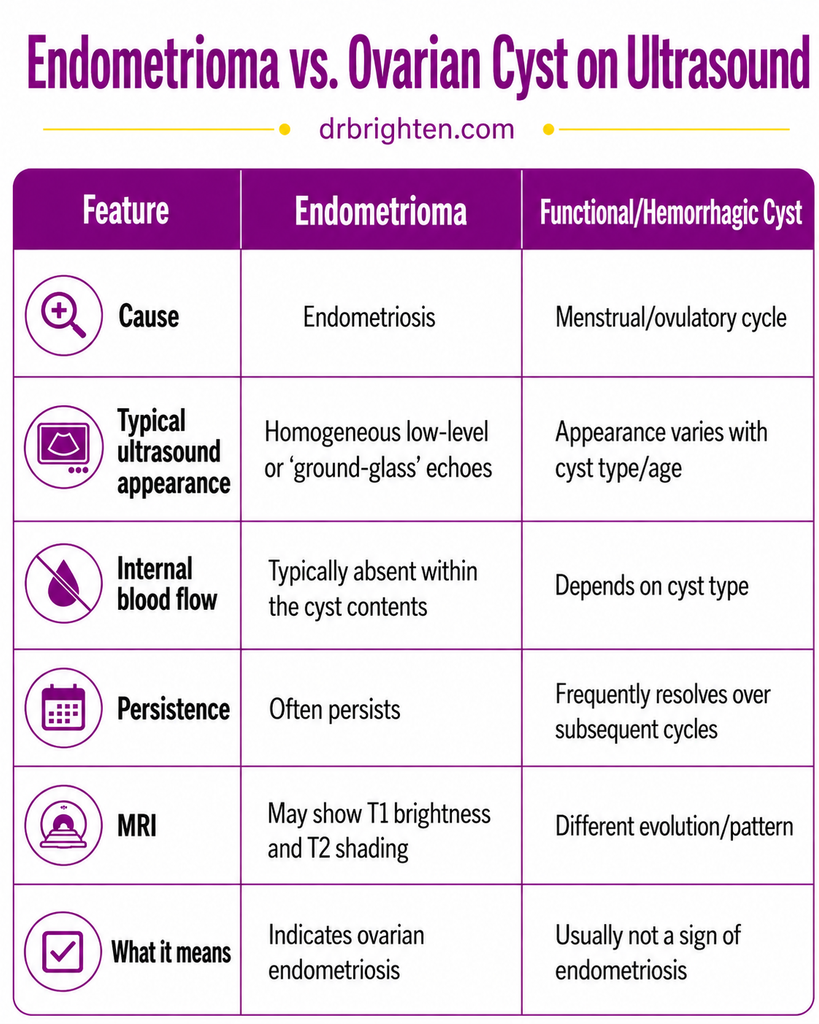
Endometrioma vs. Ovarian Cyst on Ultrasound
Learning you have an ovarian cyst can be confusing because there are many different types, and not all of them are cause for concern.
The most common ovarian cysts are functional cysts. These develop as part of your normal menstrual cycle, often during ovulation, and usually resolve on their own within a few months without treatment.
An endometrioma is different. Unlike a functional cyst, an endometrioma forms because endometriosis tissue has grown within or on the ovary.
It doesn’t come and go with your menstrual cycle and is much less likely to disappear on its own. Instead, it reflects an underlying disease process that requires thoughtful evaluation.
Can an ultrasound tell the difference between an endometrioma and another ovarian cyst?
The answer is: often, yes, but not always. An experienced sonographer or radiologist can frequently recognize an endometrioma based on its characteristic appearance during a transvaginal ultrasound.
However, while an endometrioma itself may be visible, other endometriosis lesions throughout the pelvis are often much harder to detect. That’s why an ultrasound that identifies an endometrioma may provide an important clue that additional disease is present.
This is also why a normal ultrasound does not rule out endometriosis.
Many endometriosis lesions are microscopic or located in areas that standard imaging cannot adequately visualize. If your symptoms strongly suggest endometriosis despite “normal” imaging, it’s worth discussing further evaluation with a healthcare provider who specializes in the disease.
What does an endometrioma look like on ultrasound?
An endometrioma usually has a more characteristic, persistent appearance than a functional ovarian cyst, but imaging is not perfect and interpretation depends heavily on the experience of the sonographer or radiologist.
| Feature | Endometrioma | Functional/Hemorrhagic Cyst |
|---|---|---|
| Cause | Endometriosis | Menstrual/ovulatory cycle |
| Typical ultrasound appearance | Homogeneous low-level or “ground-glass” echoes | Appearance varies with cyst type/age |
| Internal blood flow | Typically absent within the cyst contents | Depends on cyst type |
| Persistence | Often persists | Frequently resolves over subsequent cycles |
| MRI | May show T1 brightness and T2 shading | Different evolution/pattern |
| What it means | Indicates ovarian endometriosis | Usually not a sign of endometriosis |
What Causes an Endometrioma?
The exact causes of endometrioma aren’t fully understood because researchers are still working to understand what causes endometriosis itself.
What we do know is that endometriomas develop when endometriosis tissue involves the ovary. Over time, repeated inflammation and bleeding can lead to the formation of a cyst filled with old blood and inflammatory material.
Researchers believe several factors likely contribute to the development of endometriosis and endometriomas, including:
- Hormonal influences, particularly estrogen
- Chronic inflammation
- Immune system dysfunction
- Genetic predisposition
- Environmental factors that may influence inflammation and hormone signaling
Rather than resulting from one single cause, endometriosis is now understood to be a complex, multifactorial disease.
One particularly interesting finding is that some endometriosis lesions appear capable of producing their own estrogen, which may be why lesions continue to grow and cause symptoms even when circulating estrogen levels fluctuate. It also highlights why symptom severity doesn’t always match the amount of visible disease.
Importantly, an endometrioma isn’t something you caused. Diet, exercise, or stress alone do not create an endometrioma. While lifestyle factors may influence inflammation and symptom severity, they are not considered the root cause of the disease.
Endometrioma Symptoms to Watch For
Not every woman with an endometrioma experiences symptoms. In fact, some are discovered incidentally during fertility evaluations or imaging performed for another reason.
For others, however, symptoms can significantly interfere with daily life.
Common endometrioma symptoms include:
- Pelvic pain, especially before or during your period
- Severe menstrual cramps
- Pain during intercourse
- Chronic pelvic pain between periods
- Pain with bowel movements or urination during menstruation
- Bloating or pelvic pressure
- Difficulty becoming pregnant
One of the biggest misconceptions about endometriosis is that the amount of pain always reflects how advanced the disease is. That’s simply not true.
Even relatively small endometriosis lesions can trigger significant inflammation, activate nearby nerves, and create severe pain. Meanwhile, someone with more extensive disease may have fewer symptoms.
Pain itself is also complex. Dr. Chu explains that endometriosis can contribute to several different types of pain at the same time, including inflammatory pain, pain from scar tissue and adhesions, musculoskeletal pain caused by chronic muscle guarding, and nerve-related pain. “I put pain in these big buckets,” she adds.
Beyond physical symptoms, endometriosis can affect quality of life. Many women find themselves missing work or school, avoiding exercise, struggling with intimacy, experiencing fatigue or brain fog, or planning their lives around unpredictable symptom flares.
If this sounds familiar, know that these experiences are common and they’re valid. Your symptoms deserve to be taken seriously, regardless of what your imaging or disease stage may show.
Related:
Endometriosis Symptoms vs Normal Period Pain with Dr. Patrick Yeung
How to Tell If You Have Endometriosis. Painful Menstruation, Symptoms, and Treatment
Endometriomas and Fertility
One of the first questions many women ask after learning they have an endometrioma is, “Will I still be able to get pregnant?”
Having an endometrioma does not automatically mean you’ll experience infertility or need fertility treatment.
Women with endometriosis can still conceive naturally. However, an endometrioma can affect fertility in several ways, which is why it’s important to have an individualized discussion with your healthcare provider, especially if you’re hoping to become pregnant now or in the future.[6]
Ovarian reserve is an important part of the discussion here. Dr Chu says, “We know that over time, if you leave endometriomas untreated, that number [AMH] goes down dramatically compared to someone who doesn’t have that… they are making a mark.”
Ovarian reserve refers to the number of eggs remaining in your ovaries. While every woman naturally loses eggs with age, research suggests that endometriomas may accelerate this decline over time.
One blood test your healthcare provider may use to estimate ovarian reserve is anti-Müllerian hormone (AMH), although no single test tells the complete story of fertility.
Scientists are still learning exactly why endometriomas affect fertility, but several factors likely contribute, including:
- Chronic inflammation around the ovary
- Changes to normal ovarian tissue
- Damage caused by repeated bleeding within the cyst
- Scar tissue that alters pelvic anatomy
- The presence of more extensive endometriosis elsewhere in the pelvis
It’s also important to remember that fertility depends on far more than egg quantity. Egg quality, sperm health, fallopian tube function, uterine health, age, and overall health all play important roles.
If you’re diagnosed with an endometrioma and hope to have children someday—even if pregnancy isn’t in your immediate plans—it’s worth discussing fertility preservation and long-term family planning early.
Related:
The Hidden Link Between Your Gut Issues and Endometriosis
Can an Endometrioma Damage the Ovary?
An endometrioma isn’t simply sitting on the ovary; it often becomes intertwined with healthy ovarian tissue.
The inflammation associated with these cysts can affect the ovary itself.
Research and clinical experience suggest that untreated endometriomas may contribute to a decline in ovarian reserve, although the degree of impact varies from person to person. That’s one reason specialists often monitor these cysts carefully rather than assuming they’re harmless.
Another important consideration is surgery.[7] While removing an endometrioma can relieve symptoms and may be appropriate in certain situations, surgery itself can also remove or damage healthy ovarian tissue. It’s also possible for removed endometriomas to return, which some studies show happens in about 27% of cases.[8]
Decisions about treatment require careful discussion with a surgeon experienced in endometriosis. There’s no one-size-fits-all answer. Factors your healthcare provider may consider include:
- Your age
- Your symptoms
- The size of the cyst
- Whether it’s growing
- Your ovarian reserve
- Your fertility goals
- Whether both ovaries are affected
An experienced endometriosis specialist can help determine whether monitoring, medication, surgery, or another approach is most appropriate for your situation.[9]
Related: Endometriosis and Painful Ovulation: Why Ovulation Hurts, Where It’s Felt, and What Helps
Can an Endometrioma Turn Into Cancer?
An endometrioma is not ovarian cancer, and having an endometrioma does not mean that it will become cancer. However, research shows that women with endometriosis—particularly those with ovarian endometriomas or deep endometriosis—have a higher risk of developing certain types of ovarian cancer compared with women without endometriosis.
This is an important distinction because the word benign can be misleading.
As endometriosis surgeon Dr. Amanda Chu explains, “When you hear the word benign, it is often dismissed… ‘Oh, it’s just an endometrioma. Don’t worry about it.’ But benign simply means the cyst is not malignant. It does not mean it cannot affect your ovaries, fertility, pain, or long-term health.”
And when it comes to cancer risk, not all forms of endometriosis appear to carry the same risk.
A large 2024 study published in JAMA found that women with ovarian endometriomas and/or deep infiltrating endometriosis had about 9.7 times the relative risk of ovarian cancer compared with women without endometriosis.[10] The association was especially strong for type I ovarian cancers, including clear cell and endometrioid ovarian cancers, where the relative risk was nearly 19 times higher.
Those numbers can sound frightening, but relative risk and absolute risk are not the same thing.
Ovarian cancer is uncommon to begin with. In the JAMA study, having endometriosis was associated with roughly 10 additional ovarian cancer cases per 10,000 women over an average of about 12 years. For women with an endometrioma and/or deep endometriosis, the difference was approximately 27 additional cases per 10,000 women over that period.
That means the absolute risk remains low, even though the increase in relative risk is important.
Dr. Chu emphasizes this distinction when counseling patients: the goal is not to make women with endometriomas afraid of cancer, but to recognize that an endometrioma carries different long-term considerations than a simple ovarian cyst.
This is also one reason an endometrioma should not automatically be dismissed as “just a benign cyst.” Your age, family history, genetics, imaging findings, whether the cyst is changing, your history of endometriosis, and your reproductive goals can all influence how your healthcare team approaches monitoring and treatment.
If an ovarian cyst develops new or atypical imaging features, grows, changes after menopause, or your clinician has concerns about its appearance, further evaluation may be recommended.
Can Endometriomas Shrink?
Unfortunately, unlike functional ovarian cysts, endometriomas typically don’t resolve spontaneously because they’re caused by endometriosis rather than the normal menstrual cycle.
That said, they can sometimes become smaller.
Hormonal medications that suppress ovulation and reduce estrogen stimulation may help slow growth or decrease the size of an endometrioma in some women. Treatment of the underlying endometriosis may also improve symptoms, even if the cyst itself doesn’t disappear completely.
Do Endometriomas Go Away?
In most cases, no. Unlike simple ovarian cysts that often resolve within a few menstrual cycles, endometriomas are considered chronic manifestations of endometriosis and usually persist unless treated.
That doesn’t necessarily mean every endometrioma requires surgery. Some women can safely monitor a stable endometrioma with regular follow-up imaging and clinical evaluations, while others may benefit from medication, surgery, or a combination of treatments.
If you’ve been told to simply “watch it,” don’t hesitate to ask questions such as:
Why is monitoring the best option for me?
How often should I have follow-up imaging?
What symptoms should prompt me to call?
How might this affect my fertility?
At what point would surgery become appropriate?
Having these conversations can help you better understand your treatment plan and ensure it aligns with your personal goals.
Dr. Chu’s opinion is, “If you think you have an endometrioma, you should at least get a consult. A consult does not always mean surgery. It just means understanding what that endometrioma can do… and to understand all of your options.”
Related:
Endometriosis Treatment: A Doctor’s Guide to Surgery Prep and Recovery
Period Pain Relief for Endometriosis, Adenomyosis, and Hormonal Imbalances
Large Endometrioma: When Size Matters
Finding out you have a large endometrioma can feel alarming, but size alone doesn’t determine how serious the condition is, or whether you need surgery.
A larger endometrioma may increase the likelihood of symptoms such as pelvic pressure, bloating, discomfort during exercise or intercourse, or pain due to stretching of the ovary. It may also make surgery more technically complex if treatment is needed.
However, the decision to remove a large endometrioma isn’t based on size alone. Your healthcare provider will also consider:
- Whether you’re experiencing pain
- How quickly the cyst is growing
- Whether it’s affecting one or both ovaries
- Your age and fertility goals
- Whether the cyst has imaging features consistent with an endometrioma
- How it’s affecting your quality of life
Related: Endometriosis and IBS: Symptom Connection and Solutions
Endometrioma Burst and Ruptured Endometrioma
A ruptured endometrioma, sometimes called an endometrioma burst, is uncommon but can happen.[11]
When an endometrioma leaks or ruptures, the thick, blood-filled contents spill into the pelvic cavity. Unlike the clear fluid found in many functional ovarian cysts, the contents of an endometrioma contain old blood, inflammatory debris, and iron deposits that can trigger significant inflammation.
According to Dr. Chu, these inflammatory contents may contribute to scarring and make future surgery more complex.
She emphasizes that these observations come from her surgical experience and clinical practice, while acknowledging that additional research is needed to better understand these mechanisms.
Symptoms of a ruptured endometrioma can include:
- Sudden, severe pelvic pain
- Pain that continues to worsen
- Nausea or vomiting
- Abdominal tenderness
- Pain with movement
These symptoms can overlap with other medical emergencies, including ovarian torsion, appendicitis, or an ectopic pregnancy. If you experience sudden, severe pelvic pain, seek immediate medical attention.
An emergency evaluation is important to rule out potentially life-threatening conditions.
It’s also important to understand the role of the emergency department.
Emergency physicians are trained to identify and treat conditions that require immediate intervention, such as ovarian torsion, appendicitis, ectopic pregnancy, or severe infection. If those conditions are ruled out, it doesn’t necessarily mean your pain isn’t real or that nothing is wrong.
Related: Endometriosis, HRT, and Menopause: Expert Answers on Surgery, IVF & What Really Helps
What Does an Endometrioma Look Like on MRI?
On MRI, an endometrioma usually appears as a blood-filled cyst on the ovary. Because it contains old blood from repeated bleeding, it often has a distinctive appearance that helps radiologists distinguish it from other ovarian cysts.
On the MRI images, endometriomas are typically bright on T1-weighted images and darker on T2-weighted images, a pattern called T2 shading. Some also show a T2 dark spot, which represents chronic blood products or clotting within the cyst. These findings can help support the diagnosis, although imaging findings are interpreted together rather than relying on one sign alone.
In plain English: it typically looks like a cyst on the ovary containing old blood, which gives it a characteristic appearance on different MRI sequences.
A transvaginal ultrasound is usually the first imaging test performed. In many cases, an experienced radiologist or sonographer can identify an endometrioma because it has a fairly characteristic appearance.
An endometrioma MRI may be recommended in certain situations, particularly when your healthcare provider suspects deep infiltrating endometriosis or needs more detailed information before surgery.
MRI can provide a more comprehensive view of the pelvis and may identify disease involving structures that aren’t well visualized with ultrasound.
However, it’s important to remember that even MRI has limitations when it comes to certain types of endometriosis, like peritoneal endometriosis or microscopic endometriosis. This means a normal ultrasound or MRI does not rule out endometriosis if your symptoms strongly suggest the condition.
This is one reason why experienced specialists often combine imaging findings with a detailed symptom history and physical examination when making treatment decisions.
Related: Endometriosis Imaging: Why Your “Normal” Results Don’t Rule Out Endometriosis
How to Treat Endometriomas
If you’ve been diagnosed with an endometrioma, you may be wondering about the best way to move forward. The reality is that there isn’t one treatment that’s right for every woman.
The best approach depends on several factors, including:
- Your symptoms
- The size and characteristics of the endometrioma
- Your age
- Your fertility goals
- Your ovarian reserve
- Whether deep infiltrating endometriosis is suspected
- How much your symptoms affect your daily life
For some women, careful monitoring may be appropriate. Others may benefit from hormonal medications to suppress disease activity or manage symptoms.
And for women with significant pain, fertility concerns, or larger or complex cysts, surgery performed by an experienced endometriosis specialist may be the best option. Dr. Chu believes, “If it’s impacting your quality of life, you should absolutely be offered surgery.”
Surgery also isn’t the entire treatment plan. Because endometriosis is a chronic inflammatory condition, many women benefit from a comprehensive approach that may include pelvic floor physical therapy, nutrition, stress reduction, regular movement as tolerated, and other supportive strategies alongside medical or surgical treatment.
“Endo can impact every part of a person… We talk a lot about fatigue, anxiety, depression, brain fog. It really extends well beyond the body physically to also mentally,” says Dr. Chu.
That’s why Dr. Chu emphasizes that the best outcomes often come from addressing multiple contributors to pain rather than relying on a single intervention.
She also adds, “I think it’s important to ask yourself, ‘What are my goals now? We want to give patients choice… If you can give them back a little bit of autonomy, I think that’s one of the best things that you can offer them as a doctor.”
If your symptoms persist despite treatment—or if you feel your concerns aren’t being heard—don’t be afraid to seek a second opinion from a physician who specializes in endometriosis.
Related:
Endometriosis Diet That Stopped 20 Years of Pain with Khush Sra
Endometriosis Surgery: What Most Doctors Won’t Tell You
My Clinical Perspective
When I see an endometrioma, I see evidence that endometriosis has involved the ovary. That immediately raises bigger questions: Is there deep endometriosis elsewhere in the pelvis? Is the cyst affecting ovarian tissue or fertility? How much pain or disruption is this causing? And does this woman have access to someone who truly understands how to evaluate and treat endometriosis?
I do not believe an endometrioma should be dismissed simply because it is benign or because someone can tolerate the pain. Benign means not cancerous. It does not tell us whether the cyst is affecting ovarian reserve, contributing to inflammation, interfering with sex or exercise, making it harder to conceive, or changing someone’s quality of life.
I also don’t think the size of an endometrioma or the stage of endometriosis tells us how much someone should hurt. A woman with relatively limited visible disease can have debilitating symptoms, while someone with extensive disease may have surprisingly little pain. Imaging and staging give us important information, but they do not replace the patient’s experience.
Fertility deserves an early conversation too, even if pregnancy is years away. Both an endometrioma and surgery on the ovary can have implications for ovarian reserve. That does not mean every endometrioma needs to be removed. It means women deserve to understand the tradeoffs before decisions are made for them.
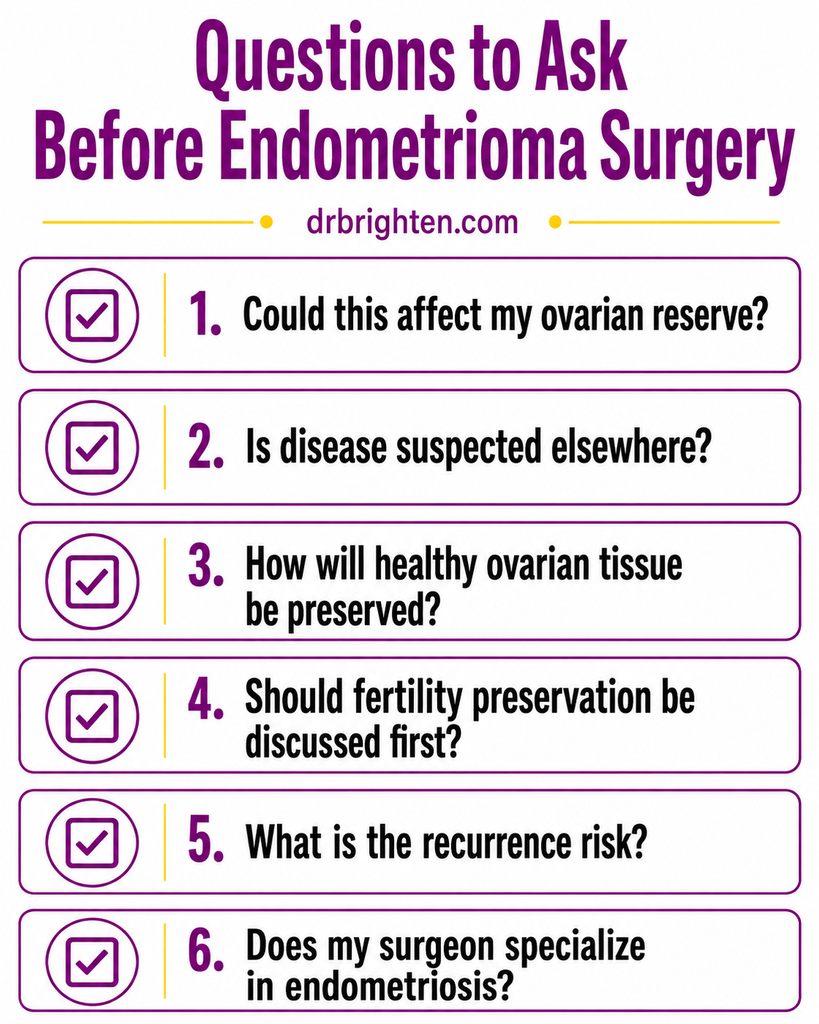
And if surgery is being considered, I would want the conversation to extend beyond, “Can you remove this cyst?” Endometriomas often coexist with disease elsewhere in the pelvis. The surgeon should be thinking about preserving healthy ovarian tissue, looking for additional endometriosis, minimizing recurrence, and understanding the patient’s fertility goals before entering the operating room.
Most of all, I want women to know that finding an endometrioma is a reason to get better information, not a reason to panic. A consultation with an endometriosis specialist does not commit you to surgery. It gives you the opportunity to understand what is happening, what your options are, and what makes the most sense for your body and your future.
What Is the ICD-10 Code for Endometrioma?
The ICD-10-CM code used for an endometrioma depends on which ovary is affected and how the diagnosis is documented.
For deep endometriosis of the ovary, the ICD-10-CM codes are:
- N80.121 — Deep endometriosis of right ovary
- N80.122 — Deep endometriosis of left ovary
- N80.123 — Deep endometriosis of bilateral ovaries
- N80.129 — Deep endometriosis of unspecified ovary
There are also separate codes for ovarian endometriosis when the depth is not specified, including N80.101 for the right ovary, N80.102 for the left ovary, and N80.103 for both ovaries.
ICD-10 stands for the International Classification of Diseases, Tenth Revision. These standardized diagnostic codes are used by healthcare providers and insurance companies for medical records, billing, and communication between healthcare professionals.
If you see one of these codes in your medical record, it tells you how the diagnosis was classified for coding purposes. It does not tell you how large the endometrioma is, how severe your endometriosis is, whether it is affecting fertility, or what treatment you need.
If you’re unsure what a code on your chart means, ask your healthcare provider to explain the actual imaging or clinical findings behind the diagnosis.
The Bottom Line on Endometrioma Signs, Causes, Tests, and Treatments
An endometrioma is much more than an ovarian cyst. It’s a manifestation of endometriosis that may contribute to chronic pelvic pain, inflammation, fertility challenges, and changes in ovarian health.
It also serves as an important clue that deeper endometriosis may be present, even when other imaging findings appear normal.
Having an endometrioma doesn’t mean you’ll experience infertility or automatically need surgery. Many women successfully manage endometriosis with a personalized combination of medical care, lifestyle strategies, pelvic floor therapy, and, when appropriate, surgery performed by an experienced specialist.
If painful periods, chronic pelvic pain, painful intercourse, or fertility concerns are affecting your life, don’t accept being told it’s “just part of being a woman.” You deserve answers, compassionate care, and a treatment plan that supports both your immediate well-being and your long-term health.
An endometrioma is a type of ovarian cyst caused by endometriosis. It forms when endometriosis tissue grows within or on the ovary and fills with thick, old blood. Because of its appearance, it’s sometimes called a “chocolate cyst.” Unlike functional ovarian cysts, endometriomas are associated with chronic endometriosis and usually don’t resolve on their own.
No. Endometriosis is the underlying disease, while an endometrioma is one manifestation of that disease. Not everyone with endometriosis develops an endometrioma, but an endometrioma only occurs in the presence of endometriosis.
No. Endometriomas are considered benign, meaning they are not cancer. However, benign does not mean harmless.
Usually not. Unlike functional ovarian cysts, endometriomas generally persist because they’re caused by endometriosis rather than the normal menstrual cycle. Some women can safely monitor them, while others require medical or surgical treatment.
Sometimes. Hormonal therapies may help slow growth or reduce the size of an endometrioma in some women, although they don’t eliminate the underlying endometriosis.
A ruptured endometrioma can cause sudden, severe pelvic pain and significant inflammation. Because its symptoms can resemble other medical emergencies, including ovarian torsion or ectopic pregnancy, you should seek immediate medical evaluation if you develop severe, sudden pelvic pain.
No. While ultrasound and MRI can often identify an endometrioma, many endometriosis lesions aren’t visible on imaging. A normal scan doesn’t necessarily mean you don’t have endometriosis, especially if your symptoms strongly suggest it.
Yes, it can. Endometriomas may contribute to inflammation, affect ovarian reserve, and are often associated with more advanced endometriosis. However, many women with endometriomas still conceive naturally or with fertility treatment when needed.
No. Surgery isn’t necessary for everyone. Treatment decisions should consider your symptoms, the size and appearance of the cyst, your age, ovarian reserve, fertility goals, and overall quality of life.
In ICD-10-CM, endometrioma is indexed under N80.12, deep endometriosis of ovary, with more specific codes depending on laterality, including N80.121 for the right ovary, N80.122 for the left ovary, and N80.123 for bilateral ovaries.